
Unbiased headlines. Facts, not spin.
Unbiased Headlines is an independently owned news organization. We bring you the facts, not opinions, written fresh from 110+ named sources. Sources linked so you can verify it yourself.
 defense
Major Story (7/10)
DIA Says China Has Tripled Its Spy Satellite Fleet Since 2018 to More Than 510, Counting Commercial Craft
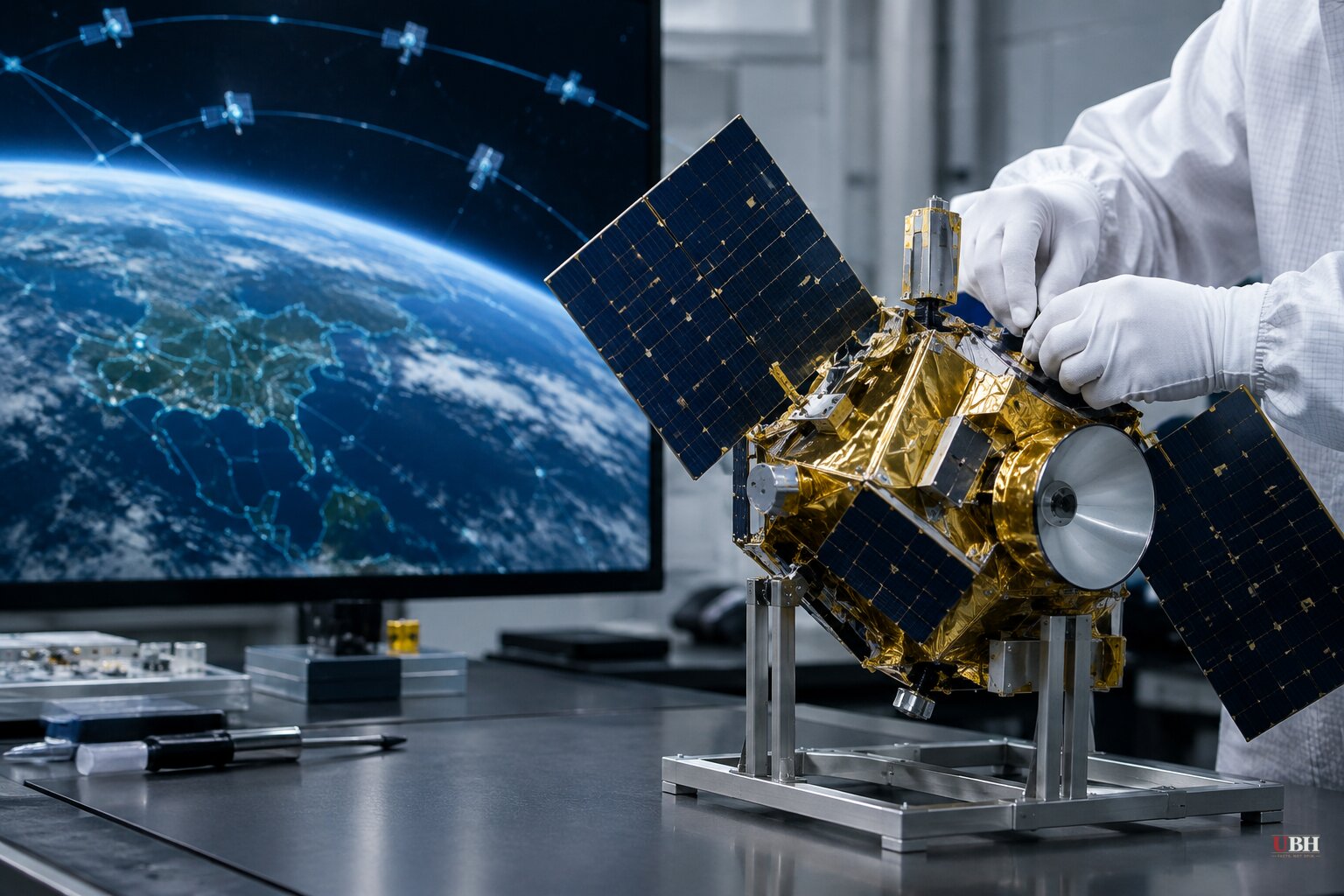
China has tripled its fleet of intelligence, surveillance and reconnaissance (ISR) satellites since 2018, according to the Defense Intelligence Agency's 2026 Challenges to Security in Space report, released Monday, Oct. 26.
The agency puts the total at more than 510 satellites in orbit as of July. It says the network helps the People's Liberation Army monitor and target U.S. and allied forces, especially across the Indo-Pacific: the Korean Peninsula, Taiwan, the Philippines, the Indian Ocean and the South China Sea.
"China employs a robust space-based ISR capability designed to enhance its worldwide situational awareness and enable long-range strikes," the report says. The fleet includes electro-optical and synthetic aperture radar imaging satellites, plus others that collect electronic and signals intelligence.
What the 510 number actually includes
The DIA's count covers satellites owned by the Chinese state and by Chinese commercial companies. A July 2026 Space Force fact sheet on space threats used the same 510 figure but did not spell that out.
The DIA does. "While many of these ISR satellites are ostensibly affiliated with commercial and civil missions, the dual-use nature of their capabilities and possibly the Chinese military-civil fusion policies means the data or imagery they collect can be used by the PLA," the report says.
The agency also says Chinese commercial firms are supplying imagery "to state actors banned by Western providers for supporting weapons proliferation."
The fleet is still growing, the DIA says, driven by Beijing's expanding constellations in low Earth orbit.
The counter-argument on the data
Todd Harrison, a senior fellow at the American Enterprise Institute, says the DIA's numbers don't make clear which satellites are in the count and leave out important context.
Harrison's own tally has China's operational surveillance and weather satellites growing from 141 in 2018 to 541. He counts pure reconnaissance satellites rising from 124 to 453. He also says the pace of Chinese growth has slowed in recent years.
His comparison with the United States: 643 active observation and weather satellites today, up from 298 in 2018.
Those figures don't contradict the DIA's warning. They do show the raw satellite count is a blunt measure. The DIA has not said how many of the 510 belong to the PLA and how many belong to commercial operators.
Kill chains and stealth
The report echoes warnings from U.S. Space Force and U.S. Space Command that the PLA is building "kill chains" capable of targeting American joint forces abroad and at home.
Clayton Swope, deputy director of the Aerospace Security Project at the Center for Strategic and International Studies, says the stakes go beyond watching ships. "A concern on the minds of US and allied decision makers should be how PLA sensor webs could erode US advantages derived from stealth in the air and undersea domains," he told Breaking Defense. "Will we be able to operate undetected in the air and undersea domains in the future?"
Stealth aircraft and quiet submarines are expensive. They are built on the assumption that the other side can't see them.
The spaceplane photo
The report also carries what appears to be the first official confirmation of a photograph that has circulated since 2024. It shows China's reusable spaceplane in orbit. The image is credited to Maxar Technologies, now known as Vantor.
A lower-resolution version surfaced in 2024, when U.S. Space Force Col. John Patrick, then commander of U.S. Space Forces-Korea, showed it at the Open Space Forum in South Korea. Its identity was unclear then. The DIA has now labeled it a PRC spaceplane.
"Spaceplanes can launch into orbit to place objects in space or even test them and return to earth," the agency says. The report names two Chinese models, Shenlong and Tengyun, and does not say which one is pictured.
The image shows a compact winged vehicle with open payload bay doors and a rear service module with solar panels deployed. Its design resembles the Boeing X-37B, which has flown eight missions since 2010. The eighth, OTV-8, launched Aug. 22, 2025. Victoria Samson of the Secure World Foundation has said the Chinese vehicle outwardly resembles the American one.
China's craft has flown four orbital missions since September 2020. The first lasted two days. The second, launched in August 2022, stayed up 276 days. The third, launched in December 2023, lasted 268 days. A fourth began in February 2026.
Tracking data show the vehicle has deployed objects and performed rendezvous and proximity operations. Those observations do not establish its intended military role, and its payload and mission objectives remain largely undisclosed.
Beyond China
The DIA says the updated report covers the space defense and military goals of China, Russia, and the emerging space powers Iran and North Korea, including their strategies, plans and intentions.
It is unclear how much of China's commercial satellite sector the PLA can actually task in a crisis. The DIA says only that the data "can be used" by the military, and no breakdown by operator has been released.
Sources used for this briefing
5 links from 5 independent newsrooms (syndicated copies of the same report count once)
These are the sources it draws on, linked so you can verify.


