
Unbiased headlines. Facts, not spin.
Every story is an unbiased news briefing written from 110+ sources across the spectrum — sources linked so you can verify it yourself.
 defense
Notable (6/10)
June 13, 2026 at 08:39 PM
defense
Notable (6/10)
June 13, 2026 at 08:39 PM
Trump Says Iran Deal Signs Sunday, Iran's Foreign Ministry Says Not So Fast
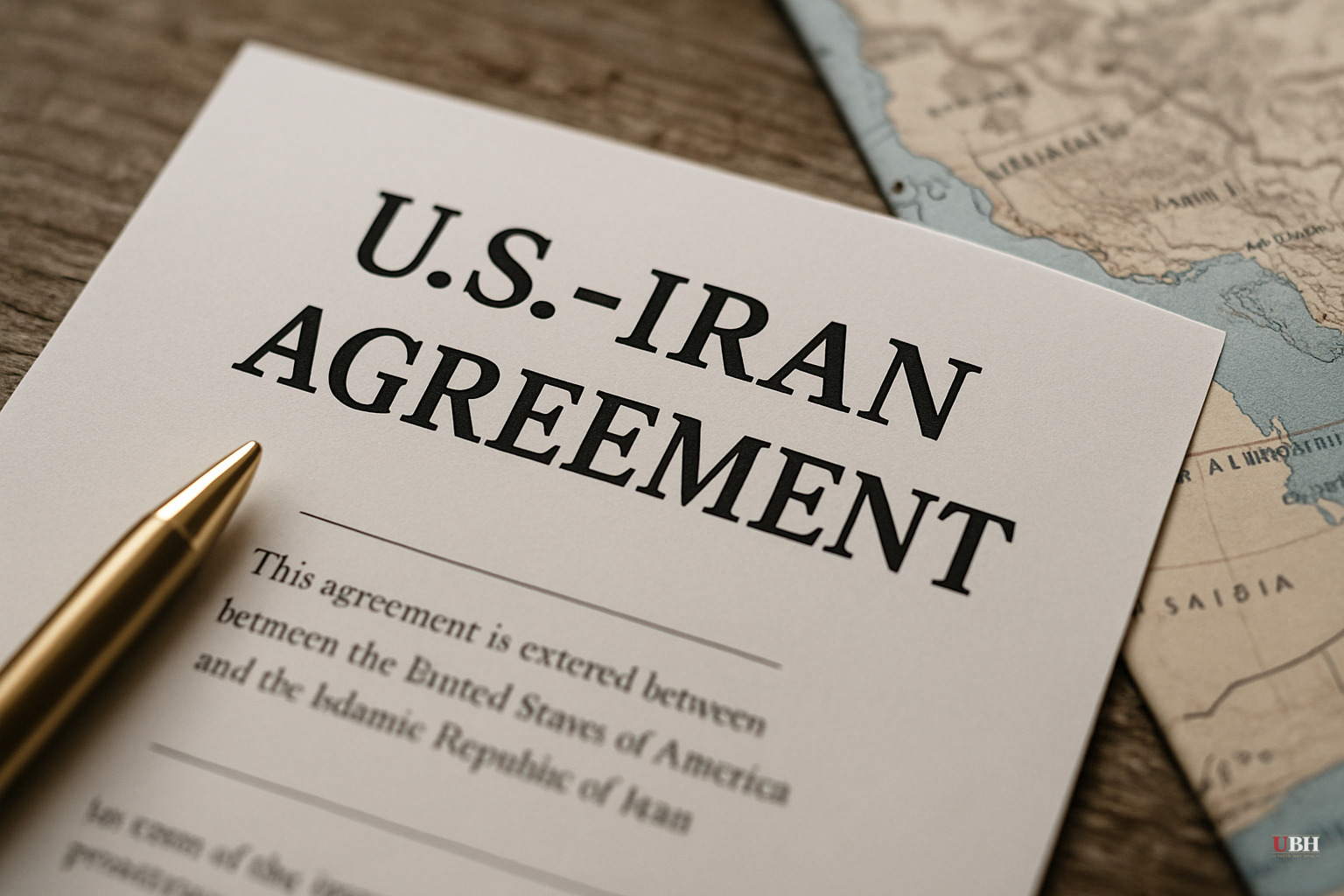
The Gap Between Washington and Tehran
Since coverage on June 13 established that G7 Iran deal talks were accelerating and Hormuz shipping was partially restored, the central question has shifted from whether a deal exists to when it gets formalized. Saturday brought that question into sharp relief, and the two parties involved gave contradictory answers on the same day.
President Trump posted on Truth Social Saturday that "The Deal is scheduled to get signed tomorrow, and immediately after it is signed, the Hormuz Strait is OPEN TO ALL." He framed the agreement as the categorical opposite of the 2015 JCPOA, writing: "My Agreement with Iran is the exact opposite, A WALL TO NO NUCLEAR WEAPON." He also confirmed that no cash changes hands, contrasting it with what he described as "Obama's Hundreds of Billions of Dollars in payments to them, including 1.7 Billion Dollars in green, cold cash."
Hours earlier, Iranian Foreign Ministry spokesperson Esmaeil Baghaei told state media a different story. "We will have to wait and see about the exact date of the signing of the memorandum of understanding, although it will not be tomorrow," Baghaei said, according to CNBC. He cited "hesitation of the other side" as grounds for caution, and said the possibility of signing "in the coming days cannot be ruled out."
Those two statements cannot both be right.
What Is Actually Confirmed
Pakistani Prime Minister Shehbaz Sharif, according to both CNBC and ZeroHedge, said Saturday that the U.S. and Iran have agreed to the final text of the agreement, with "technical level talks next week." That aligns with Trump's claim that a deal exists. It does NOT confirm a Sunday signing.
ZeroHedge separately noted that Iran's Islamic Revolutionary Guard Corps continues to push back against the deal internally. The IRGC is not the Foreign Ministry. The fact that two Iranian institutions are signaling different levels of resistance is itself informative.
Trump's post also addressed the nuclear material question, saying the U.S. will "go in and get the Nuclear Dust, buried deep under the powerful sunken granite mountains" at an unspecified future date, referring to the enriched uranium and nuclear residue created by U.S. B-2 strikes. He described the timeline as "at the appropriate time, when all is calm."
The White House did not respond to CNBC's request for clarification on Trump's remarks as of Saturday.
The Threat Underneath the Optimism
Trump closed his Truth Social post with language that reads as a warning: "If it doesn't, we have the ultimate alternative, hopefully never to be used again." That is a reference to military force. Pairing a deal announcement with a threat in the same paragraph is an unusual diplomatic posture. Whether it is pressure tactics or genuine uncertainty is not clear from the sources.
The Case for Patience on Tehran's Side
Iran's hesitation could reflect more than obstruction. A formal signing is a legally and politically significant step inside Iran, and the IRGC's resistance is real. Iranian leaders who move too fast could face domestic backlash from hardliners who view any deal with Washington as capitulation. Baghaei's caution may reflect genuine internal coalition management, not bad faith. Any deal that collapses after signing would be worse for regional stability than a deal that takes a few more days to secure internally.
At the same time, the Foreign Ministry spokesperson explicitly said the other side, meaning the U.S., showed hesitation. That framing conflicts with Trump's confident Sunday-signing announcement. One of them is misreading the situation, or misrepresenting it.
Where ZeroHedge and CNBC Diverge
ZeroHedge's write-up includes Trump's full Truth Social post, including the Obama comparison and the nuclear-dust retrieval language, which CNBC's article omits or compresses. CNBC, on the other hand, sought a White House response and noted it did not receive one. That's a meaningful piece of accountability reporting ZeroHedge skipped. Neither framing is dishonest, but the omissions pull in opposite directions: ZeroHedge presents Trump's full case; CNBC surfaces the unanswered questions around it.
What Comes Next
If no signing occurs Sunday, the gap between Trump's public announcement and Iran's stated position becomes a credibility problem for at least one party. Sharif's role as an intermediary, Pakistan having brokered or facilitated elements of this process according to his Saturday statement, means a delayed signing could complicate Islamabad's position as well. The unresolved question is whether the IRGC's internal resistance is a negotiating chip Iran's government is using to extract last-minute concessions, or a genuine veto that could push the formal signing past the "coming days" window Baghaei described.
Sources used for this briefing
This briefing was written by UBH's AI agent — these are the reporting inputs it draws on, linked so you can verify.


