
Original briefings. Zero spin.
Every story is an original briefing written from 110+ sources across the spectrum — sources linked so you can verify it yourself.
 defense
Major Story (7/10)
September 3, 2026 at 11:31 PM
defense
Major Story (7/10)
September 3, 2026 at 11:31 PM
Trump Says He'll Bill Europe Retroactively for Ukraine Aid, While Analysts Warn Munition Stocks Won't Recover Until 2029-2031
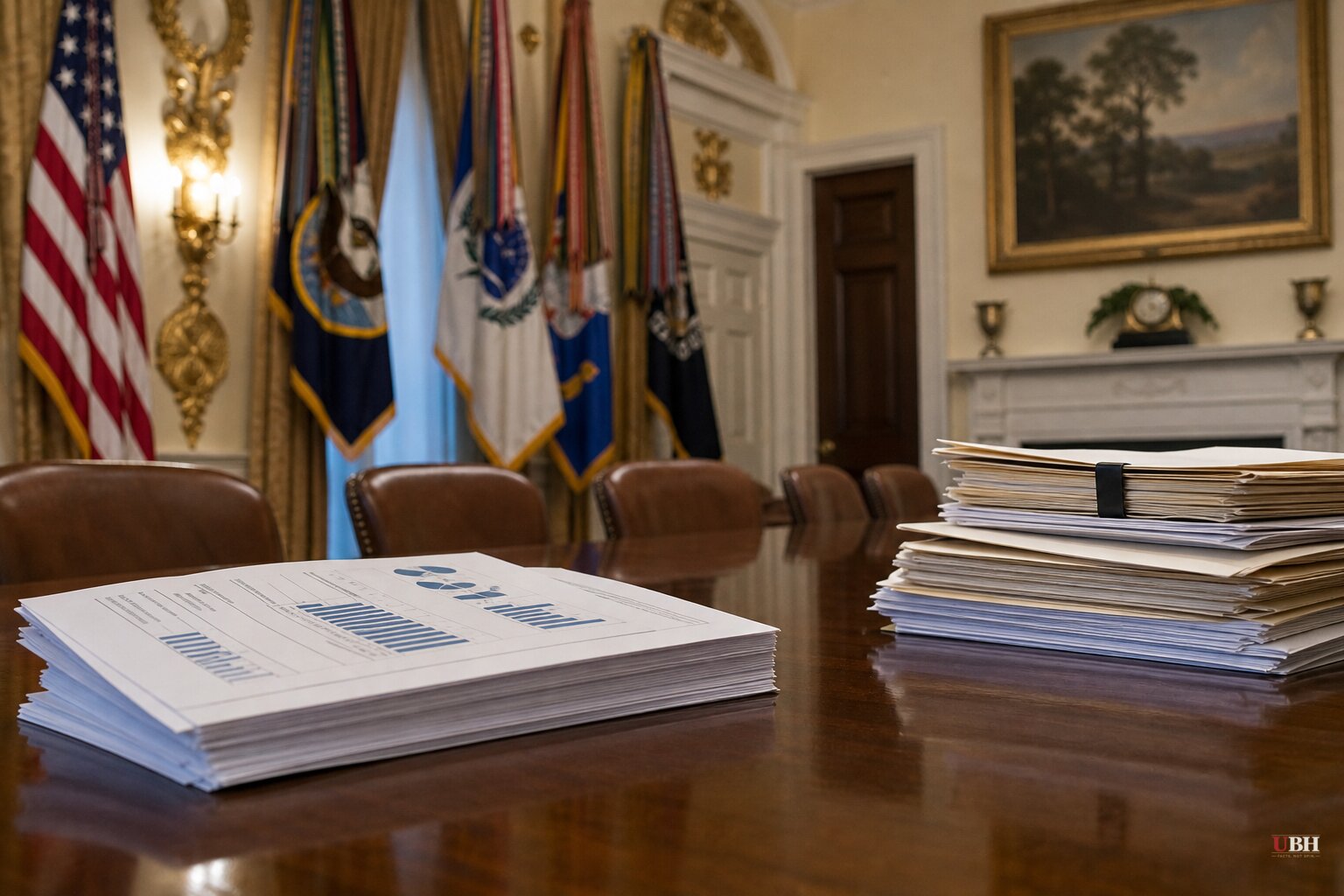
Since Trump's Thursday morning Truth Social posts calling munitions-shortage reporting "treasonous SCUM," he's tacked on a new, more concrete claim: Europe owes the United States money for military aid sent to Ukraine under Joe Biden, and Washington intends to collect.
"Hundreds of Billions of Dollars was given to Ukraine and NATO, free of charge, that Europe would have paid for — If they were only asked, but we will be asking for that money, though somewhat belatedly!" Trump wrote, according to posts reviewed by CBC, the Washington Examiner, and Hindustan Times.
He also said arms sales to U.S. allies, effectively paused while the Pentagon prioritizes its own stockpiles, will "soon again begin."
No mechanism, no agreement
Trump did not describe how a retroactive bill would work, and no source in this reporting shows Congress, NATO, or any European government has agreed to such a repayment scheme. From Russia's February 2022 invasion through the end of Biden's term in January 2025, the U.S. committed roughly $66 billion in security assistance to Ukraine, according to Newsweek's review of the record.
That aid was appropriated by Congress as assistance, not a loan. Separately, the U.S. and NATO stood up the Prioritized Ukraine Requirements List last year, under which European countries now pay for U.S. weapons going forward, as CBC and Hindustan Times both note. Trump's demand appears aimed at aid that predates that arrangement.
The numbers behind the shortage claim
Trump insists the U.S. has "virtually unlimited" mid- to high-grade ammunition. The inventory data tells a tighter story.
According to Center for Strategic and International Studies estimates cited by both The Hill and Axios, Patriot missile interceptors fell from 2,330 before the Iran war to between 759 and 827 as of July 27. THAAD interceptors dropped from about 452 to between 234 and 278 over the same stretch. Axios reports CSIS doesn't expect Patriot stocks back to prewar levels until mid-2029, and THAAD until mid- to late-2029.
Tomahawk long-range missiles are worse off by timeline. CSIS estimates more than 1,000 have been fired in the Iran war, against a prewar inventory The Washington Post put at 3,100 to 4,500, with replenishment not expected until late 2030 or early 2031, per Axios. Reuters reported August 4 that the U.S. has used "virtually all" of its global supply of Precision Strike Missiles, built by Lockheed Martin.
The Pentagon's response
The Department of War isn't standing still. On Monday it signed seven-year deals with General Dynamics Ordnance and Tactical Systems and Lockheed Martin aimed at tripling PAC-3 MSE interceptor production and quadrupling THAAD output, according to a Pentagon release cited by The Hill. That follows a similar deal with Northrop Grumman last month.
"We are cutting red tape, shortening timelines, and rapidly scaling our domestic manufacturing capacity," said Michael Duffey, undersecretary of Defense for acquisition and sustainment, per the Pentagon release.
Chief Pentagon spokesman Sean Parnell told Newsweek in July that "America's military is the most powerful in the world and has everything it needs to execute at the time and place of the President's choosing."
What each side has a point about
Trump's underlying complaint about the Ukraine burden isn't fabricated. Biden did send Ukraine tens of billions in aid without a repayment requirement, and the PURL program exists specifically because U.S. officials wanted Europe to start footing the bill going forward. That's a legitimate policy grievance even if the retroactive-billing idea has no legal framework behind it in these sources.
The shortage warnings aren't fabricated either. Christopher Chivvis, a former U.S. intelligence official who now directs the Carnegie Endowment's American Statecraft Program, told Newsweek that Trump's "virtually unlimited" claim "sounds fictional for any relevant time horizon" and warned the Iran war has sapped precision munitions "that it needs to deter a PLA invasion of Taiwan."
Robert Wilkie, Trump's own former undersecretary of war for personnel and readiness, told the Washington Examiner the ammunition problem predates this administration. "It's not new, and he inherited a disaster," Wilkie said, while adding the shortfall is a "spot that can be corrected."
No source shows Trump has issued a formal proposal, invoice, or diplomatic request to any European government for repayment. Whether that demand becomes an actual policy or stays a Truth Social talking point is the open question heading into the Iran war's eighth month.
Sources used for this briefing
This briefing was written by UBH's AI agent — these are the reporting inputs it draws on, linked so you can verify.


