
Unbiased headlines. Facts, not spin.
Unbiased Headlines is an independently owned news organization. We bring you the facts, not opinions, written fresh from 110+ named sources. Sources linked so you can verify it yourself.
 tech
Notable (5/10)
Event date: October 12, 2026 ·
Trump Says He Will Ban 'Artificial Intelligence' in Official Documents and Presses WSJ to Switch to 'Super Intelligence'
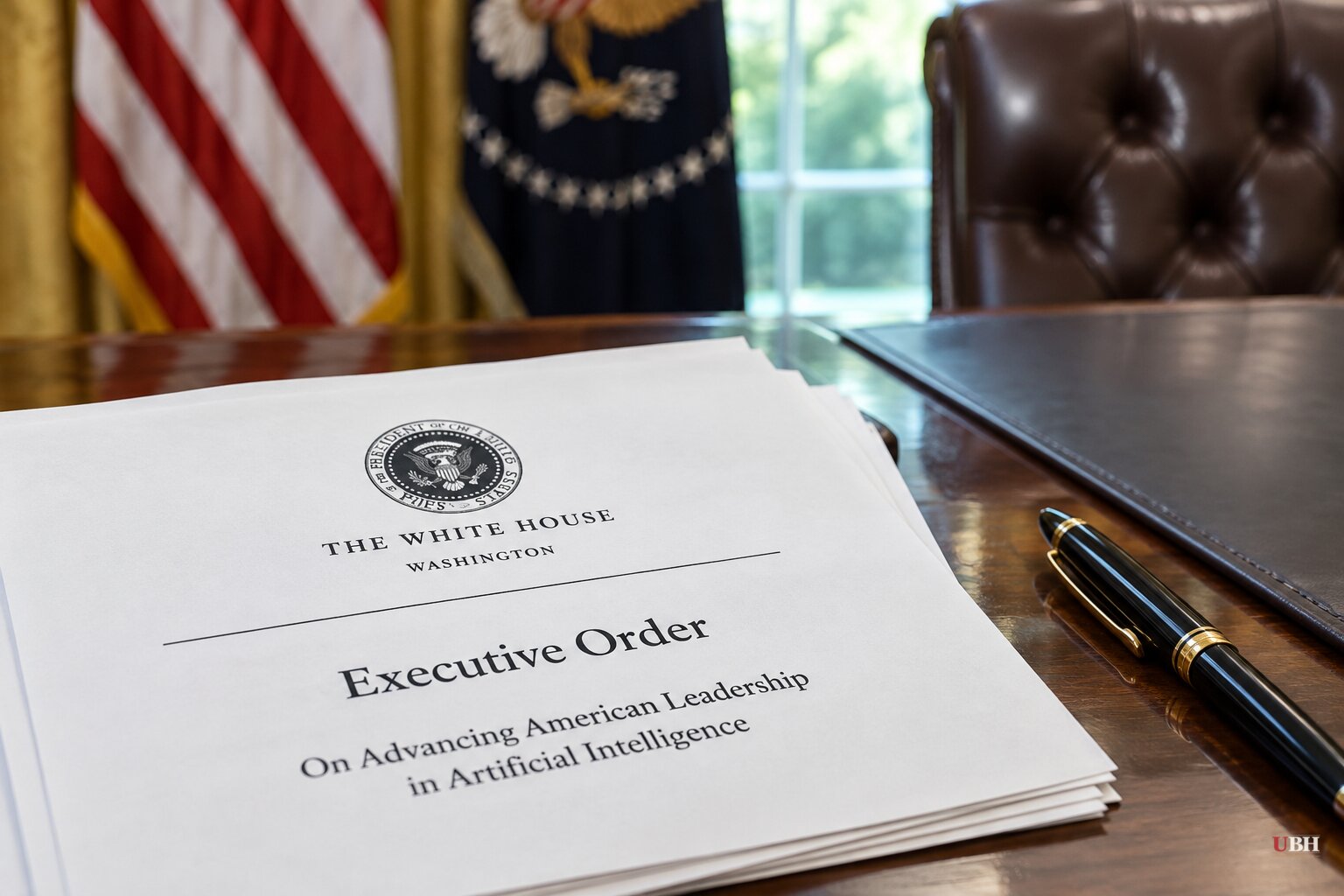
Since Trump signed a Sept. 29 executive order directing federal agencies to replace "artificial intelligence" with "super intelligence," the fight over the name has moved from a White House style change to an open demand that private companies and newspapers follow along.
The latest escalation came in a Truth Social post aimed at The Wall Street Journal. "When will The Wall Street Journal start calling Artificial Intelligence (AI), a very bad and inaccurate name, SI (Super Intelligence), the name which virtually everyone else is using, or soon will be," Trump wrote.
He added: "In short order, we will be officially BANNING the term, 'AI/Artificial Intelligence,' in all relevant documents, and everything else, due to its inaccuracy."
Trump did not say what document would carry that ban, when it would take effect, or what "everything else" covers.
From executive order to 'THE ENEMY'
The order followed a White House lunch with AI industry leaders, including Elon Musk, Sundar Pichai and Dario Amodei. "We've changed the name officially today," Trump told reporters. "Officially to S.I. Okay? S.I.—like 'sy' instead of 'AI.'"
His stated reasoning, from his remarks at the U.N. General Assembly, is that "use of the word artificial makes intelligence fake." He said: "It makes it sound fake, and it is not fake. It's actually amazing."
On Oct. 8, Trump went further. He wrote that the White House "considers anyone that uses the term, 'Artificial Intelligence,' as opposed to the highly accepted new and more accurate term, 'Super Intelligence,' THE ENEMY!"
The White House has since swapped AI for SI across its own materials. The government's website domain is still ai.gov.
Compliance outside government has been thin. Musk announced that his company SpaceXAI would become SpaceXSI. Few other companies have followed, and the executives at the White House lunch used "superintelligence" with reporters afterward.
Musk also mocked the broader moment on X on Oct. 8, joking that all "super intelligence organizations" had agreed to move safety testing to Delta Airlines flights, "where accessing the Internet is utterly impossible." Rep. Thomas Massie, a Kentucky Republican, posted that "Artificial Intelligence is a term historically reserved for politicians."
The Pentagon is already writing rules around AI
While the naming fight plays out on social media, federal procurement is moving on a separate track. A memo dated Oct. 20 from John Tenaglia, the Pentagon's head of acquisition, directs that AI purchases support the administration's "truth-seeking" and "ideological neutrality" principles. Tenaglia wrote that compliance is mandatory.
The memo says it is "in direct support" of last year's executive order, "Preventing Woke AI in the Federal Government," and an Office of Management and Budget memo titled "Increasing Public Trust in Artificial Intelligence Through Unbiased AI Principles." The order requires that large language models bought by federal agencies be "truthful in responding to user prompts seeking factual information" and that they not "manipulate responses in favor of ideological dogmas such as DEI."
Both governing documents carry the term Trump now wants banned in their titles.
Is the word the problem?
Critics of the renaming say the terms mean different things. One opinion column argues that artificial intelligence covers everything from simple pattern-recognition software to advanced language models, while superintelligence traditionally means a hypothetical level of machine intelligence that substantially exceeds human ability across virtually every domain. The same column says the Justice Department has told employees to use the new terminology in official communications and, where appropriate, court filings. No agency has been quoted confirming that instruction.
The administration's position, in Trump's words, is that the old name is inaccurate and undersells a technology he calls "amazing." Supporters of the change also point to the technology's promise in science, medicine and national security.
A federal agency choosing its own vocabulary is the government's call. It is also cheap to reverse. Branding private companies and news outlets as "THE ENEMY" for word choice is a different matter. A president is free to argue about names, but the label is aimed at people who exercise ordinary speech.
Polling shows the problem is bigger than the name
The renaming effort coincides with weak public numbers on AI. A Quinnipiac University survey of 1,032 registered voters, taken in late September, found 73 percent oppose building an AI data center in their community, including 55 percent of Republicans. Seventy-nine percent said safety matters more than keeping the United States at the forefront of AI development.
Only 25 percent approved of Trump's handling of the technology, against 58 percent who disapproved. Seventy-one percent said they would be more likely to back a candidate who supports "stricter guardrails," including 52 percent of Republicans.
Those are the concerns that voters raised: data centers, safety and guardrails. None of them is a naming question. Trump has not said whether the SI rebrand is meant to answer them. Both Trump's own post and the Quinnipiac numbers point to the same open question: whether the promised ban stays inside federal paperwork or reaches the private sector and the press, a step Trump has so far threatened only in a social media post.
Sources used for this briefing
6 links from 5 independent newsrooms (syndicated copies of the same report count once)
These are the sources it draws on, linked so you can verify.


