
Unbiased headlines. Facts, not spin.
Unbiased Headlines is an independently owned news organization. We bring you the facts, not opinions, written fresh from 110+ named sources. Sources linked so you can verify it yourself.
 tech
Notable (6/10)
Advocacy group counts 115 state AI laws in 2026; Comer probes Delaware plan for AI-run companies
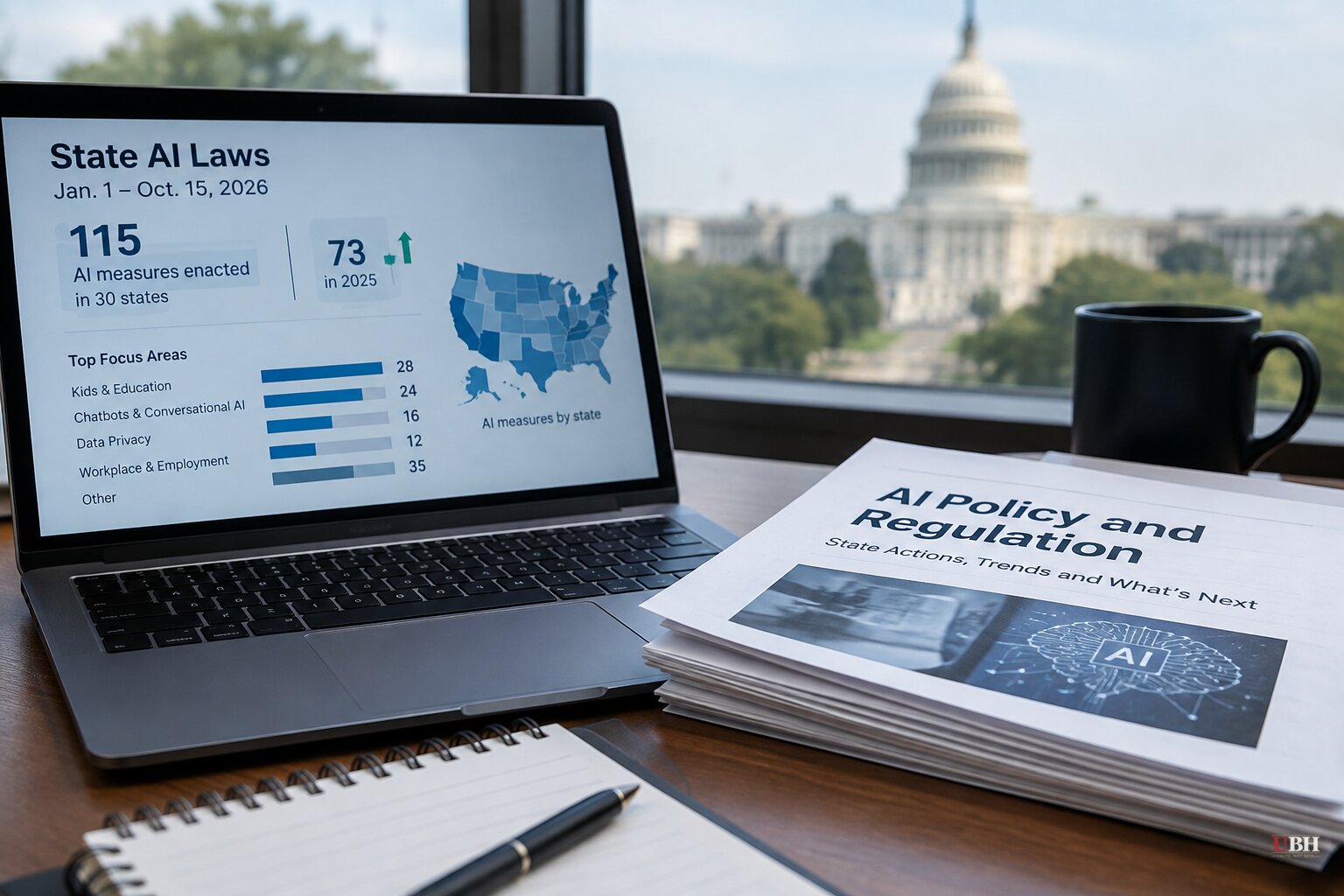
State legislatures are writing AI rules faster than anyone in Washington. Two developments this week show the range: a tally of what states passed in 2026, and a fight over a Delaware proposal that would let software agents run companies.
The 2026 state tally
The Transparency Coalition, an AI policy advocacy group based in Seattle, released its 2026 State AI Legislation Report on Oct. 27. It counts 115 AI-related laws and measures passed or enacted across 30 states between Jan. 1 and Oct. 15.
That is a jump of nearly 58% from the 73 measures in the group's 2025 report. The group's count includes a small number of bills that cleared legislatures but were still awaiting a governor's signature. It says inclusion does not mean it supports or opposes a given measure. Data center bills are excluded.
Child safety drove the most activity. According to the report, 14 states advanced chatbot safety measures aimed at self-harm and suicidal ideation, sexually explicit content, and emotionally manipulative engagement with minors. The group singles out California, Oregon and Washington for the most extensive protections.
Other categories the report lists:
- Addictive design: California, Colorado, Connecticut, Idaho, Illinois, Minnesota and South Carolina took on algorithmic feeds, autoplay and rewards aimed at kids and teens.
- Health insurance: Alabama, Colorado, Georgia, Illinois, Indiana, Iowa, Utah and Washington limited insurers from relying solely on automated systems to deny coverage or authorizations.
- AI therapy: Colorado, Maine, Rhode Island, Tennessee and Vermont banned or restricted mental health therapy delivered through chatbots.
"State lawmakers in both parties have stepped up to the challenge of regulating AI for the good of our communities," said Rob Eleveld, the coalition's CEO. He added that legislators are making decisions on complex technology "often with limited staff, limited time and intense pressure from industry."
The coalition expects state activity to accelerate further in 2027. The 115 figure is the group's own count, and it lumps together laws of very different weight.
Delaware's agent-run company idea
Delaware is drafting a law to create Artificial Intelligence Companies, or AICs. These would be firms run day to day by autonomous AI agents that can sign contracts, sue and make decisions. They would operate inside a 30-month regulatory sandbox pilot.
The plan was developed by Delaware Secretary of State Charuni Patibanda-Sanchez with Norm AI. In a July op-ed, she described it as running agentic commerce "in daylight," under supervision, with capital tied to liability and the ability to shut a system down.
According to the draft, individuals would be shielded from personal liability if an AIC is adequately capitalized and its activities are logged. AI agents would be barred from banking. No other business types have been chosen.
House Oversight Chair James Comer, a Republican, wrote to Delaware Gov. Matt Meyer, a Democrat, asking for documents by Nov. 9. Comer warned the plan could be used to protect powerful AI companies and their investors from responsibility for reckless, harmful actions.
Comer also named John Mark Zeberkiewicz, a corporate lawyer who has represented Facebook, as the apparent principal drafter. The letter's claim about the drafter is Comer's; neither Zeberkiewicz nor the governor's office is quoted on it.
Who backs it, who doesn't
Mark Cuban supports the idea. "First to market makes a killing," he said.
Andrew Baker, a law professor at UC, sees a possible good-faith push for legal certainty, but calls the liability shield overly generous.
Supporters argue states should act before offshore alternatives do. The backdrop is Delaware's effort to defend its incorporation franchise after Tesla, Dell and Dropbox moved to Nevada or Texas.
The tension is plain. Delaware's backers say supervision, capital requirements and logging are the safeguards. Comer's letter says a shield for individuals could leave no one accountable when an agent causes harm. The draft has not been published as a bill, so neither claim can be tested against final text.
What happens next
The Delaware plan is a proposal only. It is likely to be introduced in the January legislative session, and it has no bill number yet. Comer's Nov. 9 document deadline is the next concrete date.
The open question is whether the final language ties the liability shield to capital and logging requirements strict enough to answer Comer's objection, or whether Delaware's competition for incorporations pushes the shield wider.
Sources used for this briefing
4 links from 4 independent newsrooms (syndicated copies of the same report count once)
These are the sources it draws on, linked so you can verify.


