
Unbiased headlines. Facts, not spin.
Unbiased Headlines is an independently owned news organization. We bring you the facts, not opinions, written fresh from 110+ named sources. Sources linked so you can verify it yourself.
 tech
Major Story (7/10)
OpenAI Plans to Buy Google's AI Chips, The Information Reports, a Day Before Alphabet Earnings
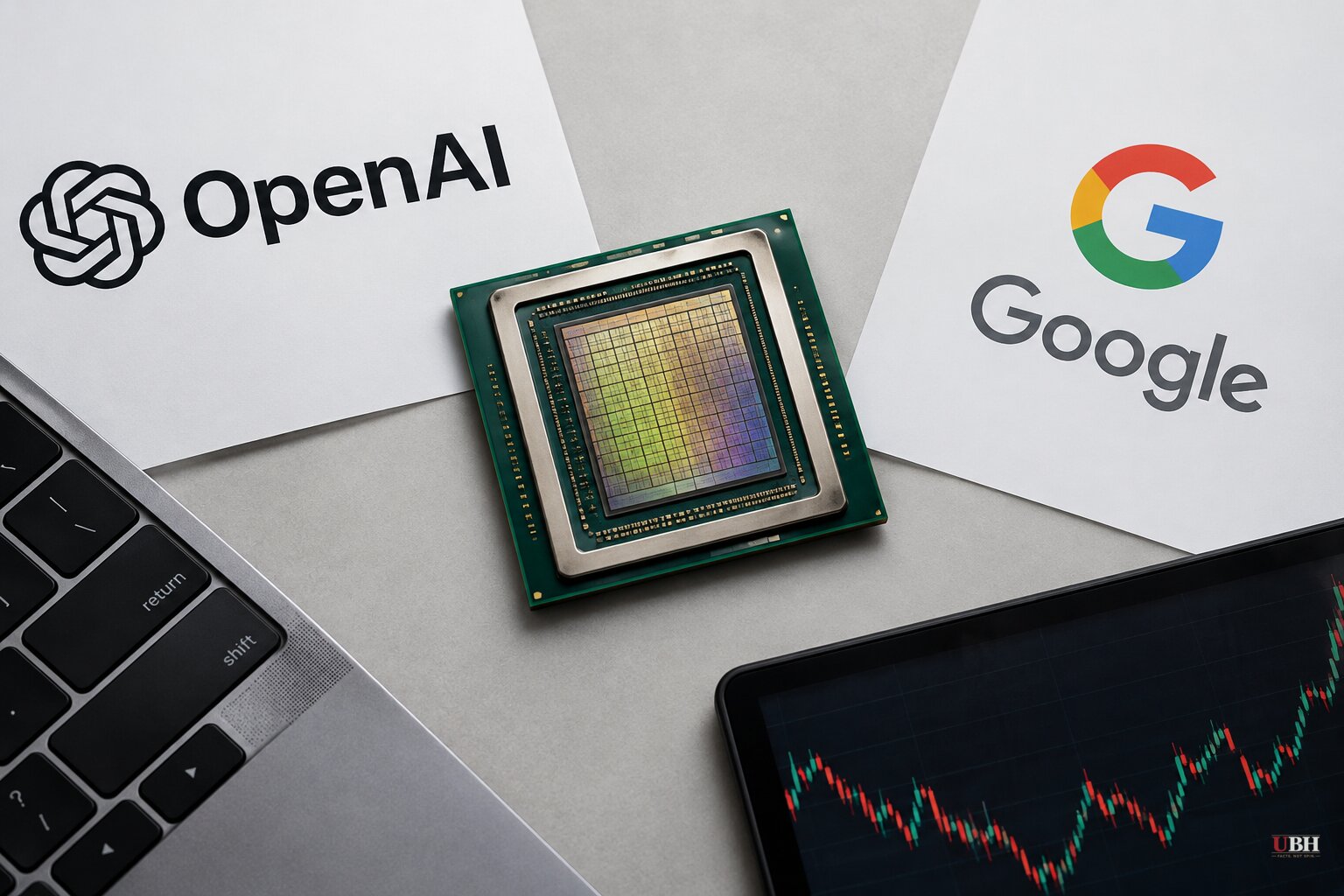
OpenAI plans to buy AI chips from Google, The Information reported Tuesday, Oct. 27, citing a person familiar with the matter. The chips are Google's Tensor Processing Units, or TPUs.
OpenAI declined to comment. Google did not immediately respond to a request for comment outside regular business hours. The report did not disclose financial terms, quantities or a delivery schedule.
This is a single-source report on a deal that neither company has confirmed.
From renting to owning
OpenAI is not new to Google silicon. Reuters reported in June 2025 that the ChatGPT maker had begun renting Google's AI chips. A purchase would be a different arrangement: owning the hardware instead of leasing time on it through Google Cloud.
The companies compete in AI products and search, but their commercial ties keep growing. Last week, OpenAI said it would make its frontier AI models available through Google Cloud.
OpenAI has not explained why it wants the chips. Its situation is plain, though. It is already among the largest buyers of Nvidia's graphics processing units, which it uses to train and run its models. Adding TPUs would give it a second hardware source.
Google's chip business is new
Google built TPUs for its own workloads and long offered them only through its cloud. It began selling them directly to some customers this year.
Anthropic, a direct rival to OpenAI, is among the customers whose deals have fueled demand for the chips. Alphabet CFO Anat Ashkenazi has said the company expects to begin recognizing a small percentage of revenue from TPU sales agreements by the end of this year. She said the vast majority will be recognized in 2027.
So the revenue is mostly still ahead. Alphabet's 2025 annual revenue was $402.8 billion, according to its 10-K, which puts any TPU contribution in perspective for now.
OpenAI is building its own chip too
OpenAI is hedging on more than one front. In June it unveiled its first custom AI chip, designed with Broadcom. It said it plans to deploy the processor by the end of this year as part of a multi-generation chip program.
That leaves OpenAI with three tracks: Nvidia GPUs, Google TPUs and its own Broadcom-built silicon.
The spending question
Amazon, Microsoft and Alphabet plan to spend as much as $600 billion combined this year on AI infrastructure. Investors are increasingly asking when that spending will turn into meaningful returns.
Alphabet will give its latest answer after the U.S. market closes today, Oct. 28. Investors want signs that the heavy AI investment is still driving growth in its cloud business. Alphabet's stock closed at $321 on Oct. 27, according to market data, for a market capitalization of roughly $3.9 trillion.
Neither company has said anything on the record about the reported purchase. If it is real, the scale matters most. A modest order would be a pilot. A large one would put Google's chips inside the data centers of one of its closest AI competitors.
Ashkenazi's remarks on the earnings call are the next public checkpoint. Analysts will be listening for any update on TPU sales agreements and the 2027 revenue timeline.
Sources used for this briefing
7 links from 7 independent newsrooms (syndicated copies of the same report count once)
These are the sources it draws on, linked so you can verify.


