
Unbiased headlines. Facts, not spin.
Unbiased Headlines is an independently owned news organization. We bring you the facts, not opinions, written fresh from 110+ named sources. Sources linked so you can verify it yourself.
 tech
Major Story (7/10)
US Took 72% of Newly Acquired AI Compute Since 2022, Epoch AI Estimates; China Holds About 10%
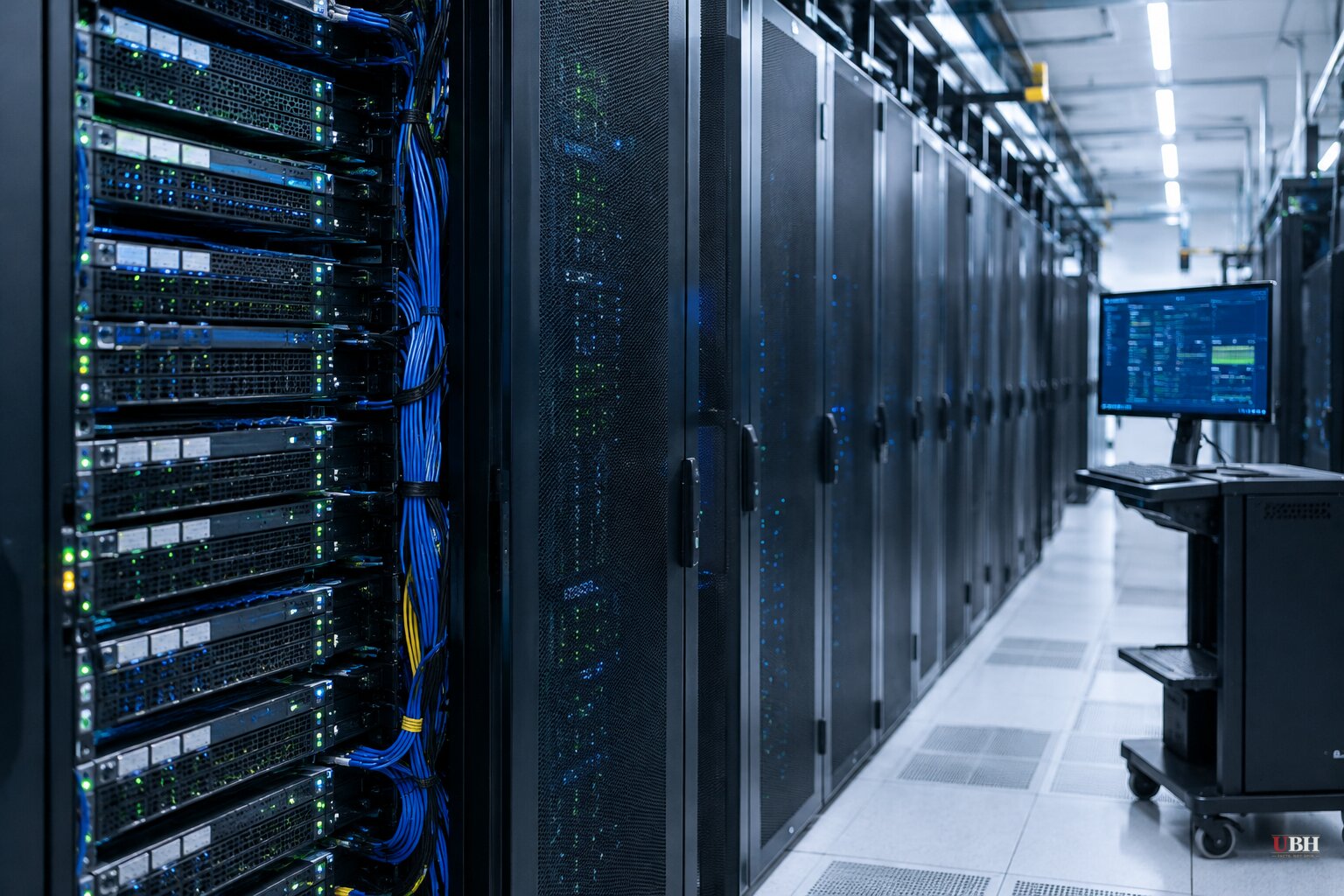
The United States has acquired 72% of the world's AI compute since 2022, according to new research from Epoch AI published today, Oct. 27. The group built the figure from customs records in its AI Chip Imports explorer.
The American share of newly acquired compute was also 72% in 2025. In the first half of 2026 it rose to 78%, which Epoch's data suggests means the gap is widening.
China sits at about 10% of global AI compute, per Epoch. By raw chip count it accounts for roughly 18% of AI chips. The research attributes the difference to China's reliance on lower-performance chip models and to compliance with export regulations.
Epoch's method rests on a physical chokepoint. Nearly all advanced AI chips are packaged in Taiwan, so they pass through one hub on the way to data centers worldwide. Customs records show what kind of chips went where, which lets analysts estimate processing power rather than just unit counts.
The numbers fit Epoch's earlier estimate that the US held about 75% of global frontier AI compute capacity as of late 2025.
The lead in models is much thinner
Compute share is not the same as model quality. A report published Oct. 19 by IFP authors Tim Fist, Georgia Adamson and Konstantin Pilz estimates that top US AI models lead top Chinese models by only about 6.5 months. That is despite US companies having far better compute access and financing.
The authors tie the gap to two factors Washington can influence: China's access to AI chips, and its ability to distill the capabilities of US models. Adversarial distillation, in their account, lets Chinese firms extract what frontier US models can do without needing much compute of their own, which weakens chip controls.
IFP estimates China's access to AI chips will roughly double between the end of 2026 and the end of 2027. Of the portion the US could restrict, the authors say about half sits in data centers outside China that Chinese developers will reach remotely.
The report argues that policies using existing executive branch authorities could roughly double the US lead by the end of 2027 if implemented now. It also says restricting Chinese access to US chips is unlikely to cut total US sales, since demand outside China is expected to outpace supply through at least the end of 2027. Those are IFP's estimates and projections, not settled outcomes.
Who is paying for the buildout
The American lead is being financed largely with private debt. Broadcom is giving residual value support on the senior debt of a new $63 billion vehicle that will buy Broadcom AI accelerators and networking equipment and lease them to Anthropic. Residual value support is a promise to cover a shortfall if the equipment is worth less than expected.
Bank of America, Citi and Morgan Stanley are arranging the first lien, and Broadcom's support equals its full amount. Blackstone is the sole provider of the committed portion of the second lien. The companies described no similar support for Blackstone's layer. They did not say how the $63 billion splits between the two liens or what interest either one pays.
Deliveries are expected to begin in calendar 2027. Anthropic's draft prospectus lists equipment leases tied to Broadcom as its largest single compute commitment.
An earlier deal offers a template. Epoch AI's analysis says a group led by Apollo-managed funds, with Blackstone and global banks, committed $34.5 billion of debt for more than a gigawatt of Google TPU systems for Anthropic. Broadcom backed $30 billion of it and left $4.5 billion uncovered. The two senior tranches were $6 billion priced 1 percentage point above Treasury yields and $24 billion at 5.75%. The $4.5 billion junior tranche pays 8.5%.
"Broadcom's backstop protects the A1 and A2 investors, but not the B investors," Epoch's Campbell Hutcheson wrote.
Separately, Anthropic's IPO prospectus says Broadcom has agreed to lend Anthropic up to $42 billion through notes that could convert into Anthropic shares. Anthropic said it does not expect any notes to be sold before it completes its IPO. The companies did not say whether the new $63 billion vehicle is connected to that arrangement.
Demand is real. The payoff is the argument.
Goldman Sachs analyst Bobby Molavi cites OpenRouter data showing weekly token volume on that platform rose from 0.5 trillion in mid-January 2025 to 128.4 trillion in the week of Sept. 14, roughly 250-fold in 20 months. H200 rental prices are up 160% this year, B200 up 120%, H100 up 35%. A100 chips made in 2020 now rent for more than at the start of the year, which cuts against the assumption of a short three-year useful life for GPUs.
That is the bull case, and the data supports it on demand.
Molavi's bearish reading is different. Open-weight models handled 72% of token traffic on OpenRouter in the second week of September but only 27% of platform spending. (That 72% is a separate measure from Epoch's compute share.) Closed-source models fell from 89% of traffic in early January to 73% but still take most of the revenue. About 69% of the platform's tokens in mid-September came from Chinese AI labs.
Molavi says the AI productivity dividend has left no quantifiable trace outside the tech sector, calls market conditions "unplayable," and says "the bears hold the thicker end of the rope." He points to falling costs for equivalent performance, about 47% each quarter, alongside rising GPU rents.
OpenRouter is one platform, and its traffic does not map directly onto national compute. Still, the numbers sit awkwardly together: a country with about 10% of global compute is the source of most tokens on one major marketplace.
The 18% versus 10% split is the figure to track on China. Epoch's research indicates that if Chinese chipmakers close the performance gap, China's compute share could rise without importing more units. And with Taiwan as the packaging hub for nearly all advanced chips, the supply chain behind the American lead runs through a single point.
The nearer test is financial. Deliveries under the $63 billion Broadcom-linked vehicle are expected to start in 2027, and Anthropic's IPO is still ahead. Whether the lease payments cover the debt will depend on the revenue question Molavi says remains unanswered.
Sources used for this briefing
6 links from 6 independent newsrooms (syndicated copies of the same report count once)
These are the sources it draws on, linked so you can verify.


