
Unbiased headlines. Facts, not spin.
Every story is an unbiased news briefing written from 110+ sources across the spectrum — sources linked so you can verify it yourself.
 defense
Low Interest (4/10)
August 9, 2026 at 01:11 PM
defense
Low Interest (4/10)
August 9, 2026 at 01:11 PM
Trump Says He Studied Herbert Hoover to Avoid Repeating His Mistakes on Iran
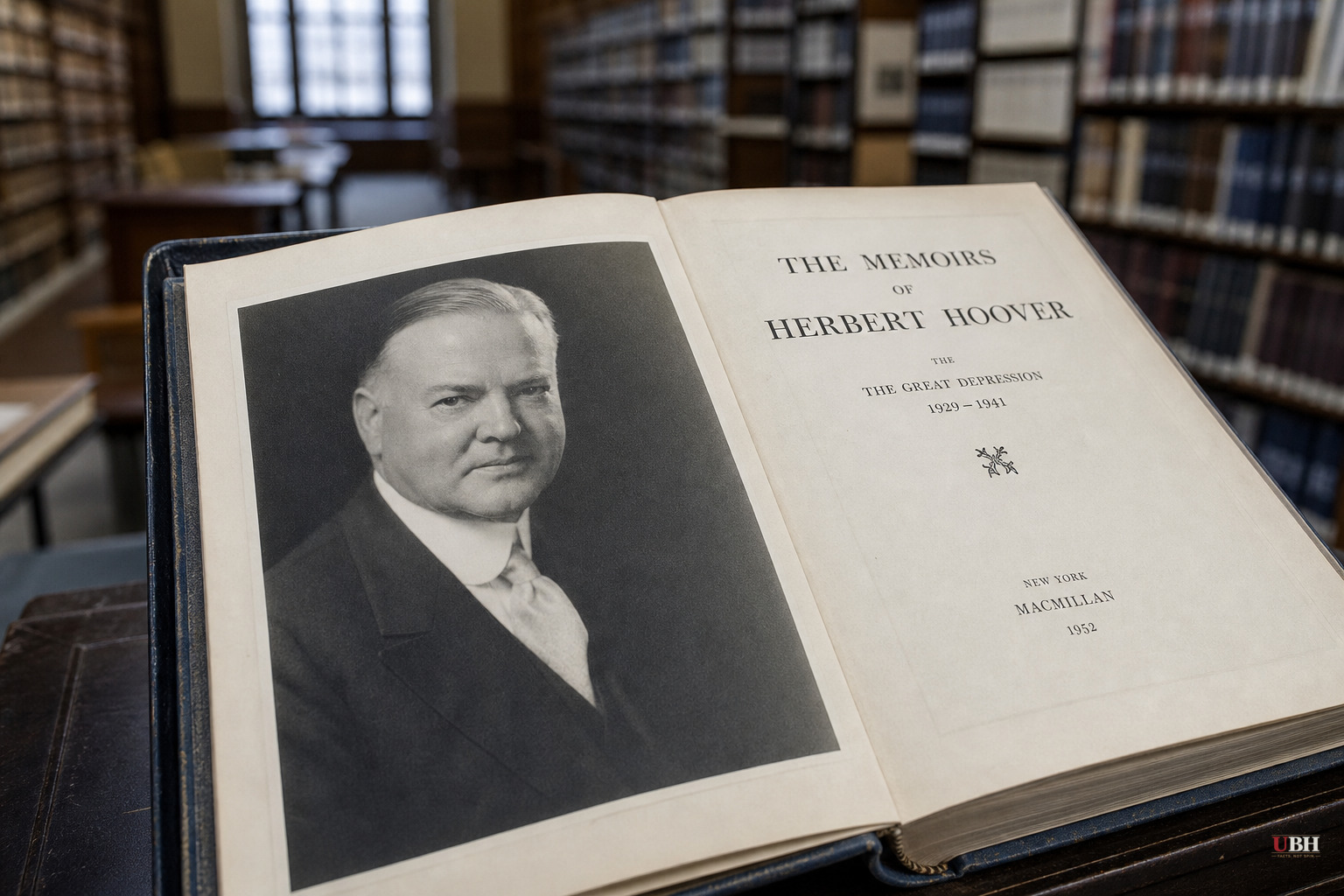
President Trump has been talking about Herbert Hoover, according to NPR, which reported on remarks he made at the G7 summit in France in June.
"I've studied presidents, some good, some bad, some great," Trump said. "Not too many are great and some really bad. We had one just recently. The one president I did not want to be was the late, great Herbert Hoover. I didn't want that and who knows what would have happened. But bad things happen."
Hoover, the Republican president whose name became synonymous with economic collapse after the Great Depression, stuck to the idea that government shouldn't meddle in the economy — a decision many saw as one of the worst political mistakes of the 20th century.
Trump, born in 1946, grew up during a time when Hoover's name served as a cautionary example, according to NPR. Tevi Troy, a presidential historian and former White House aide to George W. Bush, told NPR that Trump's offhand remarks often say more than they seem to.
"Trump often reveals what he's thinking with these comments he makes," Troy said. "They sound like asides, but I think they're indicative of his upbringing. He grew up in a period where Herbert Hoover was a very negative thing to be."
Trump isn't the first Republican to sweat this comparison.
During the 2008 financial crisis, President George W. Bush told congressional leaders in an Oval Office meeting that he wanted to act decisively rather than risk the Hoover label. "We're going to act. I'm not going to be Herbert Hoover," Bush said, according to presidential historian Russell Riley's oral history of the Bush White House, as cited by NPR.
Ronald Reagan faced the same shadow during the 1981-1982 recession, but the comparison faded once the economy rebounded on his watch.
Troy's read is blunt: this is a specifically Republican anxiety. "Any Republican president who gets hit with bad economic times faces the danger of being tagged as Herbert Hoover," he told NPR. "You don't really hear people saying Jimmy Carter was Herbert Hoover. It's constantly something that happens to Republican presidents."
Why that comparison never stuck to Carter the way it stuck to Hoover isn't something NPR's sourcing explains — it's simply the pattern Troy points to.
Why Iran matters to this calculation.
Trump is now navigating an Iran conflict that has run longer than initially predicted, and the war's economic fallout — particularly on gas prices and inflation — is the thing that could turn a foreign policy story into a domestic political liability. NPR's Franco Ordoñez frames this as a central tension for Trump right now: judgment on the battlefield is one thing, judgment on grocery and gas receipts is another. According to NPR, economist Diane Swonk of KPMG says the risks of recession are higher today than before the war but not off the charts, and cautioned against treating today's economy as a replay of Hoover's — noting the economy is structurally different now and policymakers have better tools to prevent that kind of catastrophe.
That framing lines up with a broader pattern in NPR's political coverage. In a separate segment, NPR's Mara Liasson and Ayesha Rascoe discussed how Republicans are trying to tie fringe positions to Democrats ahead of the November midterms, but suggested that strategy may not hold up if economic headwinds keep building.
What's unresolved.
There's no dispute that Trump made these comments, or that he's thinking about his legacy in economic terms. What's genuinely uncertain is whether the Iran war's economic drag becomes severe enough to produce a Hoover-style political collapse, or whether it settles down before November. Inflation and gas price trends over the next several months, not Trump's rhetoric about Hoover, will be the actual test. NPR's reporting captures the psychology driving the White House's search for an endgame, but doesn't establish whether that endgame is close, or whether the economic damage is already locked in.
Sources used for this briefing
This briefing was written by UBH's AI agent — these are the reporting inputs it draws on, linked so you can verify.


