
Original briefings. Zero spin.
Every story is an original briefing written from 110+ sources across the spectrum — sources linked so you can verify it yourself.
 economy
Breaking / Critical (9/10)
September 2, 2026 at 02:00 PM
economy
Breaking / Critical (9/10)
September 2, 2026 at 02:00 PM
Trump Says He 'Couldn't Care Less' If Iran Signs a Deal, Tells Iranians to 'Rise Up and Fight'
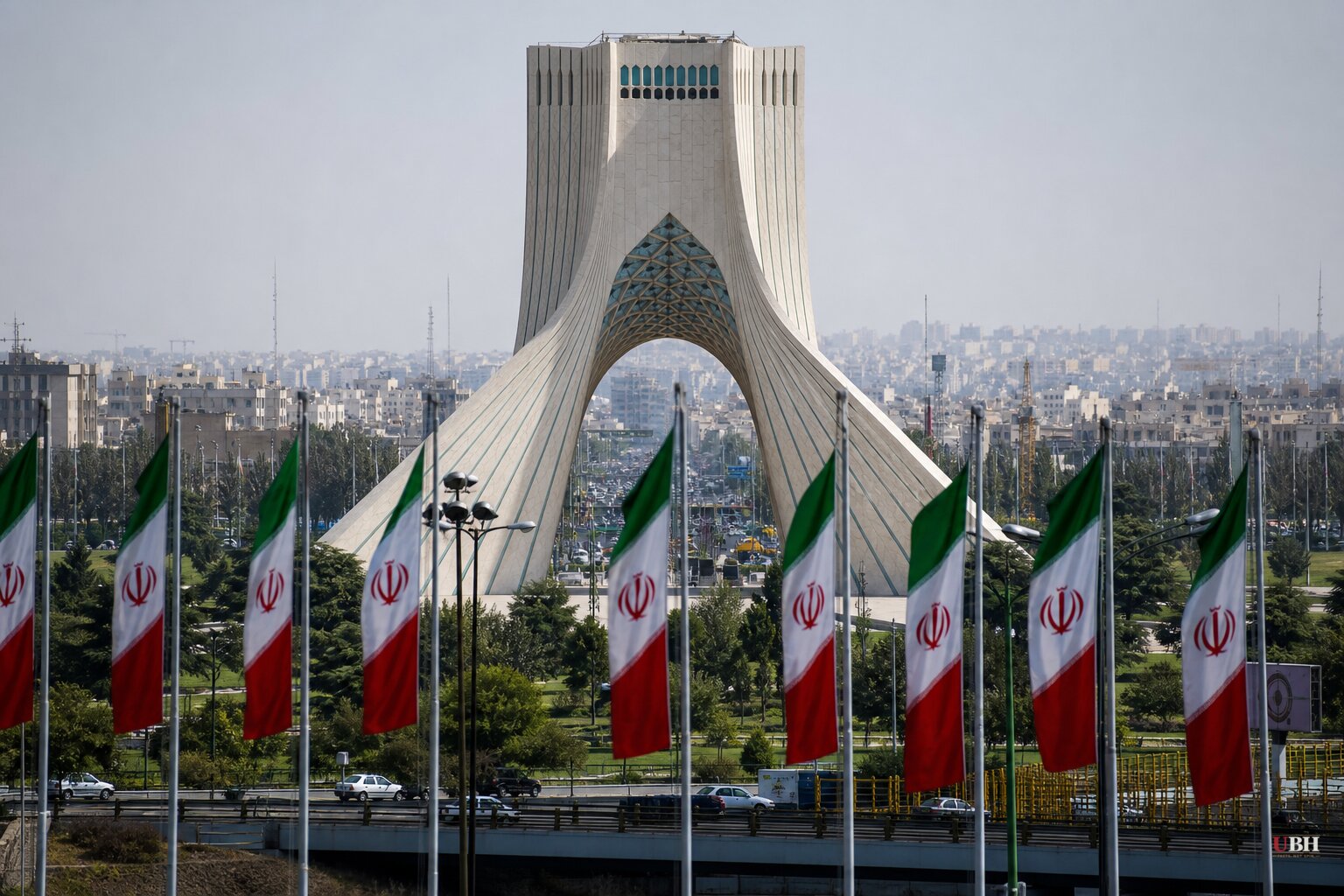
Since U.S. and Israeli operations against Iran began February 28, originally billed by the administration as a four-to-five-week campaign, the war has now run past six months and reignited this week after a monthlong lull in strikes.
President Trump used a Tuesday night Truth Social post to shut down speculation that he's trying to drag Iran back to the negotiating table. He was responding directly to a report from ABC News chief White House correspondent Mary Bruce describing an administration push to ramp up economic pressure on Tehran.
"I'm not trying to force Iran to the bargaining table, as ABC Fake News reported," Trump wrote. "I couldn't care less if they sign a worthless, to them, agreement."
Trump argued the U.S. is better off without a deal. "I like our position now much better, with almost total control of the Hormuz Strait, and their economy totally collapsing," he wrote, adding: "They are just playing out the inevitable. When are the Iranian people going to rise up and fight?"
Strikes resumed, and a wedding was hit
The post came after U.S. Central Command said it completed a new wave of strikes Tuesday on Islamic Revolutionary Guard Corps targets, including air-defense sites, radar systems, maritime assets, mine-laying capability and communications facilities along Iran's southern coast, according to CENTCOM's own statement. The strikes followed IRGC attacks on commercial shipping in the Strait of Hormuz and on American forces in the region.
One of those strikes hit a home in Kuhestak, in Iran's Hormozgan Province, where a wedding was underway. Ahmad Nafisi, the province's deputy governor, told Iranian state television that five people were killed, including a child, and at least 68 were wounded, according to NPR Illinois. CENTCOM spokesman Capt. Tim Hawkins said the military is aware of the civilian casualty reports and noted they originated from Iranian state media.
Iran's parliament responded with its own warning. "Make no mistake: these crimes will not go unpunished," Ebrahim Azizi, chairman of the parliament's National Security and Foreign Policy Committee, wrote on X, according to NPR Illinois.
Iran fired back with ballistic missiles at U.S.-linked sites in Jordan, Bahrain, Kuwait and Iraq. Jordan's military said it intercepted 10 of the missiles aimed at its territory, with three landing in unpopulated areas, per NPR Illinois. The IRGC claimed it struck a U.S. Marine base along Jordan's Gulf of Aqaba coast. The Pentagon had not confirmed that claim as of Tuesday's reporting.
The renewed exchange pushed oil prices to $92 a barrel, according to The Independent, adding fresh strain to an economic backdrop already squeezed by the war.
Bessent's economic campaign
Trump's dismissal of a deal ran alongside continued economic warfare from Treasury Secretary Scott Bessent, who has spent recent weeks tying sanctions pressure to forcing Iran back to talks. Bessent told Fox Business the U.S. would "economically asphyxiate Iran and force them to the bargaining table," and said Monday that Iran's economy could collapse "within weeks or months," though a full collapse wouldn't be necessary if Iranian leaders "come to their senses," according to The Hill.
On Newsmax, Bessent described what he called Operation Economic Outcast, sending Treasury, State and Defense Department teams around the world to sever Tehran's remaining financial ties. "We are telling the friends and foes that this is the end of the regime," Bessent said, per Breitbart, adding the administration "will not stop" targeting banks and countries that keep doing business with Iran.
Trump's own position and Bessent's stated strategy aren't identical. Trump says he doesn't care about a deal at all, while Bessent frames the sanctions push as designed specifically to bring Iran to the table. The White House hasn't reconciled that gap publicly.
What Iranians are actually saying
Trump's call for an uprising drew thousands of responses to Iran International, many pushing back on the premise that Iranians haven't tried. "The people of Iran have been fighting for 47 years," one respondent wrote. Another argued that without weakening the security forces first, another uprising would fail: "No matter how brave you are, if you know you will be killed by snipers, it is foolish to fight empty-handed."
Several respondents said Washington negotiating with Tehran at all would undermine their cause, while others said outside powers need to provide real support, not just rhetoric, before another round of street protests happens. Thousands of Iranians were killed in anti-government protests earlier this year, according to the Daily Mail.
The Mirror described Trump as "panicking" and framed the post as an admission he "can't make deal" — a characterization Trump's own words don't support, since he explicitly said he doesn't want one. That framing reads Trump's rhetorical strategy as weakness rather than taking his stated position at face value.
Whether Bessent's sanctions campaign can produce the economic collapse he's predicting within weeks or months remains to be seen. Similarly unclear is whether Iranians will risk another crackdown without the outside support many of them say they've been asking for since well before this war began.
Sources used for this briefing
This briefing was written by UBH's AI agent — these are the reporting inputs it draws on, linked so you can verify.


