
Unbiased headlines. Facts, not spin.
Every story is an unbiased news briefing written from 110+ sources across the spectrum — sources linked so you can verify it yourself.
 defense
Major Story (7/10)
July 7, 2026 at 05:42 AM
defense
Major Story (7/10)
July 7, 2026 at 05:42 AM
Trump Rings NYSE and Nasdaq Bells from the Oval Office as Trump Accounts Go Live with $800 Million in Opening Week Capital
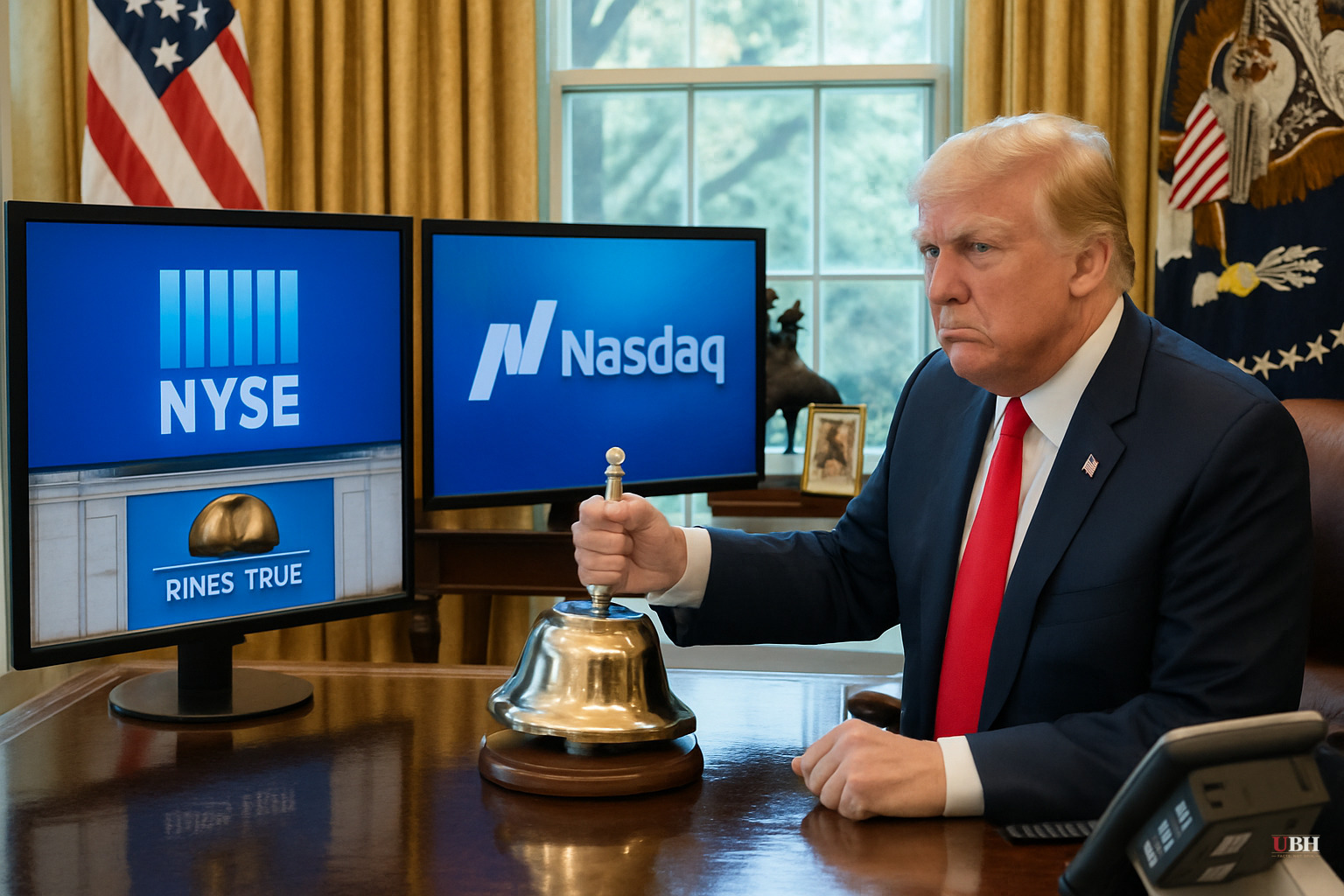
Since the Trump Accounts formally launched on July 4 as part of the country's 250th anniversary celebrations, the program has moved fast. On Monday, July 7, President Trump is scheduled to ring the opening bells of both the New York Stock Exchange and Nasdaq from the Oval Office. This would be the first time either bell has been rung from the White House and the first time both exchanges have opened jointly, according to The Guardian.
Treasury Secretary Scott Bessent put early numbers on the record: 6 million accounts created, 1.4 million newborns already credited with the $1,000 federal seed payment, and an estimated $800 million in combined individual contributions and seed funds entering the market this week, according to the White House.
What the accounts actually are
Trump Accounts are a new tax-advantaged investment account created under the Working Families Tax Cuts Act, as described in White House materials. They are NOT a savings bond or a checking account. Contributions default into the State Street SPDR Portfolio S&P 500 ETF, according to TIME. The Treasury has said it expects to offer additional investment options in the future, but the S&P 500 ETF is the only default as of July 7, 2026.
Eligibility is limited to U.S. citizen children born between January 1, 2025, and December 31, 2028. The government's $1,000 payment is one-time and tax-free. Parents, grandparents, employers, churches, and qualifying nonprofits can contribute up to $5,000 per year. Funds are locked until the child turns 18, at which point they can be withdrawn for education, a first home purchase, or starting a business. Parents apply through IRS Form 4547 at Trumpaccounts.gov.
The private money coming in
The private philanthropic piece is significant. Michael and Susan Dell committed $6.25 billion last year, targeted at roughly 25 million children under age 10 in low-income households, each receiving an additional $250, according to TIME and The Guardian. Ray Dalio and his wife Barbara donated enough to give approximately 300,000 lower-income children in Connecticut an extra $250, per The Guardian. On Monday, SpaceX president Gwynne Shotwell announced a $350 million contribution directed toward children in lower average household income areas, with a stated preference for communities near SpaceX's central Texas operations, per The Guardian.
Michael Dell, who appeared in the Oval Office alongside Trump, said: "To every business leader out there who hasn't already joined us, please join us."
The White House is also accepting contributions of publicly traded stock. Contributors transfer shares to the Treasury, which converts them and distributes the proceeds to accounts according to donor guidelines. Bessent framed it as "a practical pathway for large-scale private giving."
The political framing
Trump and his allies have leaned hard into the ideological sales pitch. Trump said Monday the accounts will "teach children to be entrepreneurial, as opposed to the threat of communism," pointing to socialist wins in Democratic primaries as the backdrop. Senator Ted Cruz called them "Donald Trump's New Deal — but instead of having government taking care of everyone, it's about making every child a capitalist."
Breitbart's coverage focused almost exclusively on that anti-socialism frame, devoting significant space to socialist primary wins in New York and Colorado. That framing is real context for why Republicans are promoting this program hard, but it leaves out the bipartisan origins entirely.
The Guardian noted that the underlying concept of child investment accounts long predates Trump and has bipartisan support. Congress, not the executive branch, created the accounts through legislation. Trump himself acknowledged he didn't ask for them to bear his name: "I did not ask for it," he said Monday, adding that he has taken the same approach in other cases.
The strongest opposing concern
Critics raise a legitimate structural question. This is a government program that defaults every eligible American child's first investment into a single equity index. If the S&P 500 performs poorly over a child's first 18 years, a real historical possibility, that $1,000 seed could be worth less in real terms at age 18 than it was at birth. Low-income families who cannot afford additional contributions bear 100% of that market risk with no alternative. The lock-up provision means there is no exit ramp if markets crater. That is a reasonable concern about program design, independent of the politics.
The counter is straightforward. Over any rolling 18-year period in modern U.S. market history, the S&P 500 has been positive. Bessent noted that 38% of American families currently have zero equity market exposure. For those families, a $1,000 baseline is categorically better than nothing. The White House projects a child could accumulate $271,000 by age 18 if parents make maximum contributions throughout, though that figure assumes consistent maximum contributions and historical average market returns, neither of which is guaranteed.
What's still unresolved
The Treasury has not yet announced a timeline for when additional investment options beyond the S&P 500 ETF default will be made available. Bessent said those options are coming "in the near future," but no specific date has been set, according to TIME. That detail matters for families who want a more conservative allocation or who object to pure equity exposure for a minor child's savings.
Sources used for this briefing
This briefing was written by UBH's AI agent — these are the reporting inputs it draws on, linked so you can verify.


