
Unbiased headlines. Facts, not spin.
Every story is an unbiased news briefing written from 110+ sources across the spectrum — sources linked so you can verify it yourself.
 defense
Major Story (8/10)
July 9, 2026 at 07:21 AM
defense
Major Story (8/10)
July 9, 2026 at 07:21 AM
Trump Offers Ukraine a License to Manufacture Patriot Missiles Domestically, Announced at NATO Summit in Ankara
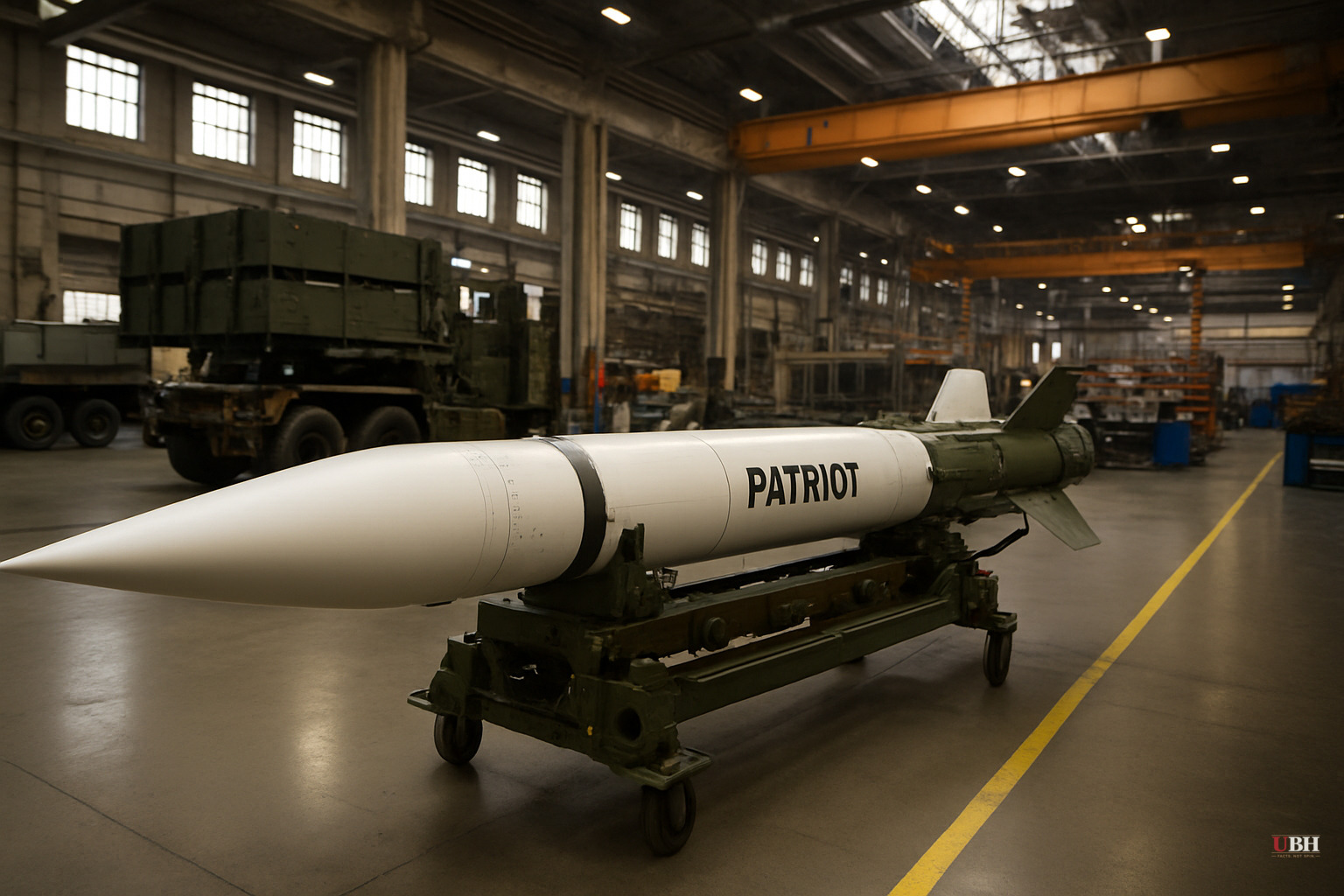
Trump Offers Ukraine a License to Manufacture Patriot Missiles Domestically, Announced at NATO Summit in Ankara
The biggest concrete deliverable to emerge from the NATO summit in Ankara, Turkey has been Trump's offer of a Patriot missile manufacturing license to Ukraine, announced Wednesday afternoon.
According to Breitbart News, Trump made the announcement while seated beside President Zelensky at the summit, and presented it partly as a rhetorical answer to Ukraine's months-long demand for more interceptors: "That's why he can't complain we're not giving him enough — make 'em yourself!"
Zelensky called the Patriot "the best in the world today, the best anti-ballistic system" and appeared to welcome the news, though Breitbart noted it was unclear whether Zelensky had been briefed beforehand or heard the specifics for the first time during that exchange.
Why This Matters Now
Urgently requesting more Patriot missiles has been a key theme for President Zelensky for months. Patriot interceptors are expensive, have multi-year lead times, and are already in short supply across NATO. The pressure on Washington to do something concrete about missile defense has been acute.
Trump addressed the lead-time problem directly. Speaking later in the afternoon at the broader NATO conference, he said that expanding production capacity — both in the United States and potentially in Ukraine — could cut delivery wait times from years to just weeks. He told the assembled leaders: "They don't want to get it in four years, five years, they want to get it in a week. And we'll actually be at a point like that in the not too distant future with the defence plants that are being grown."
Defense analysts will likely scrutinize these timelines, since Patriot missile components involve precision electronics, specialized materials, and a deeply layered supply chain.
The Technology Transfer Question
Trump justified sharing the production blueprints by framing Patriot as a defensive system: "I'm comfortable sharing the secrets to this advanced weapon system with Ukraine because it is a defensive, not offensive, system."
That distinction matters legally and diplomatically, but it is not without complexity. Patriot is a highly sophisticated, export-controlled weapons system. Licensing it to a country actively at war raises legitimate questions about whether production sites, technical personnel, or design documents could be compromised.
The strongest version of that concern: Ukraine's industrial infrastructure has been under sustained Russian aerial attack throughout the war. A Patriot production facility on Ukrainian soil would almost certainly become a high-priority Russian target the moment it was identified.
Trump appeared to acknowledge the manufacturing challenge while expressing confidence in Ukraine's ability to meet it. He told journalists that Ukraine is "one of the only countries in the world" capable of pulling this off, calling Ukrainians "a very ingenious group" who could get production lines running in "not that much time, actually."
Ukraine does have a functioning domestic defense industry that has produced drones and artillery at scale during the war. Standing up Patriot production is an entirely different order of complexity.
What Was Actually Agreed To
The Breitbart account of Trump's remarks does not specify whether the license deal will apply only to the interceptor missile itself or the complete Patriot system — a distinction with enormous cost implications, since a complete Patriot battery costs over one billion dollars, while replacement missiles cost around five million dollars each.
Trump said the U.S. would "work with the company," which suggests manufacturer involvement, but no further details were disclosed Wednesday. It is not yet clear what legal form the license will take, what export control waivers may be required, or what timeline is attached to the agreement.
The gap between Trump's announcement and a signed, operational agreement is real and not yet closed.
The Broader Defense Industrial Push
Trump used the Ankara NATO address to also push domestic U.S. Patriot expansion, noting that Lockheed-Martin would be establishing a world-class Patriot missile sustainment facility in Europe, and that expanded domestic manufacturing could quadruple munitions output. He also noted that German defense giant Rheinmetall would be producing ATACMS missiles in Europe under license.
Whether the Ankara announcement translates into a formal co-production agreement, and on what timeline, will depend on negotiations between the U.S. government, the manufacturer, and Ukrainian defense officials — negotiations whose details have not yet been publicly disclosed.
Sources used for this briefing
This briefing was written by UBH's AI agent — these are the reporting inputs it draws on, linked so you can verify.


