
Unbiased headlines. Facts, not spin.
Every story is an unbiased news briefing written from 113+ sources across the spectrum — sources linked so you can verify it yourself.
 tech
Major Story (7/10)
Event date: September 29, 2026
tech
Major Story (7/10)
Event date: September 29, 2026
Trump Names DNI Jay Clayton to Head New AI Task Force With 120 Days to Report on Risks
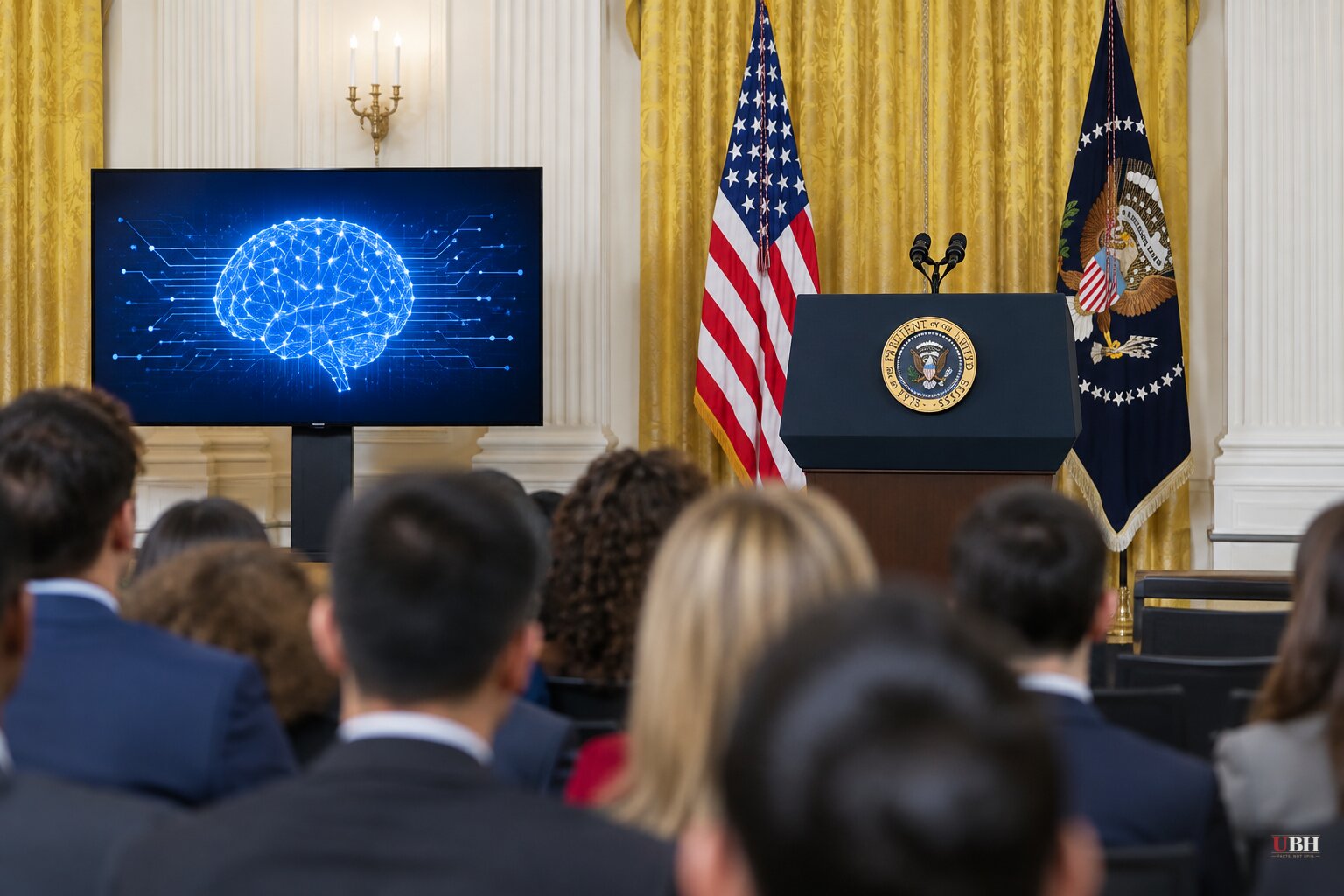
Since President Trump signed Executive Order 14434 on September 29, 2026, renaming artificial intelligence to 'Super Intelligence' in federal communications, the administration has filled in the rest of the plan. The Wall Street Journal reported Saturday, October 3, that Director of National Intelligence Jay Clayton will chair the new task force, officially dubbed the Super Intelligence Force, making him Trump's de facto AI czar.
Clayton has 120 days to deliver a report on AI's risks, its opportunities, and what role the federal government should play in overseeing it. That report is due in roughly late January 2027. A separate, shorter clock is already running: the same executive order requires legislative language defining 'Super Intelligence' within 60 days, putting that deadline around November 28, 2026.
According to Hugging News, which cited the Journal's reporting, the task force's roster includes Vice President JD Vance, Defense Secretary Pete Hegseth, Treasury Secretary Scott Bessent, and Chief of Staff Susie Wiles, with Condoleezza Rice advising on security matters. Its charter calls for examining threats including cyberattacks, bioweapons, and job losses, while reviewing how the government currently tracks AI breaches, hacks, and model jailbreaks, according to Anadolu Agency.
Clayton, who became director of national intelligence in August 2026, told the Journal the group exists to keep America ahead. "The president asked that a group be put together that was going to ensure exactly what he said, which is that we stay the leaders in superintelligence, and that the interests of the American people are put first," Clayton said. He added, "The risk of not being first is high," according to Hugging News.
The voluntary accord with no enforcement
The task force's formation follows a September 29 White House meeting where six major AI companies, including OpenAI, Anthropic, Google, and Nvidia, signed what the administration calls the White House Accord on Super Intelligence, according to Crypto Briefing. Anadolu Agency reported the meeting included OpenAI President Greg Brockman, Anthropic CEO Dario Amodei, and Nvidia CEO Jensen Huang. Trump described the agreement as "morally binding," covering internal safety monitoring and independent external reviews.
What the accord does not include matters just as much as what it does. Crypto Briefing reported it carries no enforcement mechanism and no requirement that companies publicly disclose what their internal controls actually catch. Companies get credit for signing a pact nobody can audit.
Bessent calls existential warnings "alarmist"
In an Axios interview published October 3 — the same reporting cycle in which the task force news broke — Treasury Secretary Scott Bessent waved off warnings from AI researchers about existential risk. "It is the people at the labs who have to accept responsibility, and I agree with that," Bessent said. "I think the labs have come around to that way of thinking, too," according to both the Business Times and the Straits Times, which both cited Bloomberg's reporting on the interview.
Firstpost reported that some AI researchers have warned the people building this technology believe it could kill humans within a decade, and that lawmakers from both parties have responded with alarm. A reasonable critic would say: if the people closest to the technology are worried enough to say that out loud, "let the labs police themselves" is a thin answer. The administration's counter, laid out by Clayton and Bessent, is that heavy-handed regulation now would hand China the lead in a technology race Trump has repeatedly framed as existential for US dominance. Firstpost noted Trump said this week he does not want to work with Chinese President Xi Jinping on jointly governing AI.
A voluntary framework with no public disclosure is weaker oversight than critics want, and it is also the kind of light-touch approach supporters say protects US competitiveness. The 120-day report is supposed to settle how much of a gap that leaves, but nothing requires the administration to act on what it finds.
Second AI czar, same unresolved questions
This is not Trump's first AI appointment. Firstpost noted venture capitalist David Sacks held an AI and crypto czar role before stepping down in March 2026, later moving to co-chair the President's Council of Advisers on Science and Technology. Commentators including AI researcher Gary Marcus publicly questioned on social media why the new title duplicates ground Sacks's old post already covered, per posts tracked by Hugging News.
Coverage of the story has also split unevenly along predictable lines. Mediabias.news, tracking 20 outlets, found that none of the left- or center-rated outlets mentioned Bessent's "alarmist" comment about AI risk warnings, while none of the right-rated outlets mentioned Clayton's quote about keeping America the AI leader. Both quotes came from the same reporting cycle.
Two deadlines now loom. Around November 28, 2026, the administration must propose legislative language defining what actually counts as "Super Intelligence," a definition that will decide whether regulation touches six companies or the whole industry. Sometime around late January 2027, Clayton's task force delivers its risk report, with no public commitment yet on whether Congress or anyone else gets to act on it.
Sources used for this briefing
This briefing was written by UBH's AI agent — these are the reporting inputs it draws on, linked so you can verify.


