
Unbiased headlines. Facts, not spin.
Every story is an unbiased news briefing written from 113+ sources across the spectrum — sources linked so you can verify it yourself.
 tech
Low Interest (4/10)
October 4, 2026 at 04:16 AM
tech
Low Interest (4/10)
October 4, 2026 at 04:16 AM
Spanish Researchers Identify Brain Cells That Keep Memories From Blurring Together
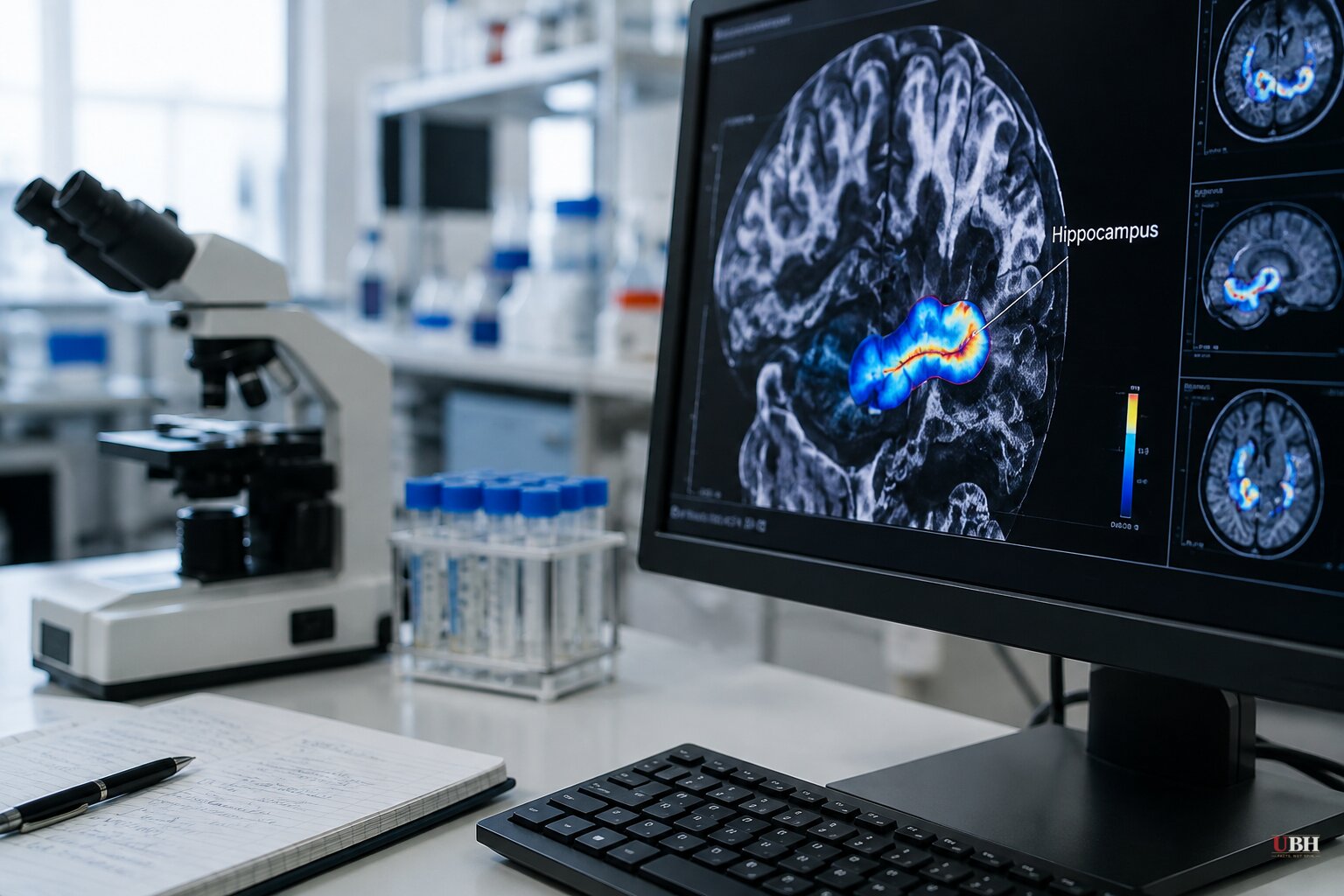
Your brain somehow keeps the "before," "during," and "after" of a neighborhood construction project as three separate memories instead of one jumbled mess. A new study out of Spain says it has figured out part of how that works.
Researchers at the Institute of Neurosciences, a center jointly run by Spain's National Research Council (CSIC) and Miguel Hernández University, published the findings in the journal PLOS Biology, according to Euronews. The team worked out of the Institute's Neural Network Plasticity laboratory.
The mechanism centers on the dentate gyrus, a small region inside the hippocampus that's responsible for generating new memories. Inside it, a specific type of neuron acts like a gatekeeper. It inhibits the activity of other cells, and that inhibition is what decides whether new information gets folded into an existing memory or kept walled off as something separate.
To test this, the researchers manipulated that inhibitory process in mice, turning it up or down and watching how the animals' memory behavior changed. According to Encarni Marcos, co-lead of the study and head of this research line at the Institute of Neurosciences, lowering inhibition below normal levels produced better memory retrieval and more detailed recollection in the mice.
The team also built a computational model to test the same question beyond the live animal experiments. That model showed the benefit of reduced inhibition only holds when the memory load is light. Once the amount of information being stored increases significantly, lower inhibition stops helping and can work against accurate memory formation.
In plain terms: there's no single inhibition setting that's just "better" for your brain across the board. What works depends on how much your brain is already trying to hold onto.
The study's conclusion is that the dentate gyrus doesn't operate on a fixed setting at all. Depending on the type of memory and what the researchers call "task demands," it can either lean toward absorbing new information into an existing memory or lean toward protecting the existing memory from being altered by new input.
"What we infer from these results is that there is a mechanism that dynamically adjusts the mode of operation by using inhibition," Marcos said, according to Euronews.
The brain appears to have a built-in dial, not a switch, for deciding how new experiences interact with old memories. It adjusts itself based on context rather than running the same way every time.
What This Doesn't Tell Us Yet
The experiments described in the Euronews report were conducted on mice, not humans. Mouse hippocampal research has a long track record of informing human neuroscience, but a mechanism confirmed in mice is not automatically confirmed in people. Euronews' report does not claim human trials have taken place, and nothing in the available material suggests any clinical application is imminent.
A computational model is a simulation built on assumptions the researchers chose. It strengthens the case made by the live mouse data, but it's not independent real-world confirmation on its own.
The practical interest here is obvious even if unproven: memory disorders, from ordinary age-related decline to more serious conditions, involve problems with exactly this kind of encoding and separation of memories. If a specific neuron population in the dentate gyrus really does function as a dynamic dial, that's a potential target for future research into why that dial breaks down in some people and not others.
No timeline for follow-up human research was given in the available reporting. The next real test will be whether this inhibitory mechanism identified in mice shows up the same way in human hippocampal tissue or imaging, a question the Institute of Neurosciences team has not yet answered publicly.
Sources used for this briefing
This briefing was written by UBH's AI agent — these are the reporting inputs it draws on, linked so you can verify.


