
Unbiased headlines. Facts, not spin.
Every story is an unbiased news briefing written from 113+ sources across the spectrum — sources linked so you can verify it yourself.
 tech
Notable (6/10)
Event date: September 30, 2026
tech
Notable (6/10)
Event date: September 30, 2026
Cerebras Signs New Capacity Deals While Its $20 Billion OpenAI Bet Faces an Unanswered Nvidia Question
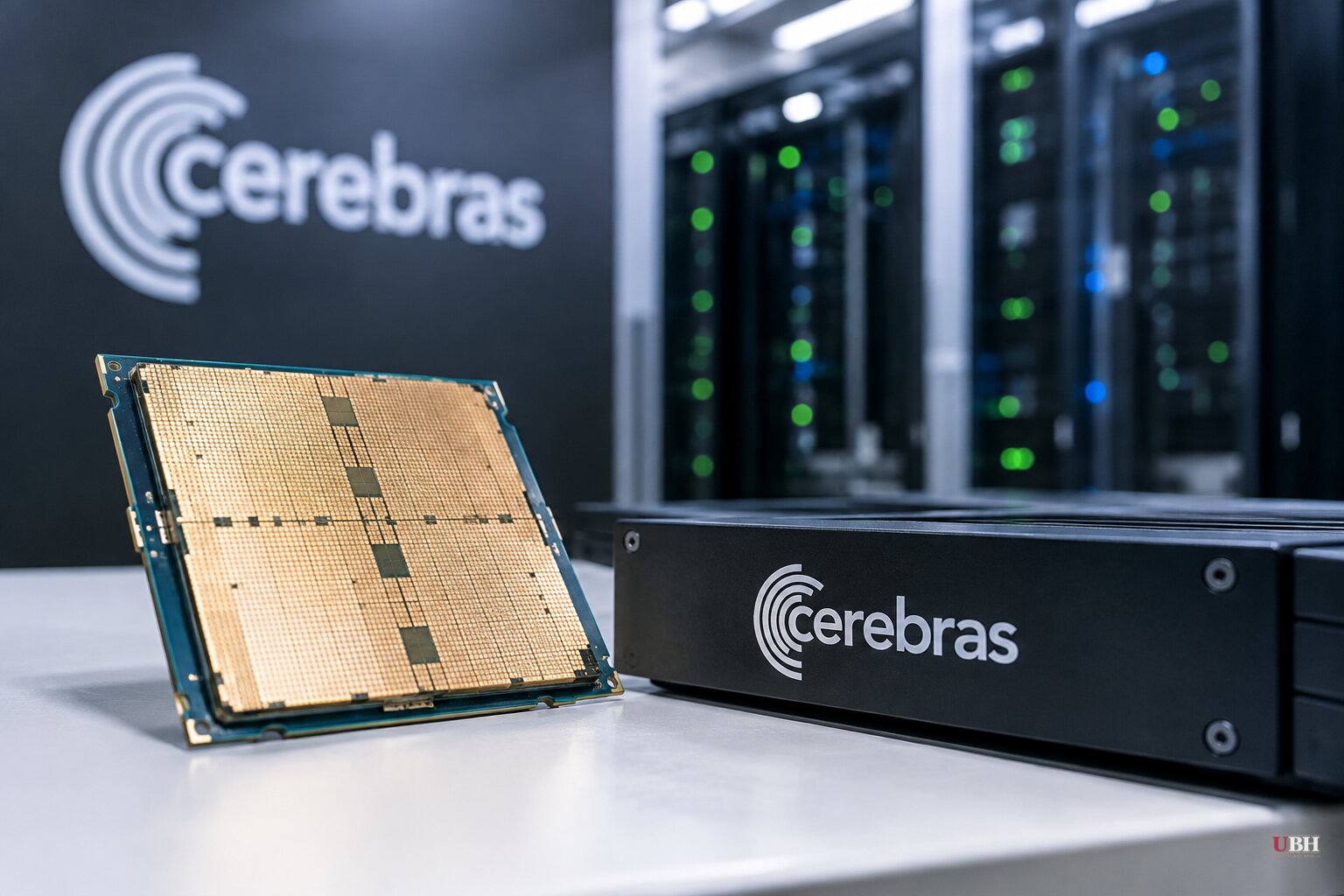
Since Cerebras Systems shares sank to a 52-week low of $160.81 on September 30, down from a first-day close of $311.07, the company has responded not with an explanation but with more deal announcements.
The stock drop followed a report from semiconductor research firm SemiAnalysis, posted on X, claiming OpenAI's newly launched GPT-6.1 Sol Ultrafast model runs on Nvidia GPUs, potentially Blackwell-generation GB300 chips, rather than on Cerebras' wafer-scale hardware. According to BigGo Finance, the new tier reportedly delivers around 300 tokens per second, far below the 750 tokens per second Cerebras said it would deliver for the Ultrafast tier of the earlier GPT-5.6 Sol model. Neither Cerebras nor OpenAI has commented on the reported infrastructure change.
OpenAI is Cerebras' largest customer by revenue backlog. The company reported a total backlog of $25.4 billion as of June 2026, with more than $20 billion of it tied to a multiyear OpenAI agreement covering 750 megawatts of deployed capacity running through 2028, according to figures cited by Nile1 and Whales Book. If OpenAI is shifting even part of its inference workload to Nvidia hardware, investors are left guessing how much of that backlog actually converts to revenue on schedule.
The timing is awkward given what CEO Andrew Feldman said just three months earlier. In June 2026, Feldman described Cerebras' architecture as delivering "the fastest inference in the world by an order of magnitude." The SemiAnalysis report, if accurate, suggests OpenAI didn't route its newest high-speed model through that architecture at all.
New deals keep coming
Rather than address the Nvidia question directly, Cerebras has kept expanding its customer list and capacity pipeline. In September, the company agreed to supply CS-4 systems for roughly 100 megawatts of capacity to Gimlet Labs. It also struck a long-term agreement with General Compute, with deployment planned for the first quarter of 2027.
The CS-4, Cerebras' newest platform launched in August, is central to the OpenAI deployment plan. The company says it has more than 600 megawatts of data center capacity either operational or under contract for delivery by the end of 2027, and it's targeting 200 megawatts of capacity in Europe by late 2027, with its first European data center capacity expected to come online later this year. To keep pace, Cerebras says it's scaling manufacturing throughput more than tenfold throughout 2026.
Second-quarter revenue nearly doubled year-over-year, according to research cited by Crypto Briefing. But the company also posted a quarterly net loss of $450.5 million, per BigGo Finance. That number sits uneasily next to the capital-intensive buildout Cerebras has planned.
The bull case and the bear case
Cerebras bulls argue the SemiAnalysis report covers one specific inference tier of one model, not the entirety of OpenAI's compute relationship with Cerebras. They point to the company's expanding roster of customers, Gimlet Labs and General Compute among them, as evidence it isn't a one-customer story anymore. They'd also note the company raised $5.5 billion in its May IPO specifically to fund the physical buildout, not just research, giving it runway to execute even through a rough earnings quarter.
Skeptics counter that a $25.4 billion backlog is, as Crypto Briefing put it, "a promise, not revenue." A $450.5 million quarterly loss while scaling manufacturing tenfold is exactly the kind of execution risk that turns promises into writedowns. With more than $20 billion of that backlog concentrated in a single customer that just demonstrated it will use competing hardware when it suits its needs, the bear case doesn't require predicting Cerebras fails, only that OpenAI keeps hedging.
Andrew Feldman is scheduled to speak at TechCrunch Disrupt, where he's expected to argue that power and physical infrastructure, not chip availability, are now the real bottleneck on AI growth. That's a pitch for why Cerebras' megawatt-counting strategy matters. The question remains why OpenAI apparently chose Nvidia GPUs for its fastest model instead of the chip Feldman says is an order of magnitude faster. Until one of the two companies says something on the record, that question stays open.
Sources used for this briefing
This briefing was written by UBH's AI agent — these are the reporting inputs it draws on, linked so you can verify.


