
Unbiased headlines. Facts, not spin.
Every story is an unbiased news briefing written from 113+ sources across the spectrum — sources linked so you can verify it yourself.
 tech
Notable (5/10)
Event date: September 30, 2026
tech
Notable (5/10)
Event date: September 30, 2026
MetaMask Ethereum Staking Breach Diverts 0.36 ETH, Triggers Exodus of Up to 523,000 ETH From Validators
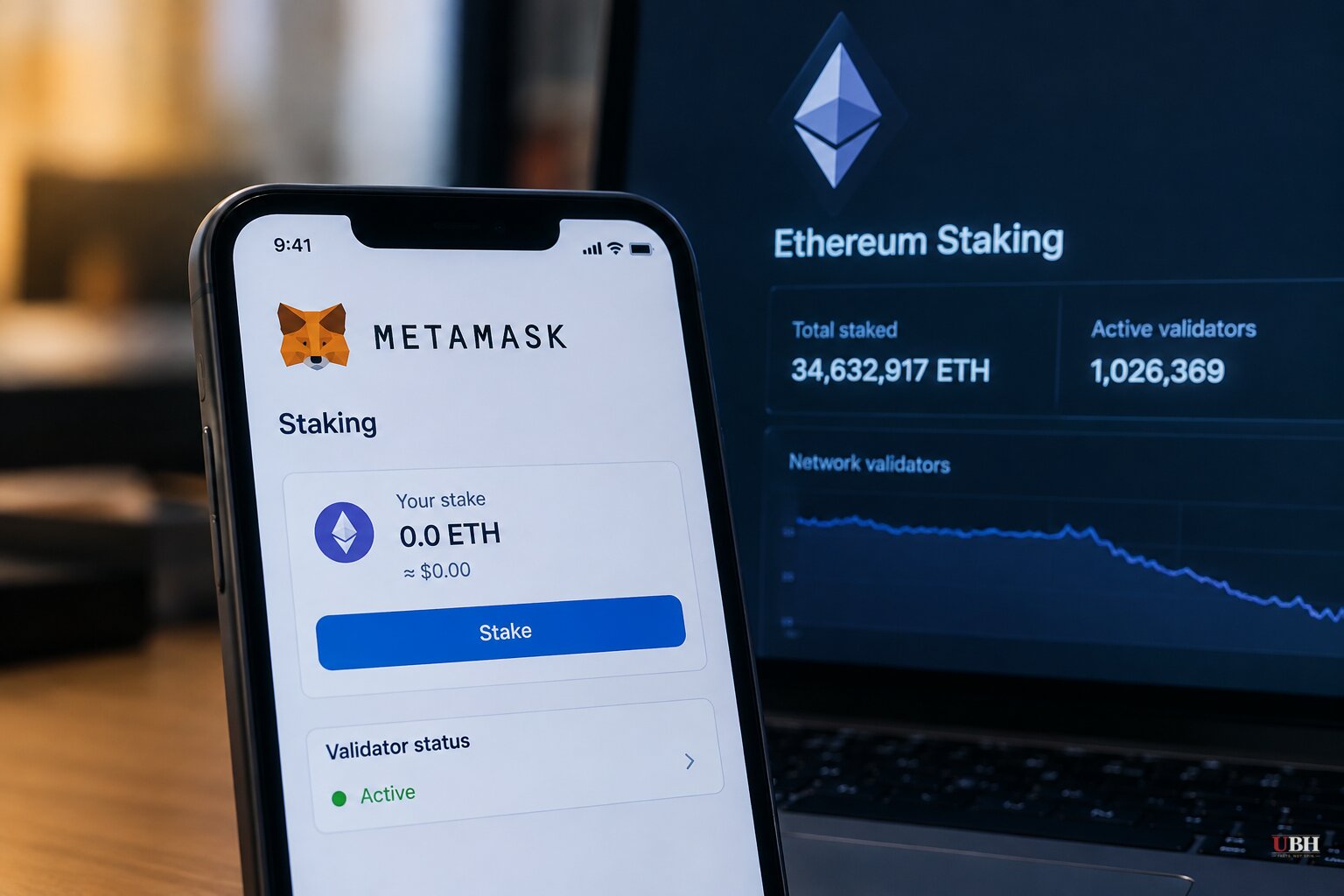
MetaMask disclosed on September 30, 2026 that part of its staking infrastructure had been compromised. The company said block rewards of about 0.36 ETH, which at roughly $2,695 per ether worked out to just under a thousand dollars, were diverted across 18 blocks. Security researcher Kaden Fee is credited with first flagging the redirection, according to Crypto Ticker.
MetaMask said it found no evidence that user wallets or sensitive data were affected. The company has not disclosed how the breach happened, which systems were hit, or whether signing keys were touched. Without a named attack vector, nobody outside MetaMask can independently verify how contained the problem actually is.
What MetaMask Is Doing About It
Rather than freeze anything, MetaMask began exiting validators tied to its noncustodial staking service. Estimates circulating in coverage from Crypto Ticker, Crypto Briefing, and the Bitcoin Foundation put the number at approximately 17,000 validators holding roughly 523,000 ETH. Outlets are careful to label this an estimate, not a confirmed figure from MetaMask itself, and none of the sources attach a current dollar valuation to that ETH total.
Lido, the staking protocol hosting most of the affected validators, confirmed on its governance forum that MetaMask Staking, the business built on former Consensys Staking infrastructure, began unstaking validators following the breach. Lido says it expects the last of those validators to reach exited status by October 7, 2026.
Reaching exited status is not the same as getting the ETH back. Lido estimates the full cycle, exit, withdrawal, and eventual re-entry for stakers who want back in, could take up to roughly 45 days, driven largely by Ethereum's backed-up validator entry queue.
No Slashing, But Not Free
Lido has told stETH holders no action is required on their part. The protocol says it has not recorded slashing, the harshest validator penalty, tied to this incident. Lido pointed to its decentralized node operator structure, which has grown to over 600 participants, and an emergency fund holding more than 6,750 stETH as backstops.
That does not mean zero cost. Lido acknowledged affected validators may forgo staking rewards during the exit window, and any validators that fail to exit on schedule face downtime penalties. Aave founder Stani Kulechov said he was monitoring the situation and confirmed Aave's markets had not been affected and continued to operate normally, according to Cryptonomist and the Bitcoin Foundation.
The central noncustodial distinction MetaMask and Lido both lean on is this: MetaMask signs validator duties but never held withdrawal keys for client stake. If that structure holds as described, the operator cannot move client ETH even in a worst case. That is a real distinction between an infrastructure failure and a theft of user funds, and so far no outlet has reported confirmed losses of staked ETH itself, only the roughly 0.36 ETH in diverted block rewards.
The Queue Numbers Don't Quite Match
Crypto Briefing reported the Ethereum validator exit queue hit approximately 850,000 ETH by October 2, a 392% jump since the start of the month, with MetaMask's roughly 523,000 ETH making up the bulk of it. AMBCrypto, citing separate data, put the exit queue at 773,447 ETH, describing it as the highest level since the start of 2026. The two figures come from different snapshots and sources, and neither article reconciles the gap, so both numbers should be read as directional rather than exact.
What both agree on is that it is the largest validator exit queue Ethereum has seen this year, with estimated wait times near 14.77 days as of October 2, per Crypto Briefing. Total staked ETH sits around 43.6 million across roughly 878,000 active validators, meaning even the larger 850,000 ETH figure represents under 2% of all staked supply.
Market Backdrop Is Shaky Regardless
The breach landed in a market already showing cracks. Ethereum posted a 70%-plus gain in the third quarter, its best Q3 on record, according to AMBCrypto. But Santiment data cited by AMBCrypto shows bullish-to-bearish social sentiment dropped to 0.89, the lowest since June 7, and Binance's weekly taker buy/sell ratio fell to 0.95, a four-month low.
Ethereum co-founder Joseph Lubin moved another 133,298 ETH, worth over $356 million, to a new wallet, AMBCrypto reported, adding to uncertainty without any stated reason disclosed publicly. Ethereum ETFs also recorded a single-day net outflow of 5,171 ETH, about $13.89 million. ETH itself traded in a tight band between $2,686 and $2,725 from September 30 to October 2, per Crypto Briefing, suggesting the exit queue has not yet translated into forced selling pressure.
The key remaining question is whether MetaMask releases any technical detail on the breach once its investigation wraps, or whether, like the September 30 disclosure, the public gets a precaution and a deadline with no named vulnerability attached.
Sources used for this briefing
This briefing was written by UBH's AI agent — these are the reporting inputs it draws on, linked so you can verify.


