
Unbiased headlines. Facts, not spin.
Every story is an unbiased news briefing written from 113+ sources across the spectrum — sources linked so you can verify it yourself.
 tech
Notable (5/10)
Event date: September 3, 2026
tech
Notable (5/10)
Event date: September 3, 2026
Tesla's Cybercab Grows to 169 Vehicles in Texas a Month After Austin Launch, Still Nowhere Near Waymo
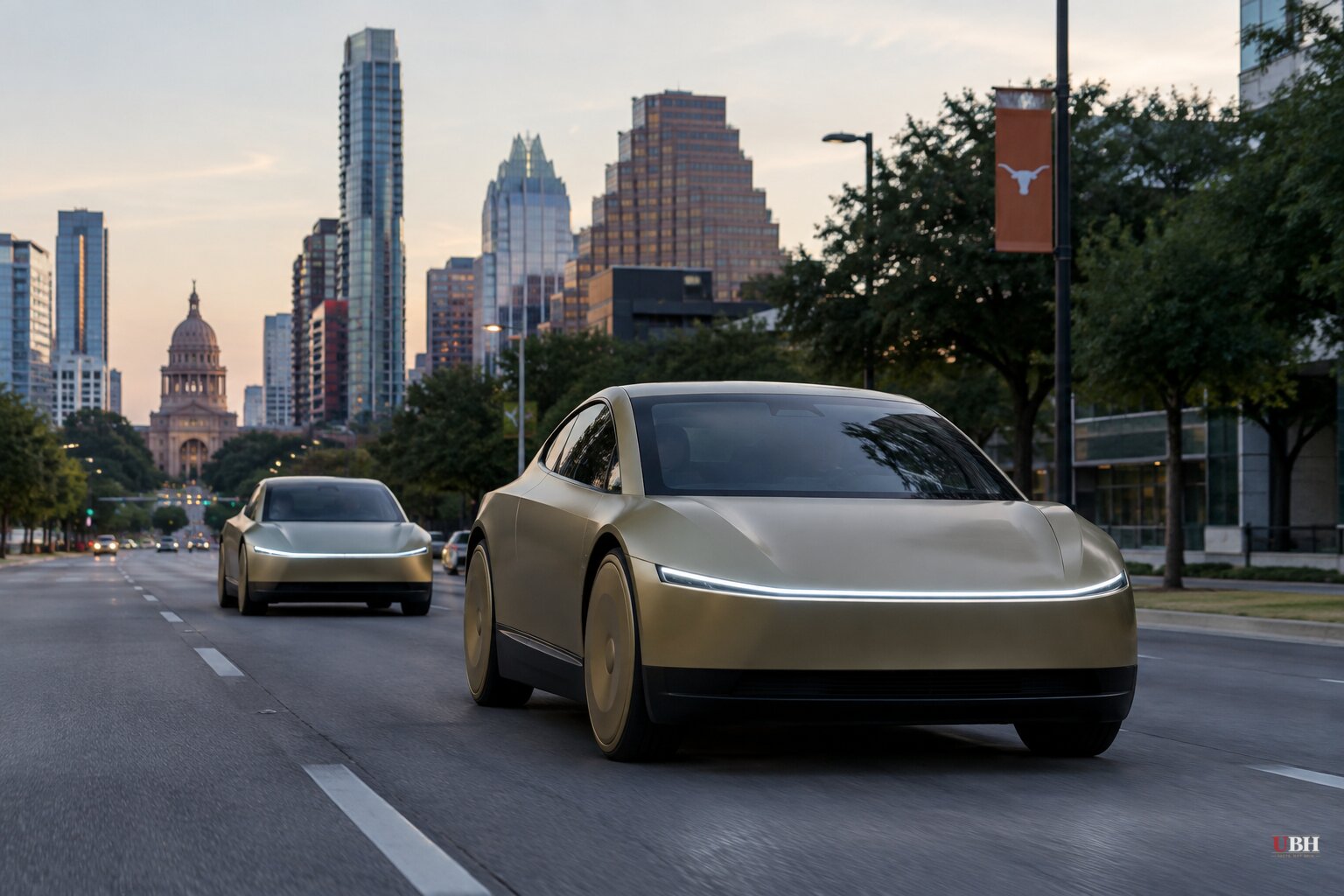
Tesla's Cybercab has been running paid, driverless trips in Austin since September 3, 2026. One month in, the numbers show growth, but not the kind of scale Elon Musk has promised investors.
According to Texas Department of Motor Vehicles records reported by CNBC, Tesla had 169 Cybercabs authorized for commercial use as of October 2, up from 45 at launch. That's nearly a fourfold increase in a month. It's also still just one city.
The Cybercab is a two-seat, bronze-colored vehicle with no steering wheel, no pedals, no rearview or sideview mirrors, and no exterior door handles. Riders get in through outward-swinging butterfly doors and use a large interior touchscreen for media controls.
Riders Say the Ride Is Smooth. The Logistics Are Not.
Ethan McKanna, a 20-year-old Texas A&M computer science student and former Tesla intern who runs RobotaxiTracker.com, told CNBC he's taken about 30 Cybercab rides. He called the drive itself "very smooth" with a comfortable private cabin, but said pickup and drop-off accuracy "was not yet refined."
McKanna said wait times during the initial rollout often topped 45 minutes, though they've come down as demand leveled out. He also wasn't a fan of the butterfly doors, which he said are less convenient than sliding or conventional doors. He compared Tesla's operation unfavorably to Waymo's, noting Waymo has "more mature" 24/7 service and better support after a longer track record in the city.
Other paying passengers posted videos online describing similar frustrations: wrong pickup spots, doors that wouldn't shut properly, trunks that didn't latch. These are basic trip-execution problems, not abstract debates about self-driving software.
Federal Regulators Are Watching
The National Highway Traffic Safety Administration opened an audit query into the Cybercab after launch to examine compliance with federal safety standards, according to Super Power Daily, which cited an NHTSA spokesperson confirming Tesla received an extension past its original September 30 deadline to answer the agency's questions.
No significant safety incidents or collisions involving a Cybercab have been reported in Austin since the commercial launch began, CNBC reported.
Still, Austin Fire Captain Matt McElearney raised a concern about emergency response. He told CNBC that while Tesla gave first responders detailed emergency guidelines and training on both the Cybercab and the Model Y Robotaxi, that instruction doesn't go far enough. McElearney wants regulation requiring an alternate way for police and firefighters to move, steer, or shut down a robotaxi with no manual controls in an emergency. He also called for ongoing safety testing throughout a vehicle's life, since software updates can change how it behaves on the road.
A car with no wheel and no pedals raises obvious questions about what happens when something goes wrong and a human needs to intervene fast. Tesla did not immediately respond to CNBC's request for comment on McElearney's remarks.
Tesla Is Still Far Behind Waymo
Alphabet's Waymo isn't slowing down while Tesla works out the kinks. Waymo operates in 15 U.S. markets with 15 more planned, plus announced international launches in London, Tokyo, and Munich, according to the company's website.
In Texas alone, Waymo had 1,154 autonomous vehicles authorized for commercial use as of October 2, including 359 of its newer Ojai models with sliding doors and a lower step-in height. Nationally, Waymo is running more than 4,000 driverless vehicles, completing over 500,000 paid rides a week, and has logged 270 million fully autonomous miles, per the company's figures cited by CNBC.
Tesla's robotaxi fleet in Texas isn't limited to Cybercabs. It also includes 420 Model Y vehicles running Tesla's automated driving system, which aren't available for individual purchase. But outside of Texas, Tesla still hasn't secured permits to run driverless vehicles on California public roads, a market it will eventually need if it wants to compete nationally.
The Bigger Financial Picture
Tesla's robotaxi push matters because the core car business isn't carrying the stock anymore. Tesla shares are down 18% in 2026, the only megacap tech stock in negative territory this year, according to CNBC.
The company did beat expectations on third-quarter vehicle deliveries, announced Friday, which lifted shares nearly 5%. But deliveries still fell 2% year-over-year, continuing a stretch of declining automotive revenue as Chinese EV makers like BYD and Xiaomi undercut Tesla on price in Europe and Asia.
Musk has told investors the robotaxi business could eventually be worth more than Tesla's entire car division. That's a massive bet riding on a service that, one month in, is authorized for 169 vehicles in a single Texas city while a competitor runs over 4,000 nationwide. Whether Tesla gets state approval to expand beyond Austin, and whether NHTSA's safety review turns up anything beyond the door and trunk complaints already public, are the two things worth watching next.
Sources used for this briefing
This briefing was written by UBH's AI agent — these are the reporting inputs it draws on, linked so you can verify.


