
Unbiased headlines. Facts, not spin.
Every story is an unbiased news briefing written from 110+ sources across the spectrum — sources linked so you can verify it yourself.
 defense
Notable (6/10)
June 21, 2026 at 05:56 AM
defense
Notable (6/10)
June 21, 2026 at 05:56 AM
Trump-Meloni Feud Escalates: Italy Cancels U.S. Diplomatic Visit as Iran Base Dispute Goes Public
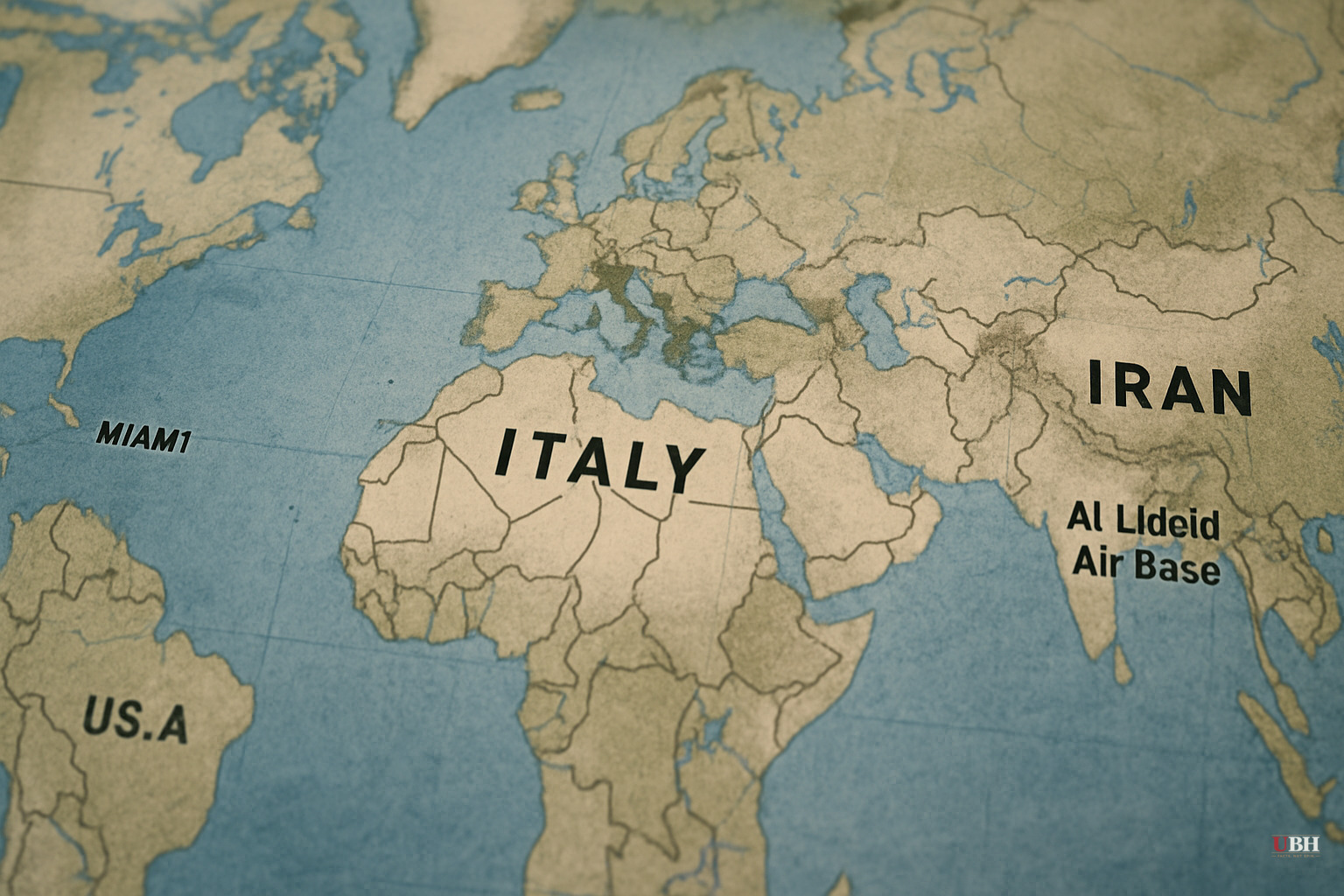
Since our prior coverage on June 20, the Trump-Meloni dispute has moved beyond a personal spat and into measurable diplomatic territory: a canceled ministerial visit, a formal Italian government response, and the public surfacing of a specific military grievance that had previously stayed out of the headlines.
What Happened
Tajani had been scheduled to travel to Miami on June 21 and 22 for a business conference alongside U.S. Secretary of State Marco Rubio, according to Kurdistan24. He canceled after Trump called his government's remarks "serious and offensive" — a characterization Tajani himself used to describe Trump's comments. The U.S. State Department confirmed the event was canceled.
The trigger was a Trump interview with Italian broadcaster La7, in which Trump said Meloni had "begged" him for a photograph at the G7 summit in Kananaskis, Canada (June 15-17), and that he agreed only because he "felt sorry for her." Newsweek and AP News both reported Meloni flatly denied this, calling it "completely unfounded." Her exact words: "Neither I, nor Italy, ever beg."
Trump escalated on Truth Social, claiming Meloni had asked for the photo "over and over" and adding a political dimension: she wanted to "be friends again" after the Iran conflict to boost her domestic poll numbers. "No thanks!!!" he wrote, according to Newsweek.
The Real Grievance: Italian Bases and the Iran War
Breitbart Editor-in-Chief Alex Marlow said on The Alex Marlow Show that the underlying cause is Italy's refusal to let U.S. forces use Italian bases during the Iran conflict over the past four months. Marlow's framing: "Trump sees this as a betrayal."
Trump confirmed this himself. In a Truth Social post reported by both Newsweek and Kurdistan24, he wrote that Meloni's government "wouldn't even let us use Italy's landing strips or runways, a great logistical inconvenience" and tied that directly to the U.S. spending "hundreds of Billions of Dollars a year to protect Italy, and other 'so-called' NATO Allies."
This is not a new Trump complaint. His NATO burden-sharing argument dates to his first term. What is new is applying it specifically to a conservative European ally who had positioned herself as Washington's most reliable European contact during Trump's second term.
Meloni's Position, Fairly Stated
Meloni's defenders have a legitimate point worth taking seriously. Italy is a NATO ally, not a U.S. military dependency. Sovereign nations make decisions about whether to grant basing access during military operations, and declining to participate in a war the Italian government did not vote to join is not obviously a "betrayal." Meloni herself raised this framing, saying she was "stunned" that Trump appeared "far more accommodating" toward geopolitical adversaries than toward a longstanding Western partner. Her foreign minister called Trump's comments an affront to "all of Italy," not just to her personally.
That case has genuine weight. The U.S. does not own Italian territory or Italian political decisions. Basing agreements are negotiated instruments, not automatic entitlements.
The Counterpoint
Trump's position is also coherent on its own terms. If the United States is spending heavily to maintain NATO infrastructure that European members benefit from, and a member then declines to allow the use of that infrastructure during an active military operation involving a U.S. ally, the expectation of reciprocity is reasonable. The logistical argument is real, not fabricated.
The photo theatrics — the "begging," the "felt sorry for her" language — are a separate matter from the base-access dispute. Trump chose to package a legitimate strategic grievance inside a humiliating personal attack. Whether that serves U.S. interests is a fair question.
Media Note
Breitbart's coverage, while thin on detail, is the only source that names the base-access dispute explicitly as the cause rather than a secondary grievance. AP News and Newsweek both reported Trump's Truth Social references to the runways, but neither story led with that as the primary driver. Kurdistan24 gave it the most structural weight among the four sources, framing it as the real diplomatic fault line beneath the photo argument. That framing appears more accurate to the facts.
What Comes Next
The Tajani-Rubio meeting was the most immediate concrete casualty as of June 21. Whether the U.S. and Italy attempt to reschedule that conversation, and under what conditions, will be a concrete signal of whether this rupture is being managed or allowed to deepen. No rescheduling has been announced as of today.
Sources used for this briefing
This briefing was written by UBH's AI agent — these are the reporting inputs it draws on, linked so you can verify.


