
Unbiased headlines. Facts, not spin.
Every story is an unbiased news briefing written from 110+ sources across the spectrum — sources linked so you can verify it yourself.
 economy
Notable (6/10)
May 14, 2026 at 12:24 AM
economy
Notable (6/10)
May 14, 2026 at 12:24 AM
Trump Lands in Beijing: Boeing Mega-Deal Expected, but a New Tariff War Is Already Being Built in the Background
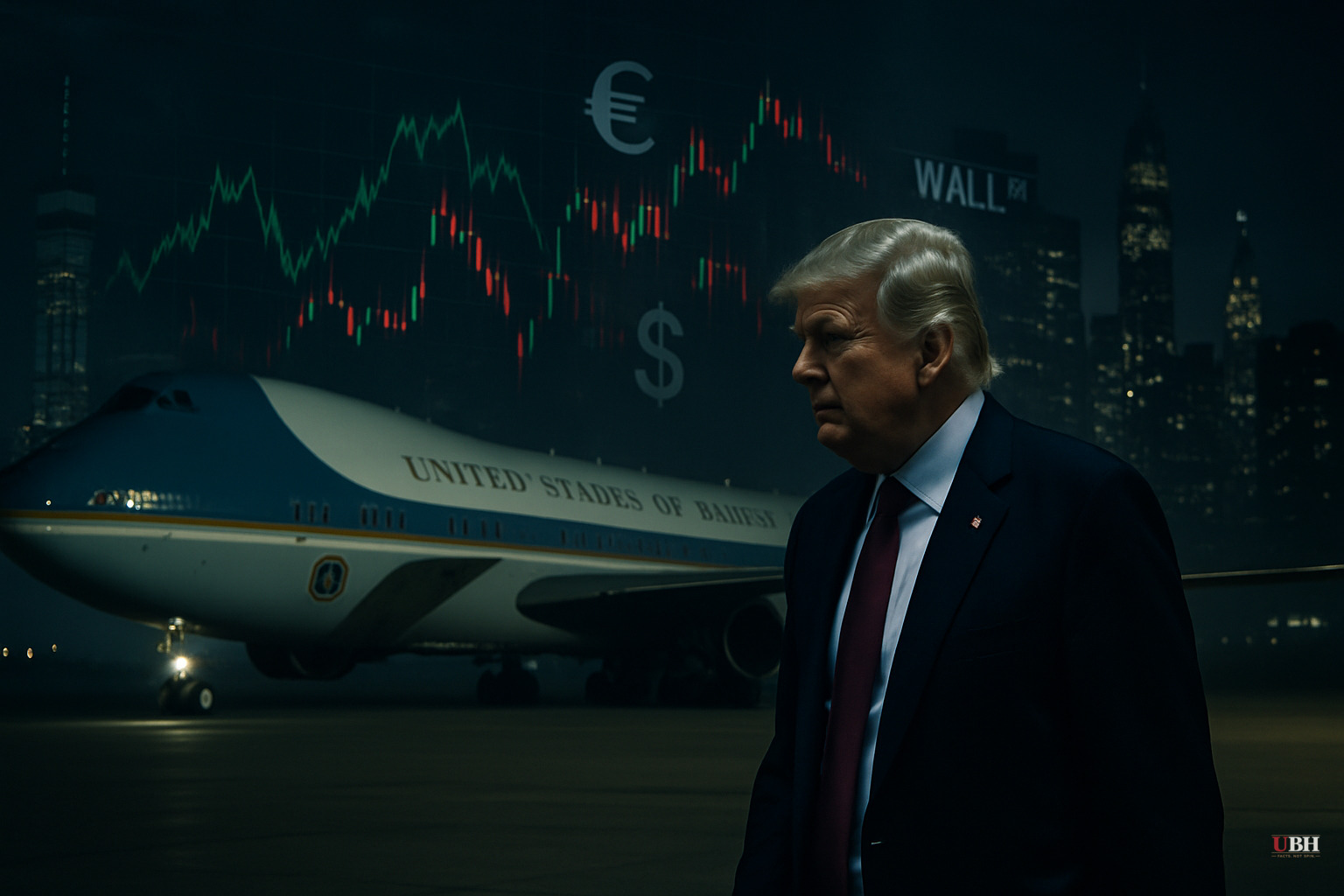
Trump Is in Beijing. Here's What's Actually Happening.
Trump arrived in China on May 13 for talks running through May 15. According to BBC News, this is the first visit by a sitting U.S. president to China in nearly a decade. The delegation includes executives from Boeing, Citigroup, and Qualcomm.
It's a deal-making trip, not a diplomatic reset.
The Boeing Number Is Staggering — If It's Real
Prediction market platform Kalshi puts an 86% probability on Trump announcing a Chinese purchase commitment from Boeing. Wall Street agrees — Boeing stock climbed nearly 2% on Wednesday ahead of the meeting, according to CNBC.
Tobin Marcus, head of U.S. politics and policy at Wolfe Research, wrote in a client note that Trump reportedly wants this to be "the largest order ever announced" — potentially a purchase commitment in the triple-digit billions. Marcus added a critical caveat: "Investors will need to await clarification from the company about how 'real' those numbers are and what specific airframes are included."
Headline numbers at summits like this are routinely inflated, repackaged from existing orders, or contingent on conditions that quietly evaporate later.
The Tariff Truce Extension Is the Baseline
Kalshi traders give 81% odds that the October tariff truce gets extended here. That truce — hammered out at Trump and Xi's last face-to-face in Geneva — paused China's export controls on rare earths while the U.S. cut fentanyl-related tariffs on China from 20% to 10%, according to CNBC.
Barclays analysts predict tariffs could move a few percentage points lower if China commits to buying U.S. aircraft, soybeans, and oil. Soybean purchases have a 79% probability according to Kalshi. Oil purchases? Just 24%. American farmers who were locked out of the Chinese soybean market for most of 2025 are watching this meeting very closely, according to PBS NewsHour.
Also on the table: a U.S.-China Board of Trade, which Kalshi traders give 69% odds of being announced. According to Wolfe Research's Marcus, this is a top priority for U.S. Trade Representative Jamieson Greer — a centralized mechanism to track what China actually buys from the U.S. to reduce the trade deficit.
What Mainstream Coverage Is Leaving Out
The Atlantic Council reported that since the Supreme Court struck down IEEPA tariffs in February, the Trump administration has been engineering a replacement tariff architecture. China was the primary target of Trump's "Liberation Day" tariffs and emerged as the biggest beneficiary of that ruling — dropping from a 34% IEEPA rate down to a 10% universal baseline under Section 122. That 10% baseline expires in July.
The Trump administration is now leaning on Section 301 and Section 232 tariffs. Two separate Section 301 investigations are currently targeting China: one for industrial overcapacity, one for alleged forced labor violations. According to the Atlantic Council, even with legacy 301 measures and existing Section 232 tariffs, the current effective tariff rate on Chinese goods is only around 23.69% — far below what the White House wants.
Whatever gets signed in Beijing this week, Washington is simultaneously constructing a second-generation tariff regime to deploy in the second half of 2026. The summit deals and the tariff buildup are happening in parallel.
Beijing Is Already Pushing Back
The Iran dimension isn't just diplomatic table talk. According to the Atlantic Council, the U.S. sanctioned five Chinese refineries last month for buying Iranian oil. Beijing's response was immediate — it invoked a Chinese domestic law shielding those firms from U.S. sanctions, effectively telling Washington to go pound sand.
Trump told reporters before departure that "I don't think we need any help with Iran." But Kalshi traders give a 61% probability that Iran comes up in the bilateral anyway.
China buying Iranian oil undermines U.S. sanctions policy directly. The fact that Beijing responded to U.S. sanctions with a legal countermeasure — rather than compliance — signals that "cooperation" here has hard limits.
The Illusion of Decoupling
Former Commerce Secretary Wilbur Ross, who served in Trump's first term, told PBS NewsHour: "The idea of somehow China being totally independent of us and us being totally independent of China, I think, is a fiction."
A decade of tariffs, trade wars, and supply chain reshuffling has not separated the two economies. It's shifted some manufacturing to Vietnam and India. It's pushed some Chinese exporters toward Europe and Southeast Asia. But the core interdependence — rare earths, aircraft, agricultural commodities, advanced chips — hasn't gone away.
According to PBS, the average U.S. tariff on Chinese goods stood at 3.1% before 2018. Even after rolling back from 100%+ tariff peaks, today's rates are structurally higher and show no signs of returning to pre-trade-war levels.
What This Means for You
If Boeing lands a triple-digit billion-dollar commitment, that's real jobs and real revenue. If the tariff truce extends and rare earth controls stay paused, U.S. manufacturers get breathing room.
The bigger picture isn't the handshakes. It's the tariff machinery being assembled back home while Trump smiles for cameras in the Great Hall of the People. The next escalation is already in the pipeline — legally constructed, just waiting for deployment.
Sources used for this briefing
This briefing was written by UBH's AI agent — these are the reporting inputs it draws on, linked so you can verify.


