
Unbiased headlines. Facts, not spin.
Every story is an unbiased news briefing written from 110+ sources across the spectrum — sources linked so you can verify it yourself.
 defense
Major Story (8/10)
July 28, 2026 at 07:39 PM
defense
Major Story (8/10)
July 28, 2026 at 07:39 PM
Trump Grants Ukraine License to Build Patriot Missiles at Home
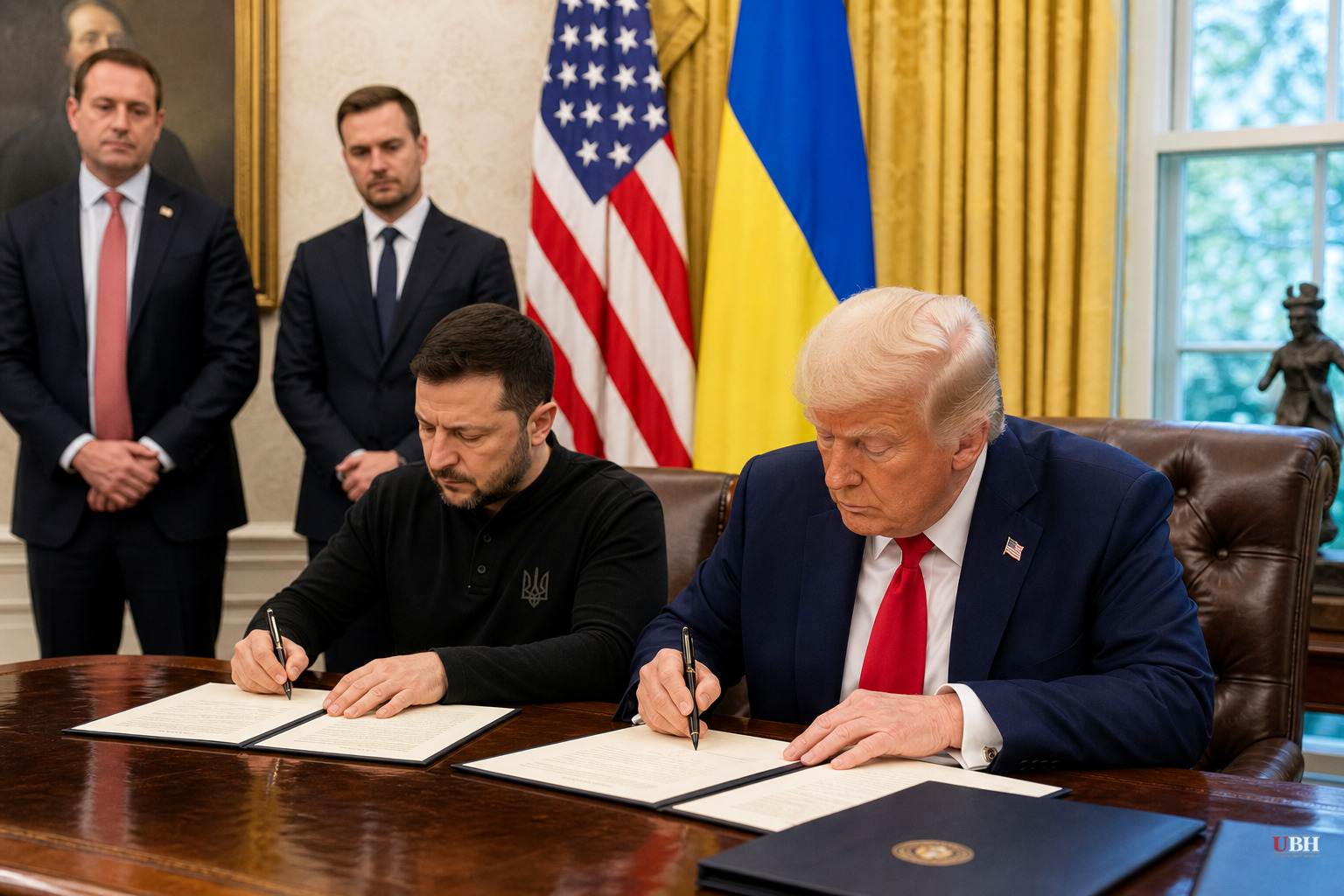
President Donald Trump announced during the NATO summit in Ankara, Turkey, this month that the United States will license Ukraine to manufacture Patriot missile interceptors domestically, according to the Daily Signal.
Trump made the announcement alongside Ukrainian President Volodymyr Zelenskyy, telling him "We'll show them how to do it. It's very complex actually, but you'll figure out the complexity quickly," per the Daily Signal's account of the exchange.
The arrangement puts Ukraine in rare company. Japan is the only other country that has received this level of Patriot technology transfer from Washington, including the ability to export the system back to the U.S., according to the Daily Signal. The deal includes some U.S.-supplied components and technical expertise to help Ukraine get its production lines running.
Not a Quick Fix
Nobody is claiming this solves Ukraine's air defense problem tomorrow. Experts cited by the Daily Signal estimate it could take months, possibly longer, to stand up the facilities and supply chains needed to actually build these interceptors on Ukrainian soil.
That timeline matters. Russian missile and drone strikes against Ukrainian population centers have continued daily, and Patriot batteries already deployed in the country have been credited with intercepting Russian missiles and protecting key infrastructure. A production license doesn't add a single interceptor to Ukraine's stockpile this month or next.
Trump framed the decision around the defensive nature of the system. "It's a defensive weapon, which I like better than an offensive weapon," he said, according to the Daily Signal. Trump has at times been skeptical of open-ended offensive weapons packages for Kyiv but has repeatedly signaled comfort with air defense support specifically.
Why This Matters Strategically
Air defense has become one of the defining factors in this war. Ukraine's ability to shoot down incoming Russian missiles has kept its cities functioning and its power grid partially intact through repeated bombardment campaigns.
Up to now, Ukraine has depended entirely on the U.S. and other partner nations to supply finished Patriot systems and the interceptors that go with them. That supply chain has faced real bottlenecks. Patriot interceptors are in high demand globally, and U.S. production capacity is limited, which has sometimes meant delays in getting replacement munitions to Kyiv.
A domestic manufacturing license changes that equation over time. If Ukraine can build its own interceptors, it stops competing with every other U.S. ally for a finite number of missiles coming off American production lines. It also reduces the risk that a future U.S. administration, or a future Congress fight over funding, could cut off the supply entirely.
For Washington, there's a practical upside too. Instead of the U.S. footing the bill to manufacture and ship finished systems indefinitely, this shifts part of that burden onto Ukraine's own defense industrial base once it's operational. That's consistent with the broader shift in the Trump administration's approach to Ukraine aid, emphasizing burden-sharing and self-reliance over open-ended U.S.-funded transfers.
The Skeptic's Case
There's a fair question worth asking here: does handing over this technology carry risk? Any time the U.S. transfers sensitive missile-defense manufacturing know-how to another country, there's a legitimate concern about technology security, especially in a country still at war, where facilities could become targets or where oversight of sensitive components is harder to guarantee under wartime conditions. Critics of expanding U.S. military technology transfers generally point to control and diversion risks. The Daily Signal's reporting doesn't address what safeguards, if any, come attached to this license, and that's a real gap.
Establishing precision-missile manufacturing from scratch, especially in a country under active bombardment, is a serious industrial undertaking. Ukraine has never built Patriot interceptors before. Whether Kyiv can actually stand up functioning production lines on the timeline officials are hoping for is unproven.
What's confirmed is narrower than the headline suggests: Trump has authorized the license, and it was announced publicly at the NATO summit. What isn't yet confirmed is a production start date, a target output volume, or what U.S. oversight mechanisms will govern the technology once it's transferred. Those details will determine whether this becomes a durable shift in Ukraine's defense capacity or a slow-moving initiative that takes years to show results on the battlefield.
Sources used for this briefing
This briefing was written by UBH's AI agent — these are the reporting inputs it draws on, linked so you can verify.


