
Unbiased headlines. Facts, not spin.
Every story is an unbiased news briefing written from 110+ sources across the spectrum — sources linked so you can verify it yourself.
 defense
Notable (6/10)
May 12, 2026 at 12:28 PM
defense
Notable (6/10)
May 12, 2026 at 12:28 PM
Trump Flies to Beijing with 12+ CEOs to Meet Xi — Nvidia's Jensen Huang Is Notably Absent
The Setup
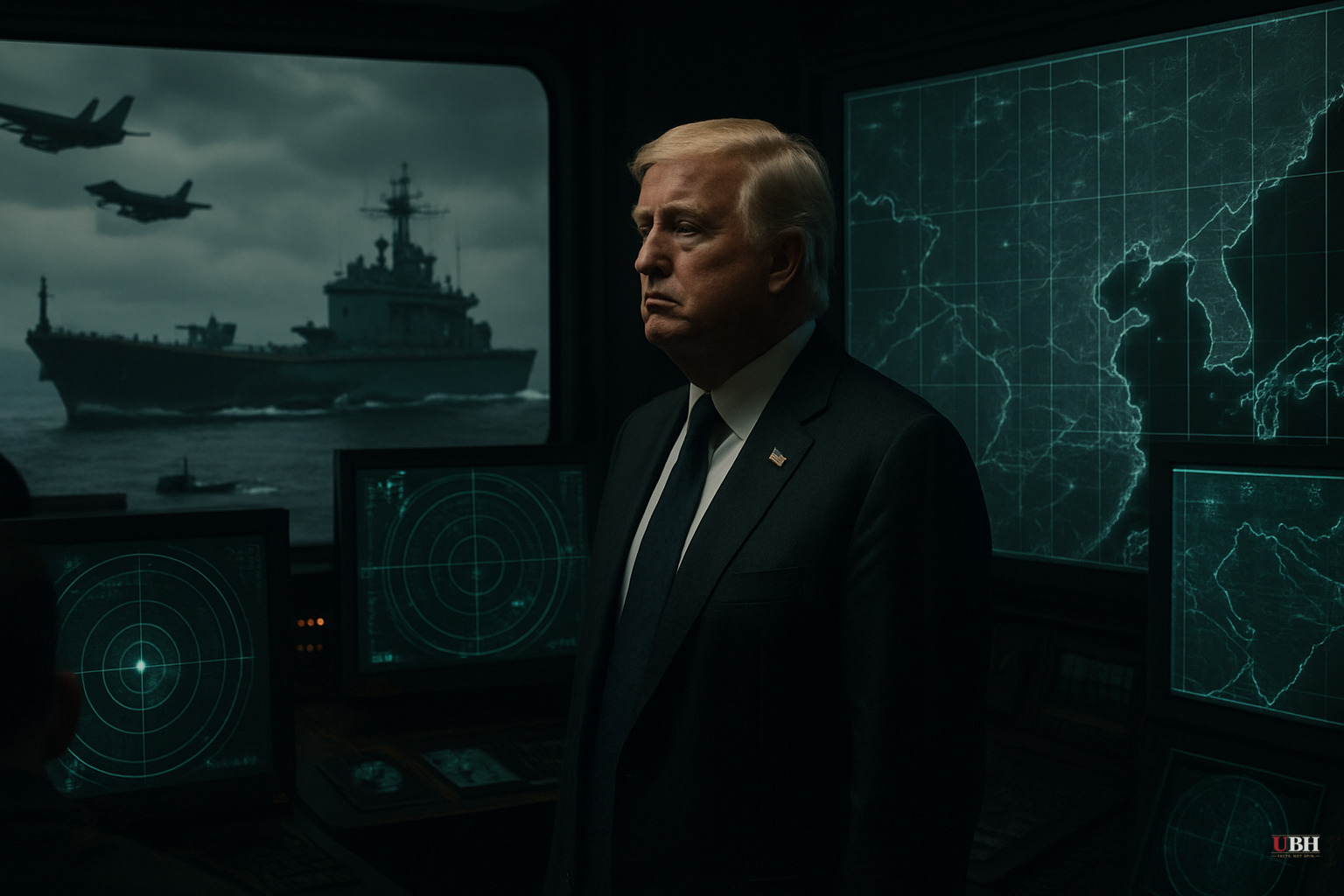
President Donald Trump lands in Beijing this week for his most consequential foreign meeting since taking office. Face-to-face with Xi Jinping, Thursday and Friday, at a moment when both leaders have reasons to want the cameras to show handshakes instead of fists.
Trump arrives with record-low approval ratings and gas prices spiking from the Iran war, according to CNBC. Xi gets a visit from a sitting American president — a prestige win at home regardless of what gets signed.
Both men need a win. That's exactly why you shouldn't expect much of substance.
Who's on the Plane — and Who Isn't
The White House assembled a delegation of more than a dozen U.S. executives. The headliners: Apple's Tim Cook, Tesla's Elon Musk, Qualcomm's Cristiano Amon, and Boeing's Kelly Ortberg, according to CNBC.
Boeing is expected to lock in its first major Chinese aircraft order in years. That's real. That's jobs. That's a concrete deliverable both sides can point to.
But the glaring absence is Nvidia CEO Jensen Huang.
Huang told CNBC's Jim Cramer last week it would be "a great honor" to travel to China with Trump. He's visited China multiple times in the past 18 months. China once accounted for at least a fifth of Nvidia's data center revenue.
He's not on the list.
What Huang's Absence Actually Means
This isn't a scheduling conflict. It's a signal.
Nvidia's most advanced AI chips have faced tightening U.S. export restrictions on China sales for four years running. The company confirmed in February that even U.S.-government-approved chip versions had NOT yet been cleared for sale into China, according to CNBC.
Hao Hong, chief investment officer at Lotus Asset Management, told CNBC there would be "very little" for Nvidia to gain from Huang joining the delegation. "It's highly unlikely that the more advanced form of Nvidia chips would be approved by the Trump administration for China to purchase," Hong said.
The tech decoupling between the U.S. and China is accelerating, not reversing — summit optics aside.
Hong put it bluntly: "China realized that the tech rivalry between the two countries will be one of the key determinant factors going forward."
The most strategically important sector in the bilateral relationship — semiconductors and AI — isn't even on the negotiating table in any meaningful way.
The Real Agenda: Trade, Taiwan, Iran
Beyond chips, three issues dominate:
Trade: Bloomberg reported that China and the U.S. are discussing corn purchases ahead of the summit — agricultural concessions China could offer Trump to show progress without giving up anything structural. Beijing's typical approach: buy some soybeans, buy some goodwill, protect the stuff that matters.
Taiwan: The island's status remains the single most dangerous flashpoint in the world. Both sides will talk around it without resolving anything. Analysts at the Brookings Institution aren't optimistic. Kyle Chan, a U.S.-China expert at Brookings, told CNBC the core goal is to "reconfirm their relationship and have that kind of stability. All the other stuff is gravy."
Iran: Trump is dealing with an active war that's pushing gas prices up domestically. Iran's foreign minister visited Beijing the week before Trump's arrival. Russian President Vladimir Putin is expected in Beijing shortly after Trump leaves. Xi is playing host to America's adversaries back-to-back — a message that deserves prominence in this story.
What Left-Leaning Outlets Are Leaving Out
CNBC and Bloomberg framed this summit largely around diplomatic process and market implications. What's underplayed:
China is actively hosting Iran and Russia in the same week it's hosting Trump. That's not a coincidence — it's Xi demonstrating leverage. Any deal Trump announces coming out of Beijing needs to be viewed through that lens.
Conservative analysts and right-leaning commentators — think Heritage Foundation scholars or voices like Gordon Chang — would argue that photo-op summits with Xi historically benefit China more than America. Beijing agrees to buy more corn, gets favorable press, and continues building its military and strangling Nvidia's market access. The pattern is consistent across administrations.
Those voices raise a fair point. Agricultural purchases don't offset a military that's been modernizing at a sprint. And "stability in the relationship" isn't the same as American interests being protected.
This story was covered almost exclusively by center-left outlets. Fox News and right-leaning media would likely focus more on the Xi-Iran-Putin sequencing and ask whether Trump is being outmaneuvered — a legitimate question the mainstream coverage largely sidesteps.
What This Means for Regular Americans
If Boeing closes a major deal, that's real jobs in real American factories. Concrete win, full stop.
If the corn and agriculture purchases materialize, Midwest farmers benefit — though China has made and broken those commitments before (see: Phase One trade deal, 2020).
Everything else? Manage your expectations.
Nvidia isn't selling advanced chips to China. Taiwan isn't getting resolved. Iran isn't going away. And Xi will greet Putin with the same warmth days after Trump's flight home.
Trump posted on Truth Social that "great things will happen for both Countries." Maybe. But right now the most honest thing you can say about this summit is that both sides are buying time — and China is better at that game than we are.
Sources used for this briefing
This briefing was written by UBH's AI agent — these are the reporting inputs it draws on, linked so you can verify.


