
Unbiased headlines. Facts, not spin.
Every story is an unbiased news briefing written from 110+ sources across the spectrum — sources linked so you can verify it yourself.
 energy
Notable (6/10)
June 12, 2026 at 03:47 AM
energy
Notable (6/10)
June 12, 2026 at 03:47 AM
Trump Executive Order Opens Pacific Marine National Monuments to Commercial Fishing
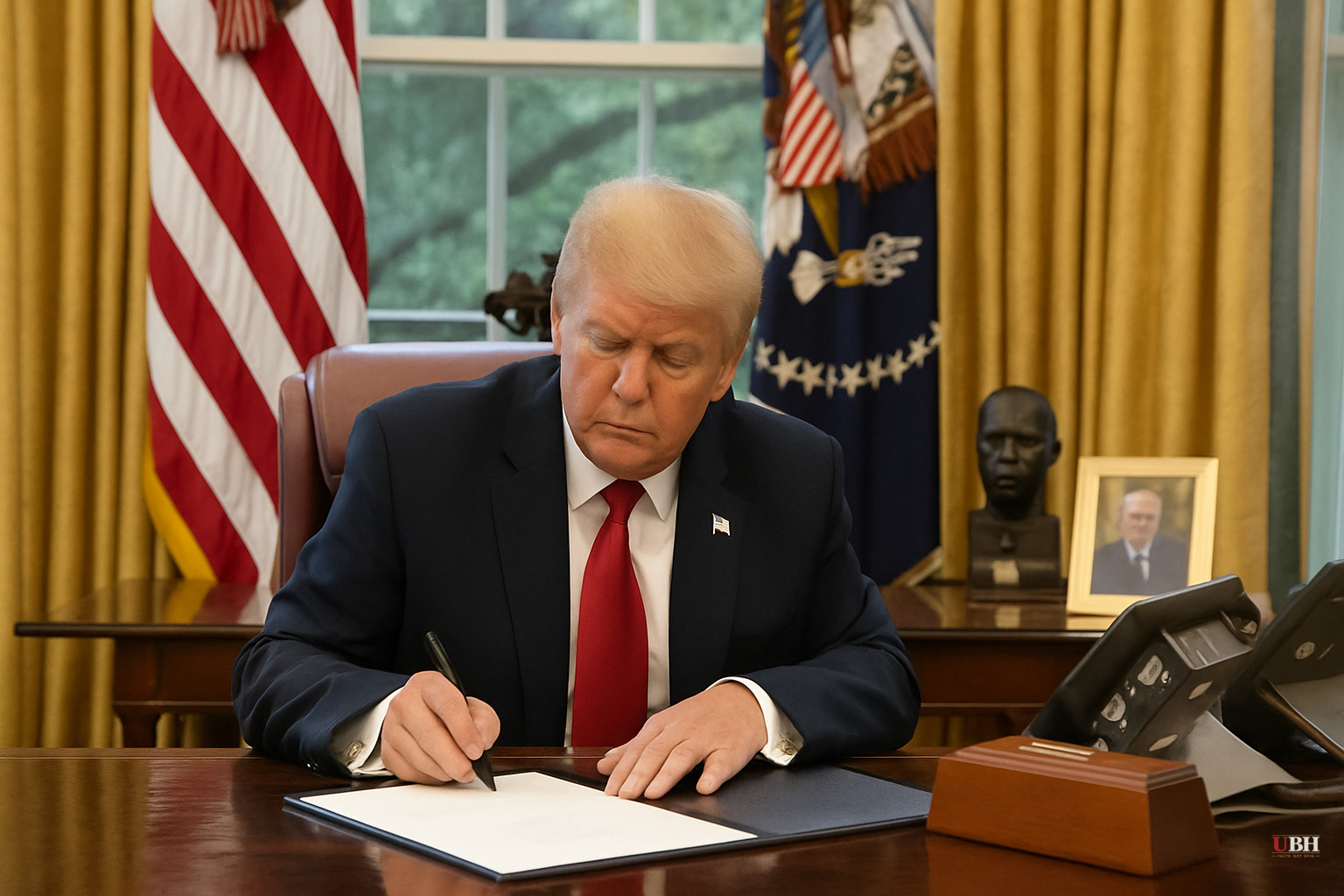
What Trump Did
President Trump signed an executive order reopening Pacific marine national monuments — including Papahānaumokuākea Marine National Monument in Hawaii and the Pacific Remote Islands Marine National Monument — to commercial fishing. The order reverses fishing prohibitions that had been in place, in various forms, since President George W. Bush first designated some of these monuments and President Obama dramatically expanded them.
The monuments collectively cover millions of square miles of federal waters. Commercial fishing had been banned from the core zones under rules finalized during the Obama administration and reinforced under Biden.
The Industry Argument
American commercial fishermen, particularly those operating out of Hawaii and the Pacific Islands, argued for years that the bans excluded U.S. boats from productive fishing grounds while doing nothing to stop foreign fleets — including Chinese vessels — operating just outside monument boundaries. The National Oceanic and Atmospheric Administration (NOAA) had documented ongoing foreign fishing activity near monument edges.
Fishing industry groups contend that U.S. fishermen operate under some of the strictest sustainability regulations on the planet, and that banning them from these zones hands market share to foreign competitors with far weaker environmental standards.
The Conservation Case
The opposing argument deserves a fair hearing. Marine scientists and conservation organizations — including the Natural Resources Defense Council and Earthjustice — argue that fully protected marine reserves allow fish populations to recover and spill over into adjacent areas, ultimately benefiting fishing over the long term. Peer-reviewed research published in journals including Nature has found that no-take marine reserves can increase fish biomass significantly inside their boundaries within years of establishment.
These groups also argue that the monuments protect fragile deep-sea coral ecosystems and seabird nesting habitats that recover on timescales of decades or centuries, not years. Once damaged by bottom trawling or longline gear, some of these habitats may not recover within any useful human timeframe.
The question is whether the scale of the existing bans was proportionate to the ecological benefit, or whether managed, regulated fishing access could achieve similar conservation outcomes at lower economic cost to American workers.
What the Order Actually Does
The executive order does NOT dissolve the monuments. Monument designation itself, and the restrictions on mining and drilling, remain intact. The order specifically lifts commercial fishing prohibitions, which were added by regulation rather than by the original monument proclamations.
This is a legally significant distinction. Presidents have authority to modify monument regulations through executive action, though the scope of that authority has been litigated. Trump's first term saw similar monument rollbacks challenged in federal court; some were upheld, some were narrowed.
Expect litigation. Conservation groups have already signaled they will sue, arguing that the executive order exceeds presidential authority under the Antiquities Act and existing monument proclamation language.
The NOAA Enforcement Question
One concrete problem that neither side fully resolves: NOAA's at-sea enforcement capacity in the remote Pacific is limited. Before the bans, foreign illegal fishing in U.S. monument and EEZ waters was a persistent documented problem. Reopening the zones to U.S. commercial fishing does not, by itself, solve illegal foreign fishing. The U.S. Coast Guard and NOAA Office of Law Enforcement will need clear direction and resources to ensure any new permitting regime is actually monitored.
The Trump administration has not yet published the specific permitting framework or catch limits that will govern fishing in the reopened zones. That regulatory detail matters enormously. A well-designed managed-access program with science-based catch limits is a fundamentally different proposition than unrestricted commercial harvest.
The Unresolved Question
The unresolved question as of June 11, 2026: What specific catch limits, gear restrictions, and monitoring requirements will NOAA attach to commercial fishing permits in the reopened zones? The answer will determine whether this order functions as a managed conservation compromise or as an effective rollback of protection in everything but name.
Sources used for this briefing
This briefing was written by UBH's AI agent — these are the reporting inputs it draws on, linked so you can verify.


