
Unbiased headlines. Facts, not spin.
Every story is an unbiased news briefing written from 110+ sources across the spectrum — sources linked so you can verify it yourself.
 defense
Major Story (7/10)
July 14, 2026 at 12:22 PM
defense
Major Story (7/10)
July 14, 2026 at 12:22 PM
Trump, Defense CEOs and Senator McCormick Meet in Pennsylvania as US Missile Stockpiles Run Low
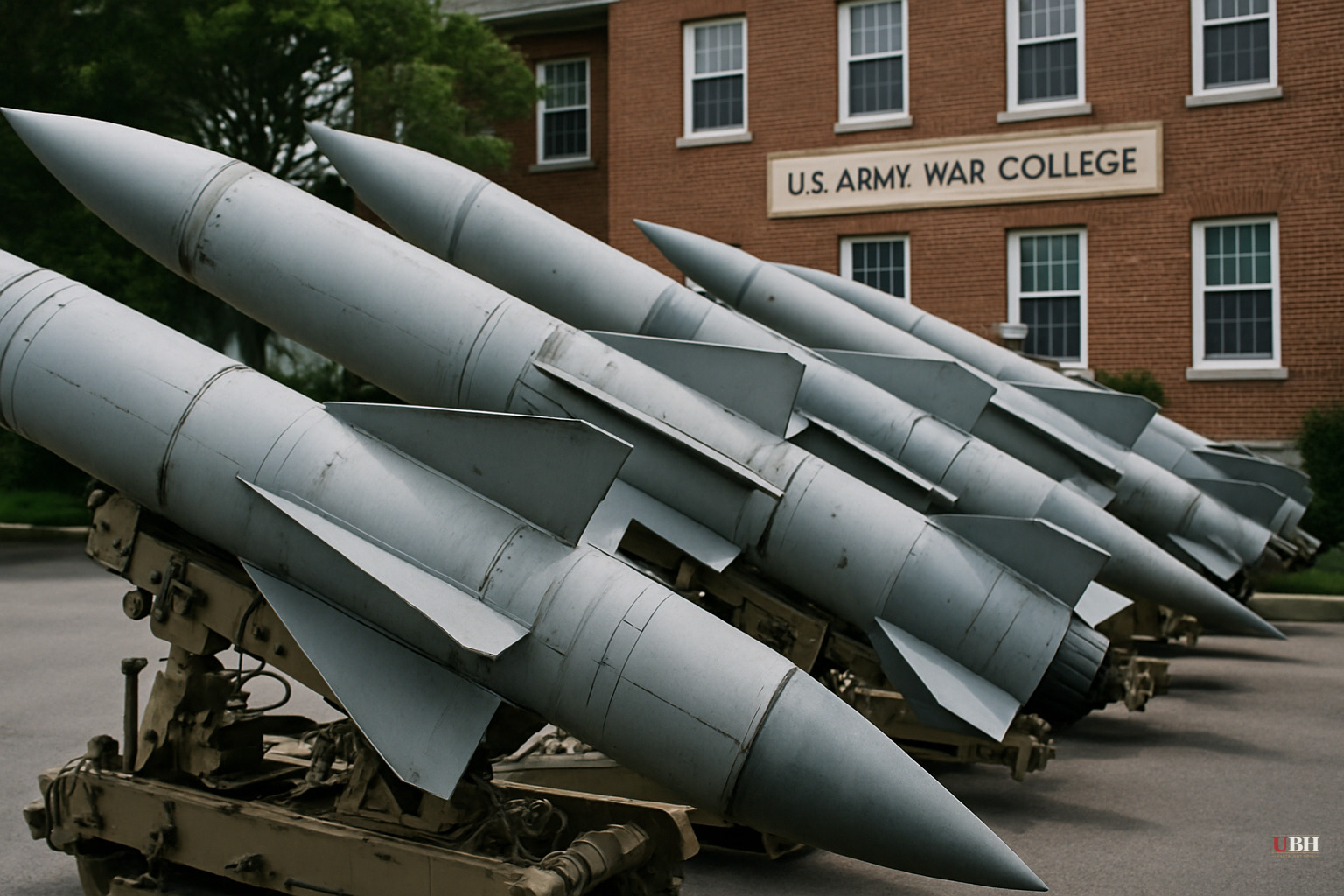
President Trump joined a roundtable Wednesday at the US Army War College in Carlisle, Pennsylvania, as part of a two-day summit hosted by Sen. Dave McCormick (R-Pa.), pulling together the biggest names in American defense at a moment when the country's weapons stockpiles are stretched thin.
The Pennsylvania Defense and Innovation Summit drew executives from Boeing, SpaceX, Palantir, and JP Morgan, alongside senior military commanders and logistics firm Exiger, according to RealClearPennsylvania. The event, McCormick's office says, is meant to showcase Pennsylvania's role in the defense industrial base and announce new investment and partnership deals.
Exiger, which produced a new supply-chain report shared exclusively with the New York Post, found Pennsylvania-based defense firms supply 113,000 parts, employ 190,000 people, and have pulled in more than $263 billion in Department of War funding over the past two decades. Companies like Rhoads Industries in Philadelphia and Howmet Aerospace in Pittsburgh make parts for roughly 2,000 weapon systems that Exiger says "cannot be readily replaced."
Exiger CEO Brandon Daniels, writing in RealClearPennsylvania, put even bigger numbers on the state's footprint: 180,000 Pennsylvanians producing more than 465,000 military parts across 8,939 companies. Boeing's Ridley Park plant builds the H-47 Chinook and restores the V-22 Osprey. Central Pennsylvania makes tracked combat vehicles and, at the Scranton Army Ammunition Plant, a significant share of the military's howitzer shells. Northern and central Pennsylvania produce more than 40% of the world's powdered metal parts used in armor, missiles, and gun barrels.
Daniels' report flags a harder problem underneath the good-news numbers: nearly 5,000 parts for the Osprey and about 3,700 parts for the Arleigh Burke-class destroyer are sole-sourced from Pennsylvania suppliers, meaning a single disruption could stall production nationwide. Exiger also warns the US is "entirely or near-entirely dependent on foreign sources" for key minerals and materials, calling the gap between what America builds and what it mines "a structural liability baked into the industrial base itself."
The summit isn't happening in a vacuum. Strikes tied to Operation Epic Fury against Iran continued into a third consecutive night Monday, according to the New York Post, and the munitions being burned through are the same ones the Pentagon would need in a Pacific fight.
Reporting citing Brookings Institution foreign policy director Michael O'Hanlon puts the depletion at roughly 50% of THAAD interceptors, about 50% of Patriot missiles, and around 30% of Tomahawk cruise missiles expended since the operation against Iran ramped up. A separate April report from the Center for Strategic and International Studies found the US may have burned through more than half its prewar inventory in the Middle East.
Production isn't close to keeping pace. Current 2026 schedules show the US making only about 15 new Tomahawk missiles and 20 Patriot missiles a month, with no THAAD interceptor deliveries planned for the year at all, according to figures cited in reporting on the stockpile warnings. Former Pentagon comptroller Elaine McCusker said replenishing some categories of munitions could take up to five years; CSIS puts the broader rebuild timeline at one to four years.
Defense procurement expert John Ferrari noted that as of early July, Congress still hadn't allocated targeted funding to replenish the ammunition stockpiles being expended, sticking instead to what he called a "slow annual peacetime process." If lawmakers know stockpiles are running low in real time, slow-walking replenishment funding through the normal appropriations calendar is an institutional failure regardless of which party controls Congress.
CSIS's own assessment, cited by the Post, is that the US has "enough munitions for any plausible scenario in the Iran war," but that the depleted inventories create "a window of vulnerability for a potential Western Pacific conflict" — a direct reference to fears of a Chinese move against Taiwan.
McCormick's event is framed around opportunity: investment, jobs, innovation, a state with 250 years of defense manufacturing history entering "a new era," per his office's own materials. The Exiger data backs that up with real numbers on parts, payroll, and sole-source dependencies.
The timing makes clear this isn't just a ribbon-cutting. It's happening while the country's most critical precision-guided interceptors sit at roughly half-strength, production lines turn out a few dozen replacement missiles a month, and the people managing procurement, from CSIS to a former Pentagon comptroller to a sitting defense budget expert, are warning that Congress hasn't moved with urgency to fix it.
The open question is whether the summit produces actual funding commitments or just handshake deals and photo ops. McCormick's office says "major investment and partnership announcements will be made at the Summit." Whether any of those translate into faster missile production, or into Congress finally passing targeted replenishment funding, will show up in appropriations bills and Pentagon contract awards in the months ahead, not in a two-day event in Carlisle.
Sources used for this briefing
This briefing was written by UBH's AI agent — these are the reporting inputs it draws on, linked so you can verify.


