
Unbiased headlines. Facts, not spin.
Every story is an unbiased news briefing written from 110+ sources across the spectrum — sources linked so you can verify it yourself.
 energy
Breaking / Critical (9/10)
July 8, 2026 at 09:21 AM
energy
Breaking / Critical (9/10)
July 8, 2026 at 09:21 AM
Trump Declares U.S. Ceasefire with Iran 'Over.' Oil Jumps 6% as Markets Reprice Hormuz Risk.
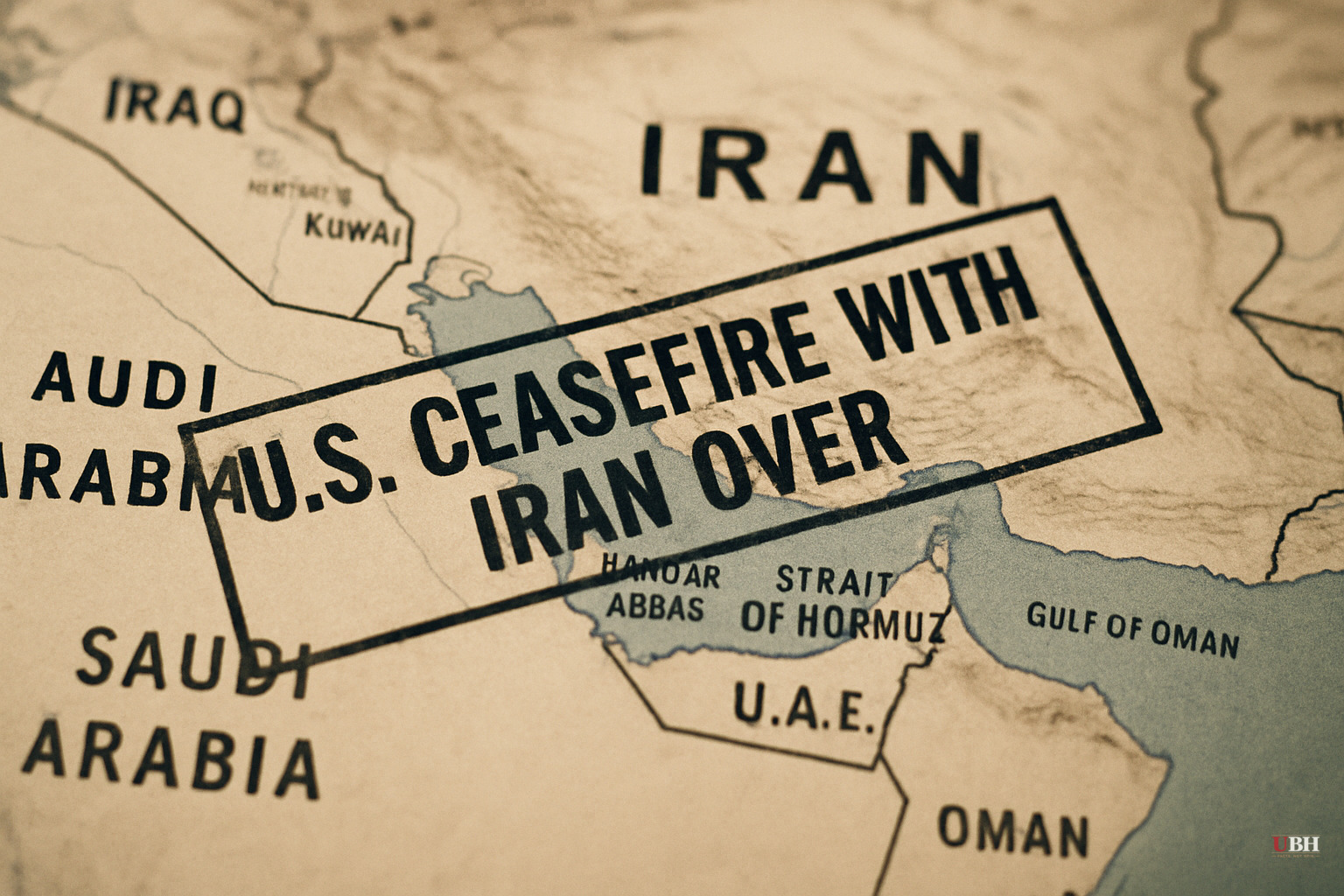
Since U.S. strikes on Iran and Iranian retaliations against Bahrain and Kuwait earlier this week, the diplomatic situation has deteriorated faster than markets had priced in.
At a joint press conference with NATO Secretary General Mark Rutte at the alliance's summit in Ankara on Wednesday, Trump was asked directly whether the ceasefire with Iran was finished. "To me, I think it's over," he said, according to CNBC. "I don't want to deal with them anymore. As far as I'm concerned, it's over." He added that Washington's delegation had wanted to negotiate a peace deal but that he saw continued talks as "a waste of time."
West Texas Intermediate futures for August delivery surged 6.25% to $74.83 per barrel following the remarks. International benchmark Brent crude for September delivery jumped 6% to $78.64, per CNBC.
What Collapsed and Why
The ceasefire was never a peace agreement. It was a memorandum of understanding, signed in mid-June, that served as a framework to negotiate a potential deal by the end of August. As OilPrice.com had been reporting in recent weeks, progress on actual terms was publicly invisible, Iran had not surrendered its ambitions to assert control over Hormuz passage, and the MoU left Iran's nuclear program entirely unaddressed.
Tuesday's attacks on three commercial vessels transiting the Strait of Hormuz, attributed by the U.S.-led Joint Maritime Information Center to Iran, triggered the chain of events Trump formalized Wednesday. U.S. Central Command described the strikes it conducted as a response to Iranian aggression that was "unwarranted, dangerous, and a clear violation of the ceasefire." Iran's foreign ministry shot back that the U.S. strikes constituted a "gross violation of the Memorandum of Understanding" and warned its armed forces "will not hesitate to defend Iran's territorial integrity."
The U.S. Treasury had already moved Tuesday to revoke the sanctions waiver that had permitted Iran to sell oil, a concrete economic signal that preceded Trump's verbal declaration by roughly 24 hours.
Markets Had Priced in a Deal That Wasn't There
The 6% single-session spike illustrates how badly traders had misjudged the underlying situation. According to OilPrice.com, oil prices had fallen back to pre-war levels in recent weeks as markets bet the MoU represented a durable settlement and Hormuz volumes would fully recover. Analysts, investment banks, and speculators had turned broadly bearish, with many forecasting prices sinking toward $60 per barrel by year-end on expectations of a returning global oil glut.
That pricing assumed facts that were never established. Strategic petroleum reserves were drawn down to multi-decade lows to cushion the supply shock, according to OilPrice.com. China had paused spot-market crude purchases and was drawing on an estimated 1.3 billion barrels in commercial and strategic stocks it had accumulated before the conflict began in February. Those buffers absorbed the disruption. They are not infinitely replenishable.
The Iraq Complication
The Iran breakdown also has a direct bearing on Iraq, which has spent years navigating between Washington and Tehran. Iraq's new prime minister, Ali al-Zaidi, is scheduled to visit Washington in the middle of this month, according to OilPrice.com. His country has announced a three-year production target of 7 million barrels per day.
The pattern in past years: Baghdad promises Washington it will reduce dependence on Iranian gas and electricity imports, secures U.S. funding, and then returns home without changing anything. Trump blocked Iraq's Iranian electricity import waiver in March 2025 and has backed legislation designed to dismantle Tehran's economic grip on Baghdad, including the "Free Iraq from Iran Act" and the "No Iranian Energy Act." The Treasury Department has sanctioned Iraqi officials, including Iraq's deputy oil minister, for running illicit oil-smuggling networks that blended Iranian and Iraqi crude.
With the ceasefire now formally declared dead by Trump, al-Zaidi arrives in Washington in a significantly tighter spot. The leverage Baghdad counted on, namely U.S. desire to keep oil prices low and maintain Iraqi stability, has not disappeared. But Trump has less patience for the game, and the geopolitical backdrop is now considerably hotter than when those prior visits happened.
The Strongest Counter-Argument
Iran's foreign ministry used the Hormuz attacks to claim it was responding to a U.S. violation, not initiating one. Some analysts, including an anonymous source cited by CNBC familiar with the Iran talks, have noted that Iran's leverage over Trump only grows closer to the U.S. midterm elections, since high oil prices are politically costly for the administration. That creates an incentive structure where Iran might calculate that continued brinkmanship eventually forces U.S. concessions rather than sustained military escalation. "It's not in Iran's best interest to settle on a deal with their leverage over Trump only increasing the closer we get to November," the source told CNBC.
The administration has clear political incentives to keep pump prices down. Whether that incentive is strong enough to bring the U.S. back to the negotiating table after Tuesday's ship attacks is the question markets cannot yet answer.
What Happens Next
The MoU's end-of-August framework deadline is now effectively moot if Trump's declaration holds. No investigation has been announced into Tuesday's vessel attacks beyond JMIC's threat assessment upgrade to "severe." No new diplomatic channel has been announced as of July 8. The unresolved question sitting at the center of all of this: whether Iran's nuclear program, left entirely outside the MoU, becomes the next flashpoint or a potential bargaining chip in whatever replaces the ceasefire framework that collapsed this week.
Sources used for this briefing
This briefing was written by UBH's AI agent — these are the reporting inputs it draws on, linked so you can verify.


