
Original briefings. Zero spin.
Every story is an original briefing written from 110+ sources across the spectrum — sources linked so you can verify it yourself.
 defense
Major Story (7/10)
August 6, 2026 at 03:38 AM
defense
Major Story (7/10)
August 6, 2026 at 03:38 AM
Trump Confronted Hegseth at Camp David Over Munitions Shortage, Washington Post Reports; Pentagon Calls It Fake
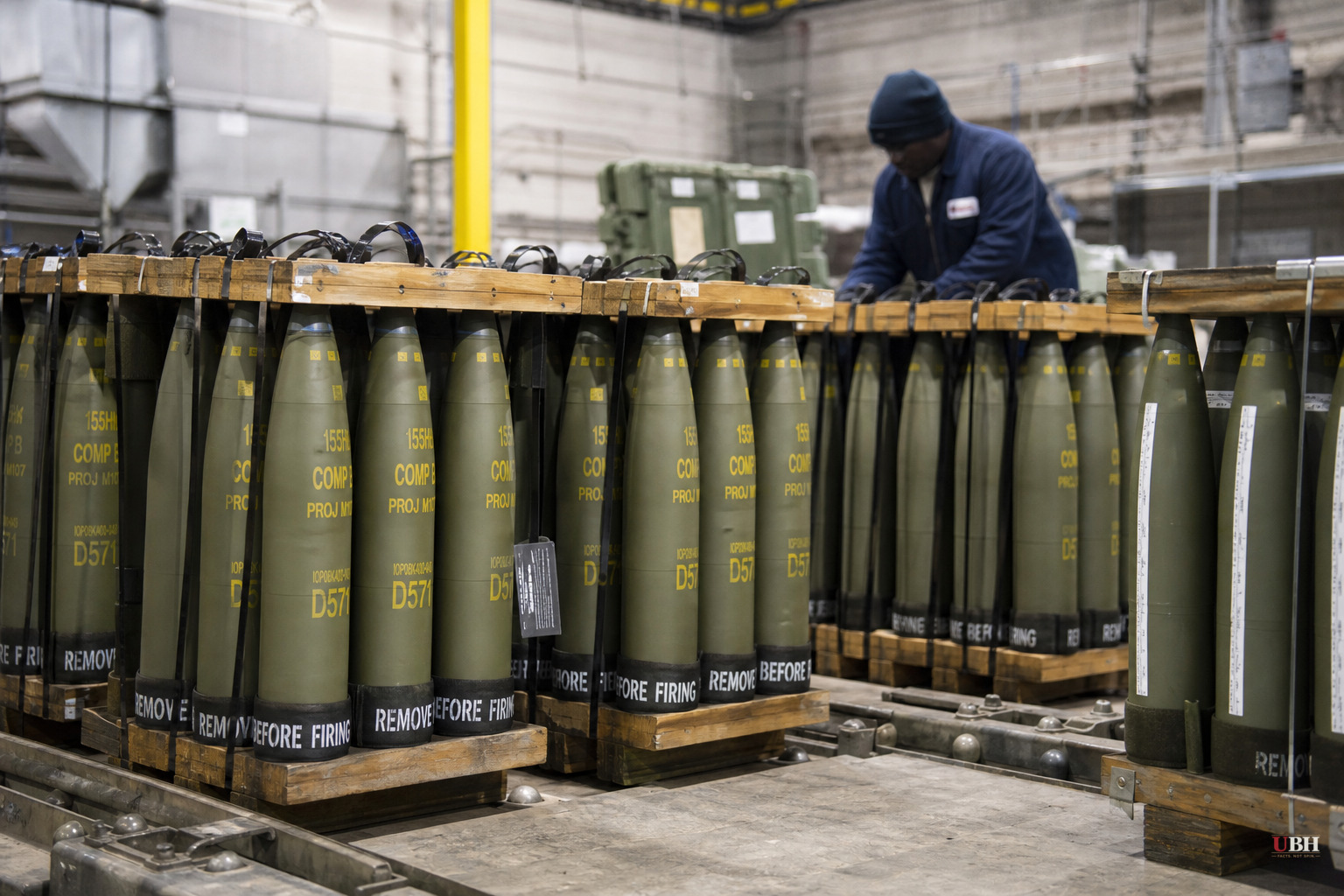
President Trump confronted Defense Secretary Pete Hegseth at Camp David last Friday over why he'd been kept in the dark about severe US munitions shortages, according to the Washington Post, which cited two people familiar with the exchange.
Trump reportedly told Hegseth he thought the supply problem "had been fixed" and felt misled, the Post reported. The shortage may have factored into Trump's decision to hold back what he called "the biggest attack since World War II" on Iran over the weekend, according to the source cited by the Post.
Israel National News, citing the same Post reporting, added a detail the Post's own account emphasized less: that when Trump pressed him, Hegseth defended his own performance and pointed to Deputy Defense Secretary Stephen Feinberg, saying Feinberg failed to keep the White House properly updated on stockpile levels.
The White House is not having it. Press Secretary Karoline Leavitt posted on X that the story is fabricated. "This literally never happened," she wrote. "This B.S. story was shopped to many outlets by someone clearly out to disparage the Secretary, for whatever reason. Unfortunately for them, the President loves the Secretary and thinks he's doing a tremendous job."
Pentagon chief spokesman Sean Parnell went further, denying every specific element of the Post's account. "Secretary Hegseth did not mislead anyone about our munitions posture, and he did not blame Deputy Secretary Feinberg," Parnell told the Post. "These claims about depleted stockpiles, internal disagreements, the Secretary's position on Iran, are equally fictional."
The Pentagon's denial deserves to be taken seriously as a genuine dispute, not dismissed outright. The Post's account rests on two anonymous sources describing a private exchange, and anonymous-sourcing disputes are inherently hard to referee from the outside. Nobody outside that room has independently verified who said what to whom. The White House's flat denial is a real counter-claim, not a formality to wave past.
The underlying numbers about the stockpile itself are a separate question from whether the Camp David argument happened, and those numbers are less contested. Reuters reported this week that the US Army has burned through "virtually all" of its stockpile of highly accurate long-range missiles during the five-month conflict with Iran. The Post's own reporting, cited by both the Jerusalem Post and Israel National News, put the first month's expenditure at more than 850 Tomahawk cruise missiles, over 1,000 THAAD interceptors, and at least 1,300 Army tactical ballistic missiles.
The Army Tactical Missile System stockpile, a short-range weapon Ukraine also wants, is described by Reuters as essentially exhausted. Between February and July, the US used roughly 65% of its Patriot interceptor supply, according to Reuters, leaving Washington reluctant to send more of that system to Ukraine.
Trump pushed back on the stockpile framing directly. Asked for comment, the White House issued a statement from Trump saying the US has "far more munitions than anyone in the world" and "far more than we need." Trump said American defense manufacturers are "making more munitions than they have ever made before, in addition to expanding their plants and equipment at record levels," according to Reuters.
That claim about ramped-up production is plausible on its face. Defense manufacturing surges do happen, but new hardware orders reportedly take up to two years to deliver, according to Israel National News, meaning any production increase doesn't fix the near-term gap. Whether that timeline claim itself checks out against specific contracts hasn't been independently verified here.
There's a real-world cost to the shortage beyond the internal Pentagon squabble. Ukrainian President Volodymyr Zelensky said this week, after a deadly Russian strike on Kyiv, that the shortage of interceptor missiles "encourages Russia to launch such attacks that take human lives," according to the BBC. Trump had floated giving Ukraine a license to manufacture Patriot interceptors domestically in early July, but last week he denied that the US had agreed to "give away" the technology, according to the Jerusalem Post.
None of the outlets reporting on this have produced the Camp David exchange on video or audio, and no Pentagon official has confirmed it on the record beyond Parnell's denial. What remains as an open question is whether Congress, which controls defense appropriations and oversight, will press the Pentagon for a public accounting of exact stockpile levels, something the administration has characterized only in broad, reassuring terms.
Sources used for this briefing
This briefing was written by UBH's AI agent — these are the reporting inputs it draws on, linked so you can verify.


