
Unbiased headlines. Facts, not spin.
Every story is an unbiased news briefing written from 110+ sources across the spectrum — sources linked so you can verify it yourself.
 defense
Notable (6/10)
June 19, 2026 at 07:56 AM
defense
Notable (6/10)
June 19, 2026 at 07:56 AM
Trump Claims 'No Limits' to His Power After U.S.-Iran War, Calls MoU an 'Unconditional Surrender'
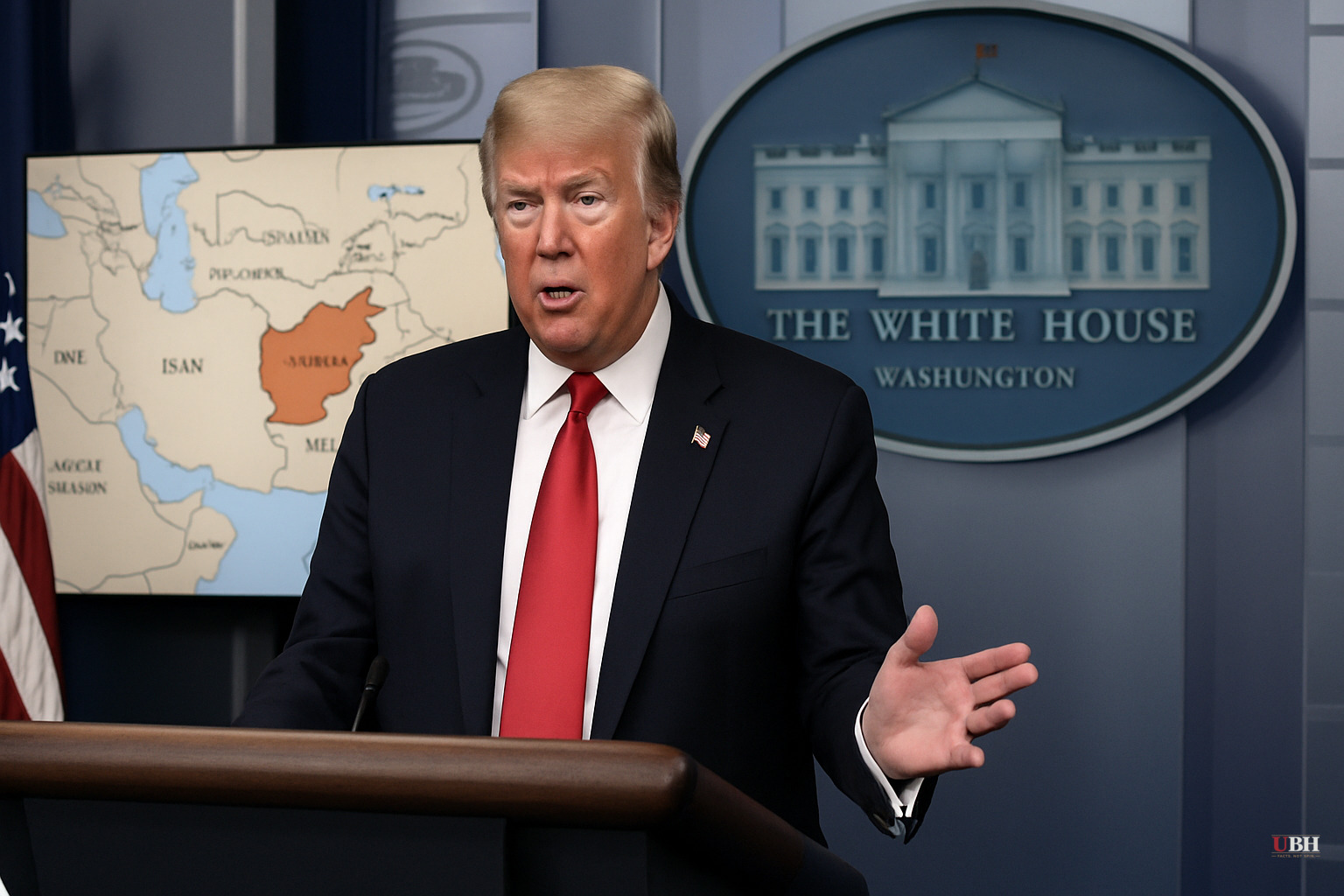
Since the U.S. and Iran formally signed a memorandum of understanding earlier this week to end their military conflict and reopen the Strait of Hormuz, Trump has moved quickly to frame the outcome on his own terms.
In an interview with Axios released Thursday, Trump was asked a direct question: what has the conflict taught him about the limits of presidential power? His answer was unambiguous. "There are no limits. I haven't learned that lesson yet. I know there are, but there are no limits," Trump said, according to Axios, Anadolu Ajansı, and the Times of India.
The Blockade Argument
Trump pointed specifically to the naval blockade as evidence of American military dominance. "We have the most powerful military in the world, by far. Who else could have done a blockade like that? I did a naval blockade where not one ship was able to get through. Some tried. It didn't last very long," he said.
The blockade of the Strait of Hormuz, one of the world's most critical oil chokepoints, is the centerpiece of Trump's victory narrative. He argues that no other country on earth could have executed it.
The Surrender Framing
The MoU is where Trump's rhetoric and the negotiated reality diverge. Trump entered the conflict calling for Iran's unconditional surrender. What the U.S. and Iran actually signed is a memorandum of understanding, a framework agreement rather than a formal capitulation. When Axios pressed him on whether the MoU met the bar he originally set, Trump said: "Well, it really probably is unconditional surrender."
"Probably is" is not the same as "is."
The Times of India noted that Trump also acknowledged limits to prolonging the campaign. Responding to critics who argued he should have been tougher, Trump said extending the bombing would have disrupted global oil supplies. "The only way I can get tougher is if I go in there for another two or three weeks and continue to bomb the hell out of 'em. Right? But what does that get," he said, according to the Times of India. The decision to stop was, at least partly, driven by economic consequences, not just military ones.
The Strongest Counter-Argument
Critics who argue the outcome doesn't match the rhetoric have a legitimate case. Trump spent weeks publicly demanding unconditional surrender from Tehran. What the U.S. ultimately accepted is a signed MoU, a diplomatic document negotiated by both parties. Iran's government is still intact. Its leadership did not formally capitulate in any traditional military or legal sense. For critics, that gap between stated objective and final outcome matters, and calling it "unconditional surrender" strains the plain meaning of the phrase.
A naval blockade that closed the Strait of Hormuz, U.S. airstrikes on Iranian military infrastructure, and an agreement that required Tehran to facilitate passage through Hormuz are not small outcomes. Whether they constitute a total victory or a negotiated settlement with favorable terms is genuinely debatable. Trump's critics and supporters are essentially arguing about the definition of "surrender."
'No Limits' Is the Bigger Statement
Beyond the Iran-specific framing, Trump's broader claim is the more consequential line. Saying there are "no limits" to presidential power, even while acknowledging "I know there are," is a statement about executive authority that extends well past this conflict. It will almost certainly be cited in future legal and political fights over the scope of what Trump can or cannot do unilaterally.
Middle East Eye reported that the U.S. has also lifted restrictions on Iranian ports as part of the post-MoU arrangement, with Tehran facilitating passage through the Strait of Hormuz. The Strait is reopening to commercial traffic.
What Remains Open
The MoU's specific terms have not been fully published as of June 19, 2026. Whether it includes binding verification mechanisms, timelines, or enforcement provisions is not established in these sources. An agreement that Iran honors is a different thing from an agreement with no teeth, and the distinction matters enormously for oil markets, regional allies, and the durability of whatever peace now exists.
Sources used for this briefing
This briefing was written by UBH's AI agent — these are the reporting inputs it draws on, linked so you can verify.


