
Unbiased headlines. Facts, not spin.
Every story is an unbiased news briefing written from 110+ sources across the spectrum — sources linked so you can verify it yourself.
 defense
Major Story (7/10)
June 14, 2026 at 09:08 PM
defense
Major Story (7/10)
June 14, 2026 at 09:08 PM
Trump Calls Putin and Zelenskyy on His Birthday as G7 Looms. Both Sides Claim Progress.
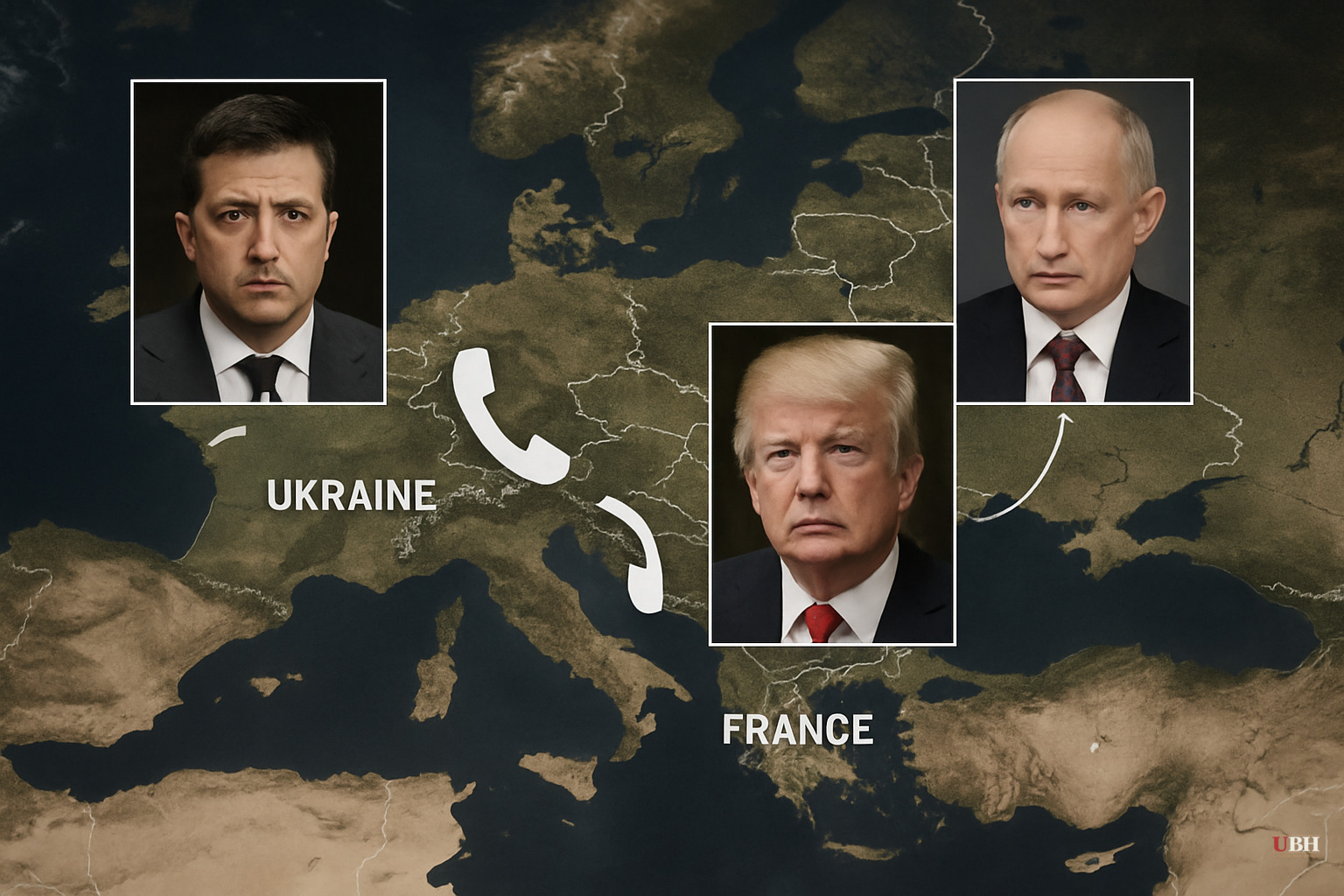
Since the Royal Marines boarded the shadow fleet tanker SMYRTOS in the English Channel earlier this same Sunday, the diplomatic dimension of the Ukraine war has moved in parallel. The two tracks tell a complicated story.
What Putin's Side Said
The substantive readout came from Russian presidential aide Yuri Ushakov, who briefed reporters after Putin's call with Trump, which lasted just under an hour. According to Ushakov, Trump said recent Ukrainian strikes on civilian targets inside Russia complicate a peace settlement, expressed readiness to influence European allies and Kyiv at the G7, and said ending the war quickly could open the door to "a truly new quality of U.S.-Russian relations." Putin argued that Ukrainian attacks on Russian infrastructure would not change the battlefield situation, and told Trump that if Zelenskyy wants a face-to-face meeting, "let him come to Moscow."
Ushakov also said U.S. envoy Steve Witkoff and Jared Kushner are expected to travel to Russia soon.
The White House did NOT confirm any of those characterizations, nor did it comment on the call, according to CNBC. Ushakov is an interested party summarizing a private conversation. His account is unverified.
What Zelenskyy Said
Zelenskyy's version, posted on Telegram Sunday, was notably thin on specifics. He called it a "wonderful conversation," thanked Trump for supporting Ukraine, said they discussed "what could help bring peace closer now" without specifying what that means, and told Trump Ukraine's position along the eastern front line has "improved and strengthened." The two agreed to meet at the G7 summit, where Zelenskyy is scheduled to join the gathering.
Neither side produced a joint statement.
The G7 Backdrop
Trump was scheduled to fly overnight to France after hosting a UFC event on the White House lawn Sunday evening. This was an unprecedented birthday celebration for a sitting U.S. president. Ukraine is expected to be a central topic at the G7 summit, with Tuesday flagged as the key day for those discussions, according to CNBC.
Both sides want to shape the narrative going into those talks.
The Shadow Fleet Operation, Revisited
The SMYRTOS boarding, reported here on June 14, connects to the diplomatic picture. The UK Ministry of Defence confirmed it was a six-hour operation involving HMS Sutherland, Chinook helicopters, Royal Marine Commandos, and National Crime Agency officers. The vessel is now anchored off England's south coast under guard.
ZeroHedge noted that France has conducted approximately four similar interdictions in the Mediterranean, but the English Channel location makes this operation geographically distinct. The UK MoD stated the operation was conducted "in close coordination" with French authorities.
Russia's Foreign Ministry spokeswoman Maria Zakharova called the broader EU interdiction framework a threat to maritime security and said the term "shadow fleet" is a "political fabrication." Shipping broker BRS estimated in August 2025 that vessels engaged in illicit trading represent 18.2% of global oil tanker tonnage, according to CNBC. This gives scale to what Western governments are trying to disrupt.
The Strongest Counterargument
Critics of the Western interdiction strategy—voices on the skeptical right and antiwar left—raise a legitimate point: seizing tankers in international shipping lanes sets a precedent that could be used against any nation's vessels by any sufficiently powerful navy. If the EU and UK can board ships based on unilateral sanctions designations, other state actors can claim the same logic. Russia's complaint that there is no recognized legal category called a "shadow fleet" has substance; international maritime law does not use that term, and the legal authority for these boardings rests on specific flag-state agreements and EU mandate expansions rather than longstanding precedent.
That said, the SMYRTOS was already under UK sanctions, the boarding was coordinated with French authorities, and the vessel is being held for investigation rather than immediately seized as a prize. The UK government has a defensible legal footing even if the broader framework is contested.
Where This Goes
The G7 summit is the next concrete pressure point. Zelenskyy will be present. Trump will arrive having just spoken to both leaders. What he chooses to say publicly about those calls—versus what Ushakov claimed privately—will be the first real test of where U.S. policy actually sits. If the White House continues to say nothing about the Putin call's contents, Ushakov's version fills the vacuum by default.
Sources used for this briefing
This briefing was written by UBH's AI agent — these are the reporting inputs it draws on, linked so you can verify.


