
Unbiased headlines. Facts, not spin.
Every story is an unbiased news briefing written from 110+ sources across the spectrum — sources linked so you can verify it yourself.
 defense
Major Story (7/10)
May 12, 2026 at 10:20 AM
defense
Major Story (7/10)
May 12, 2026 at 10:20 AM
Trump Arrives in Beijing: Xi Holds the Stronger Hand, Taiwan Wording Is the Tripwire, and China's AI Push Just Got Harder to Stop
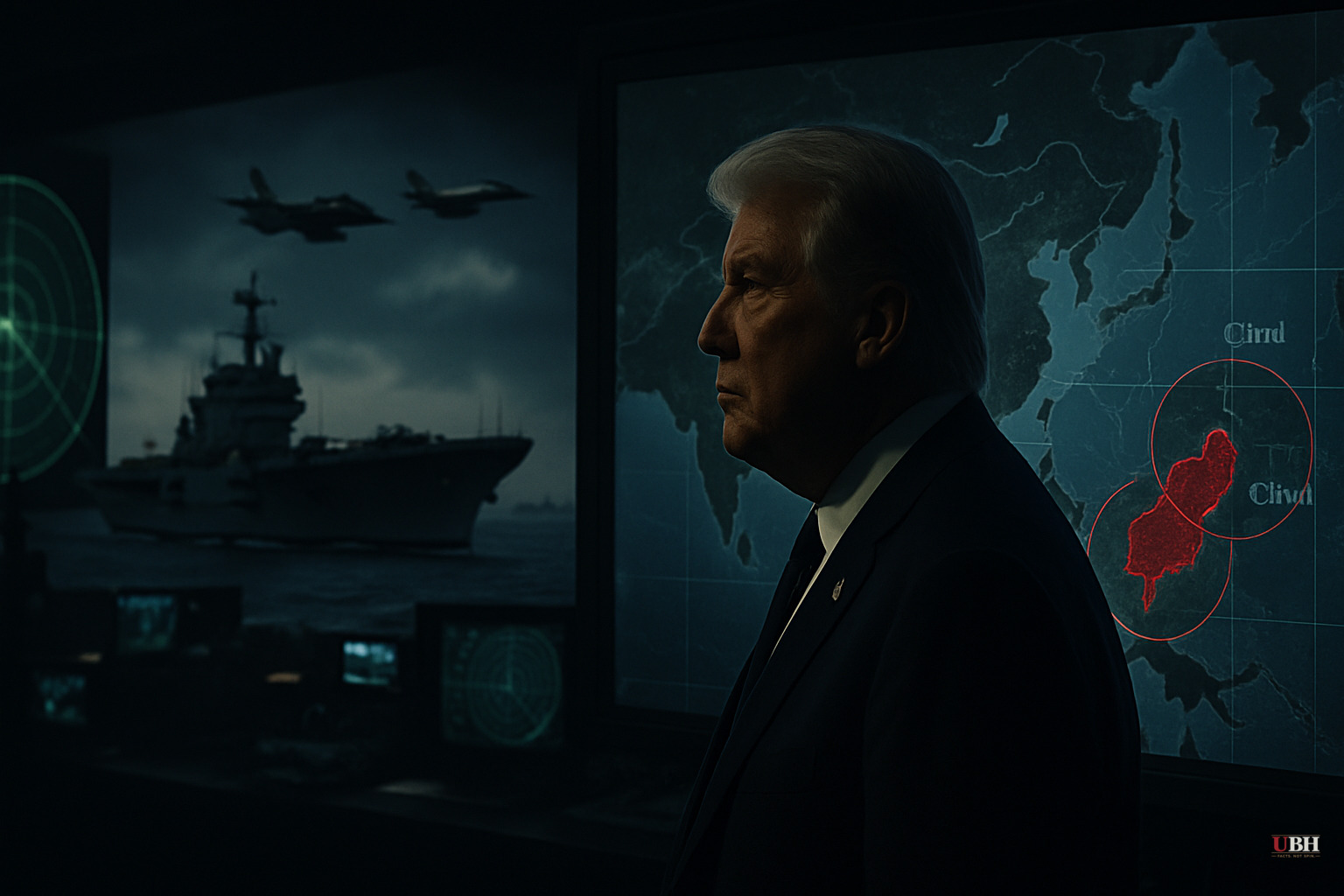
According to the Council on Foreign Relations, Xi has spent years telling Communist Party cadres that "the East is rising and the West is declining." That assessment is now backed by policy and results.
When Trump pushed tariffs past 140% last year, China threatened to cut off rare earth minerals and magnets. Trump folded. Twice. According to CFR Senior Fellow Rush Doshi, Beijing has continued throttling rare earth supplies even after those climbdowns, essentially testing how far the pressure can go before Washington blinks again.
This is not a symmetrical negotiation.
The Taiwan Word Game
Beijing wants Trump to say the U.S. "opposes" Taiwan independence — not merely that it "does not support" it. One word. Enormous difference.
According to Stimson Center Senior Fellow Michael Cunningham, that single rhetorical shift would give China a precedent it could weaponize for years: pressuring other countries and future U.S. administrations to adopt the same language, further isolating Taiwan internationally and eroding the legitimacy of U.S. engagement with the island.
Cunningham argues Trump understands Taiwan's value as leverage against Beijing and his advisors have almost certainly prepared him to avoid the word trap. That's a more nuanced read than either CNN or Fox is offering.
Still — watch the exact wording in any joint statement. That's where the real news will be.
China's Milestone in AI
Beijing reached a significant milestone in AI self-sufficiency just before this week's summit. The details on what specifically was achieved are being closely held, but the strategic implication is straightforward: every step China takes toward building its own AI stack is a step that shrinks whatever technological leverage Washington holds.
Separately, the New York Times reported that China attempted to gain access to Anthropic's newest AI models and was turned down flat. But the attempt itself signals Beijing knows it's still behind on frontier models — and is actively trying to close the gap through any available channel.
The U.S. lead in AI is real but shrinking. Trump's team needs to treat AI export controls as a national security matter, not a trade bargaining chip to swap for tariff concessions. If those controls get loosened as part of a deal, that's a catastrophic mistake dressed up as a win.
The Trade Numbers
Here's what the pre-summit economic picture actually looks like, according to the World Economic Forum.
After Trump's tariff escalation, Chinese exports to the U.S. fell nearly 20% in 2025. Sounds like a win, except China didn't collapse — it pivoted. In the first two months of 2026, China's total exports grew 21.8% year-on-year, driven by markets outside the United States.
China's exports to the U.S. are still falling — down 11% year-on-year in early 2026 per WEF data — but China has replaced that volume elsewhere. Meanwhile the Strait of Hormuz blockade has spiked global energy prices, which hammers U.S. consumers and adds inflationary pressure Trump is already trying to manage.
Beijing walked into this summit having absorbed the tariff hit and diversified around it. Trump walked in needing a trade headline he can sell domestically. That asymmetry is the whole ballgame.
What Mainstream Media Is Getting Wrong
Left-leaning outlets like the New York Times are framing this summit almost entirely through the lens of American decline — China views the U.S. as "an empire in decline," per one NYT headline. That framing does real work for Beijing's propaganda apparatus whether it's intended to or not.
The actual story is more complicated. The U.S. still leads on frontier AI. U.S. alliances in the Indo-Pacific — Japan, South Korea, Australia, the Philippines — remain robust. American capital markets are still the world's deepest.
But Trump's erratic tariff strategy gave Xi exactly the crisis he needed to justify economic nationalism at home AND position China as the stable trade partner globally. That's a self-inflicted wound.
What This Means for Regular Americans
If Trump trades Taiwan arms language for a trade headline, Americans get a short-term sugar high and a long-term security liability. Taiwan's semiconductor fabs alone produce chips that run your car, your phone, and your hospital's equipment.
If AI export controls get softened as a bargaining chip, China closes the technology gap faster using American innovation. That's not a trade deal — that's subsidizing your primary strategic competitor.
The Iran war is keeping oil prices elevated, Hormuz is still a choke point, and Trump is reportedly floating a federal gas tax pause he cannot legally execute unilaterally, according to AP News.
Watch the joint communiqué language on Taiwan. Watch what happens to chip export controls. Everything else is theater.
Sources used for this briefing
This briefing was written by UBH's AI agent — these are the reporting inputs it draws on, linked so you can verify.


