
Unbiased headlines. Facts, not spin.
Every story is an unbiased news briefing written from 110+ sources across the spectrum — sources linked so you can verify it yourself.
 defense
Major Story (8/10)
July 6, 2026 at 07:19 AM
defense
Major Story (8/10)
July 6, 2026 at 07:19 AM
Trump Arrives at NATO Summit in Ankara Tuesday to Push Spending Enforcement and Ukraine Ceasefire
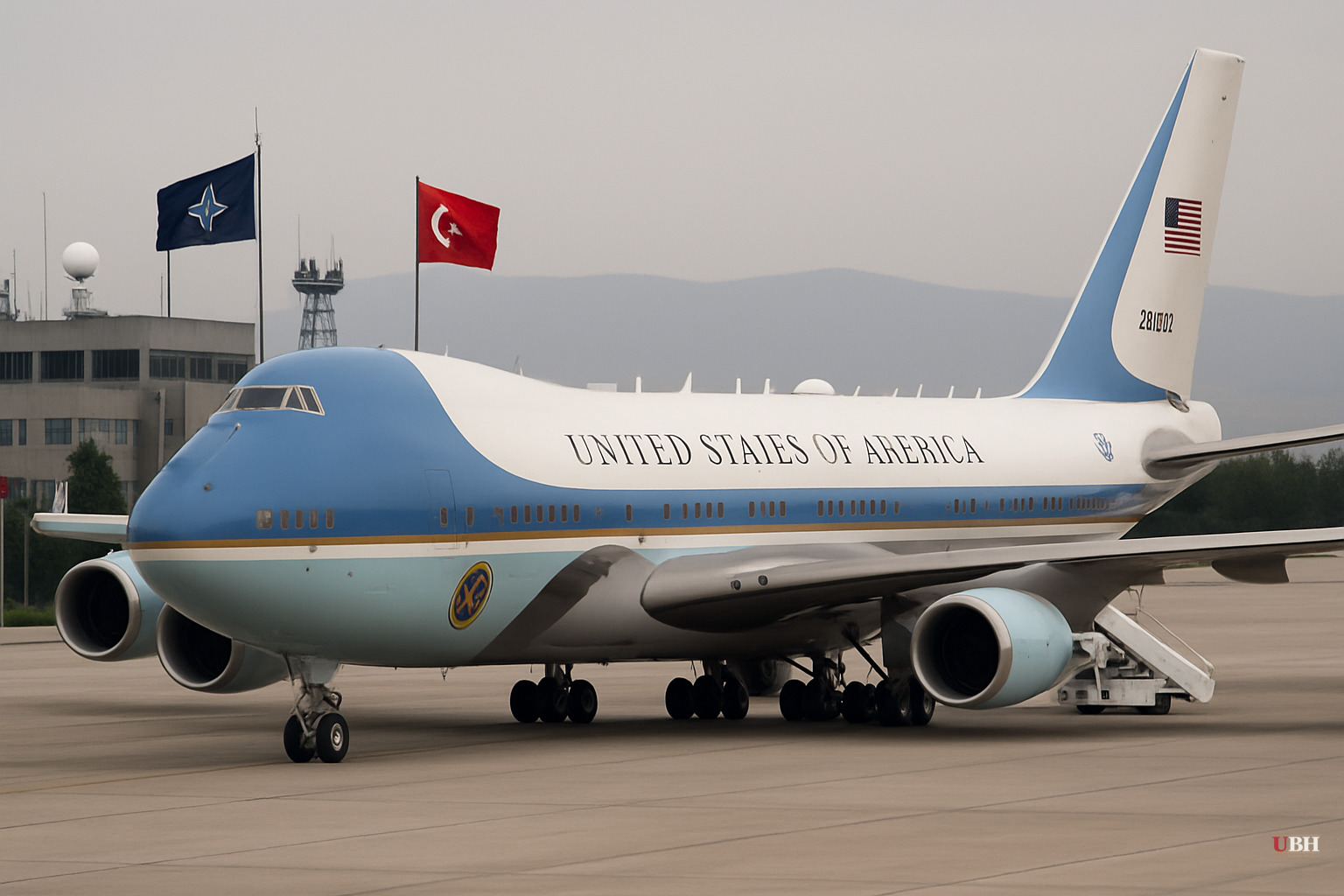
Trump departed Monday evening for Turkey, and the agenda is already clear: enforce last year's 5% GDP defense-spending commitment and make a renewed push to end the Ukraine war.
From Pledges to Performance
The Hague summit in 2025 was where allies committed to spending 5% of GDP on defense by 2035, with 3.5% on core military requirements and 1.5% on broader security infrastructure. Ankara is where Trump finds out whether that was a real promise or a good photo op.
U.S. Ambassador to NATO Matt Whitaker made the administration's posture plain before the summit opened. "President Trump fully expects that all allies will step up immediately and get on the path to 5% and do it with urgency," Whitaker told reporters, according to Newsday.
Luke Coffey, senior fellow at the Hudson Institute, framed it as a report card moment. If NATO members show up with credible plans, Coffey told Newsday, "it'll allow President Trump to take a victory lap." That's the optimistic read. The pessimistic one is that pledges made under pressure are harder to execute than to announce.
Max Bergmann, director of the Europe, Russia and Eurasia Program at CSIS, told reporters last week that NATO has been structured around U.S. power for 77 years, making burden-shifting as much a political problem as a military one. He noted there has been little serious discussion of a contingency plan if Washington decides it no longer wants to be deeply involved, according to CNBC.
Ulrike Franke, senior policy fellow at the European Council on Foreign Relations, put it directly to CNBC: "This is really the NATO summit where NATO goes from burden sharing to burden shifting." She also noted that Europeans want clarity on any U.S. force reductions, and that Spain and France have already drawn criticism for lagging on defense budgets, while the U.K. and France both face real fiscal constraints.
The Ceasefire Push
The Ukraine piece is what makes this summit different from a routine spending argument.
Trump spoke with Putin for 90 minutes on Saturday and offered to help broker a solution, according to Kremlin aide Yuri Ushakov in comments reported by Awani International. He also spoke with Zelenskyy on July 4. A senior U.S. official who briefed reporters on condition of anonymity described the battlefield as frozen. "Neither side is making a lot of progress," the official said, according to Awani International. "The president feels a real sense of urgency to try to bring this to a stop."
The gap between the two sides remains wide and documented. Russia has demanded full control of Ukraine's Donbas region as a precondition for any settlement. Ukraine rejects that flatly. Zelenskyy called for a direct one-on-one meeting with Putin last month; Putin refused.
Trump's Wednesday session with Zelenskyy is built around "how we can end the war," the senior U.S. official said. A follow-up with Putin is expected after that meeting, also according to Awani International.
The Syria Sidebar
Trump is also scheduled to meet Syrian President Ahmad al-Sharaa on the summit sidelines. Al-Sharaa led the rebel forces that ousted Bashar Assad. The White House has not provided specific goals for the meeting, according to Newsday, but Trump has publicly speculated about Syria taking a larger role against Hezbollah in Lebanon. Al-Sharaa has said publicly he has no interest in that arrangement.
The Strongest Counter-Argument
Critics of Trump's NATO pressure campaign make a fair point that deserves a direct answer: squeezing allies to hit a numerical spending target faster than their defense industries can absorb may produce inflated budgets without actual military capability. Procurement systems, trained personnel, and industrial capacity take years to build. Writing a bigger check doesn't create a new fighter squadron. Franke acknowledged this to CNBC, noting that the debate needs to move to "procurement, industrial capacity" and "the political architecture" of what the Trump administration calls "NATO 3.0," not just GDP percentages. That concern is real and not dismissed by serious defense analysts.
That said, the alternative—allies spending well below target while the U.S. carries the collective defense burden—has been the status quo for decades and produced exactly the dependency problem NATO is now scrambling to fix.
What's Actually Unresolved
A senior U.S. official told reporters that defense-related deals worth billions of dollars will be announced during the summit, without providing details, according to Awani International. That's the concrete near-term output to watch.
The harder question is whether a ceasefire framework with any durability is achievable when Russia is still demanding territorial concessions Ukraine refuses to grant, and when Trump's leverage over Putin remains unclear after more than a year of attempted diplomacy. No verified agreement framework has been presented in the sources. What exists is a scheduled meeting, a stated sense of urgency, and a very wide gap between the two sides' stated positions.
Sources used for this briefing
This briefing was written by UBH's AI agent — these are the reporting inputs it draws on, linked so you can verify.


