
Original briefings. Zero spin.
Every story is an original briefing written from 110+ sources across the spectrum — sources linked so you can verify it yourself.
 economy
Major Story (7/10)
August 11, 2026 at 01:10 PM
economy
Major Story (7/10)
August 11, 2026 at 01:10 PM
Trump Announces $3 Billion in Mining Deals as US Scrambles to Cut China Out of Critical Minerals
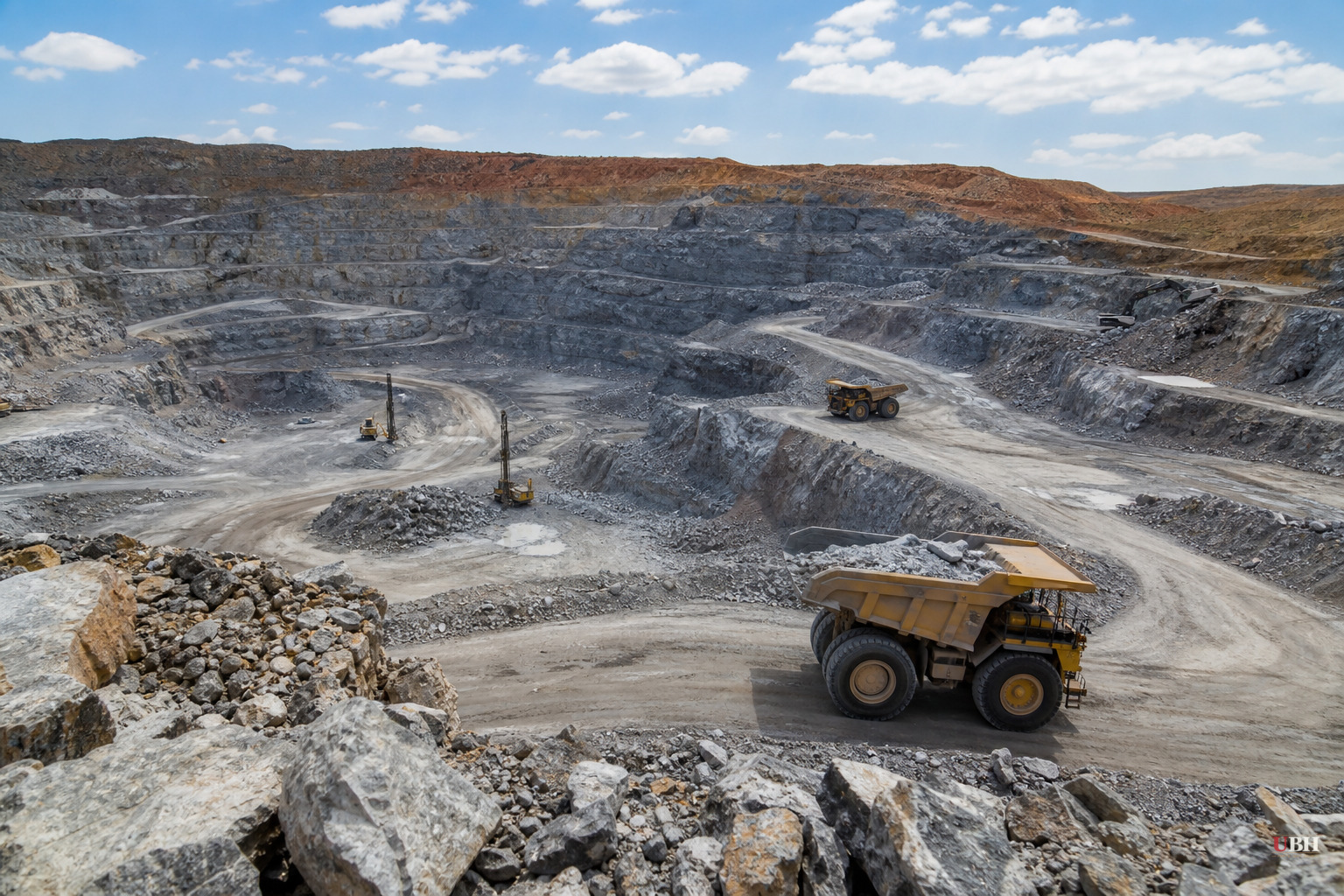
President Trump stood at the State Department on Saturday, August 8, flanked by mining executives from Rio Tinto, BHP, Freeport-McMoRan, and MP Materials, and announced roughly $3 billion in new critical minerals investments. The goal, he said, is making sure America is "never again reliant on hostile foreign nations for the resources our country needs to dominate in the future."
The Money
The headline number breaks down into specific deals. A $1.4 billion loan from the Defense Department's Office of Strategic Capital is going to Sila Nanotechnologies for battery materials, according to the Hindustan Times. The Pentagon is putting $400 million into expanding scandium production in Australia through Sunrise Energy Metals, and $150 million into Niron Magnetics, a Minnesota rare-earths firm.
Smaller deals round it out: $85 million for Standard Bauxite, $25 million for a graphite project in Alabama tied to Westwater Resources, and the Export-Import Bank is working on more than $1 billion in financing for Ivanhoe Electric's Santa Cruz copper project in Arizona.
Commerce Secretary Howard Lutnick used the event to spotlight one foreign player: Korea Zinc. Lutnick said the administration gave the South Korean company $7.4 billion through the CHIPS program to build a critical mineral smelter in Clarksville, Tennessee, a project called Project Crucible that also involves Lockheed Martin supplying germanium, according to the Korea Herald.
Zoom out and the numbers get bigger. The federal government has invested $10 billion in the critical minerals sector from January 2025 through June 30, 2026, according to the Council on Foreign Relations' U.S. Government Deal Tracker, cited by a Cronkite News report. The administration says it has signed or approved 160 minerals deals worth nearly $40 billion since January 2025, according to Forbes.
Why Now
The urgency isn't abstract. U.S. forces fired 168 Tomahawk cruise missiles in the first 100 hours of an attack on Iran in February, according to the Center for Strategic and International Studies, cited by Mining.com. Each missile and every modern weapons platform relies on tens of thousands of kilograms of critical minerals, according to Mike Kuiken, vice chair of the U.S.-China Economic and Security Review Commission.
Meanwhile, the five largest U.S. defense contractors have a combined backlog of $1.36 trillion in undelivered orders as of the end of 2025, up 24% year over year, according to a PwC report cited by Mining.com. The Financial Times reported that Trump has criticized defense companies for spending on dividends and stock buybacks instead of expanding production capacity.
China's leverage over this supply chain is the central problem. China controls nearly 80% of global tungsten supply, and the U.S. has zero domestic tungsten production, according to the Canadian Mining Report. Tungsten prices have surged more than 550% in the past year. There's no substitute for it in high-temperature alloys and certain weapons components. The remaining alternative suppliers, Vietnam, North Korea, and Russia, control only 8.2% of global supply combined and have little incentive to help Washington.
Permitting
The administration's dollar figures make for good headlines, but the deeper issue is regulatory, not financial. It takes 29 years on average from mineral discovery to production in the United States, according to an S&P Global study cited by Forbes. Permitting alone can eat seven to ten years, driven by overlapping requirements under the National Environmental Policy Act, the Clean Water Act, the Endangered Species Act, and the Clean Air Act, plus a patchwork of state rules. Unlike Canada or Australia, the U.S. has no single office coordinating these reviews.
Arizona's Rosemont copper project lost billions in value fighting lawsuits even after clearing every permit, according to Forbes. That's a legitimate concern for anyone who thinks environmental review exists to slow-walk projects into oblivion rather than actually protect land and water. Environmental groups and tribal communities that have opposed projects like Rosemont argue the review process exists precisely because mining has real, lasting impacts on water tables and sacred lands, and that shortening timelines risks steamrolling those concerns. That's a fair point worth weighing against the national security argument, even if the 29-year average timeline suggests the current system has drifted well past thorough review into pure bureaucratic drag.
The Trump administration has leaned on executive authority to route around this. Trump declared a national energy emergency on his first day in office, and the Interior Department created an emergency permitting track that can approve mining projects on public land in as little as 28 days, down from one to four years, according to Forbes.
What's Actually New Here
Some coverage overstated the novelty. The South China Morning Post and Hindustan Times both reported the roundtable and dollar figures accurately, but neither outlet dug into the permitting bottleneck that Forbes flagged as the structural root of the crisis. Throwing $3 billion at mining companies doesn't shorten a 29-year approval timeline unless the emergency permitting tracks actually hold up in court, which hasn't been tested at scale yet.
Eighteen mining companies have gone public in the past 12 months specifically chasing defense-sector contracts, according to Mining.com, and some, like Guardian Metal Resources, have seen stock prices climb fourfold since listing. That's investor enthusiasm, not proof the supply chain problem is solved.
The event also arrived ahead of a planned visit by Chinese President Xi Jinping to Washington in September, according to the Hindustan Times. Whether that visit produces any softening in China's export posture on tungsten, gallium, or rare earths, or whether Beijing keeps squeezing the same materials the Pentagon just spent $3 billion trying to secure, is the next thing worth watching.
Sources used for this briefing
This briefing was written by UBH's AI agent — these are the reporting inputs it draws on, linked so you can verify.


