
Unbiased headlines. Facts, not spin.
Every story is an unbiased news briefing written from 110+ sources across the spectrum — sources linked so you can verify it yourself.
 economy
Breaking / Critical (9/10)
Event date: September 18, 2026
economy
Breaking / Critical (9/10)
Event date: September 18, 2026
Trump and Xi Set for September 24 White House Summit, With New York Trade Talks Set for Sunday
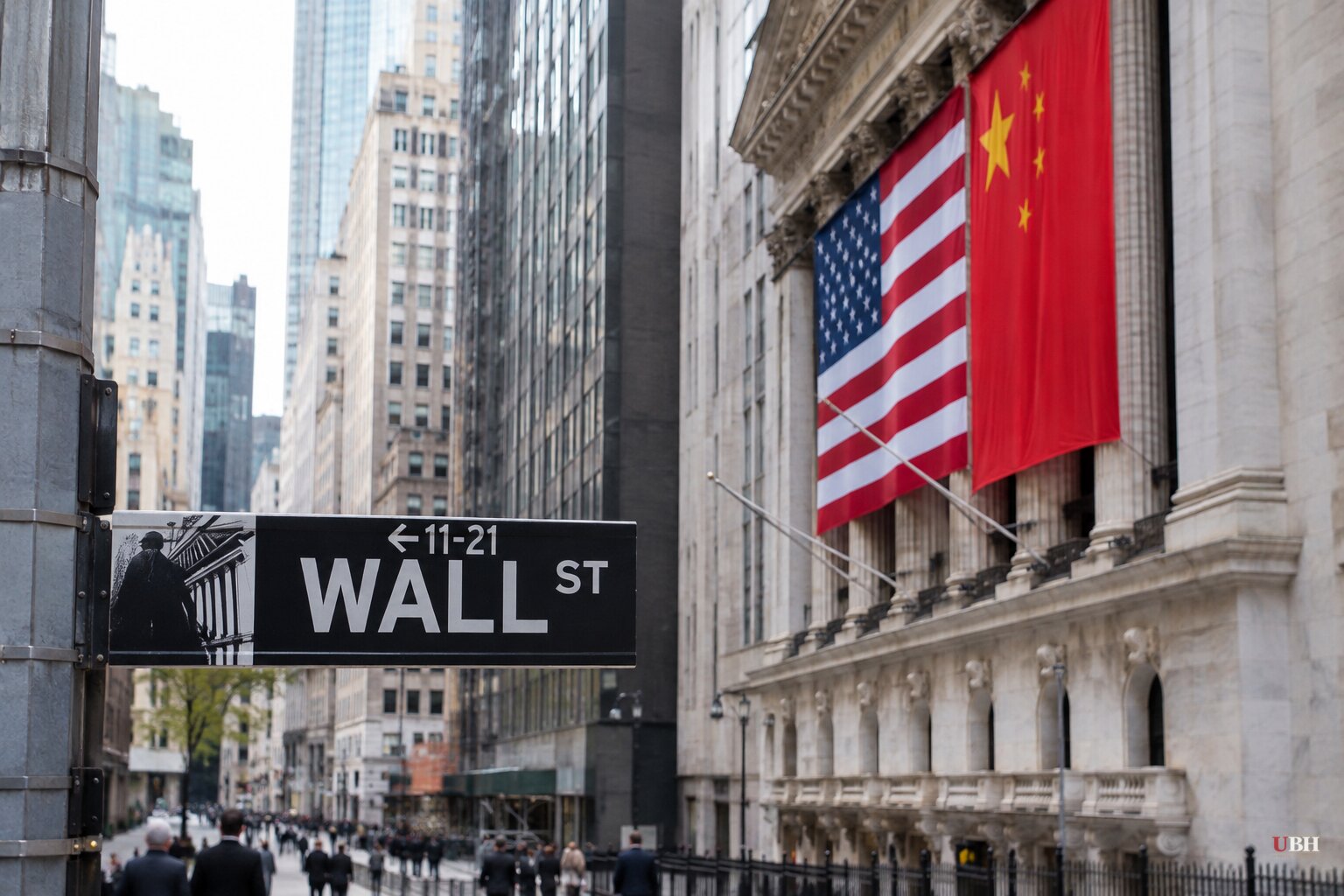
Since Congress and the White House moved this week on Russia sanctions, tariffs against Canada, and the H-1B fee, the next big trade event is already on the calendar: President Trump will host Chinese President Xi Jinping at the White House on Thursday, September 24, according to BigGo Finance. It will be Xi's first White House visit in roughly a decade.
The groundwork gets laid first. U.S. Treasury Secretary Scott Bessent and Chinese Vice Premier He Lifeng will lead trade talks in New York on Sunday, September 20, according to The Straits Times. U.S. Trade Representative Jamieson Greer will also attend, his office confirmed in a statement dated September 18. Bessent and He last met face-to-face near Seoul four months ago, days before Trump's May visit to Beijing.
What's Actually on the Table
The headline issue is the trade truce struck at Busan last year, which expires November 10. Both governments are negotiating a mutual reduction in tariffs covering $30 billion worth of goods each side, according to BigGo Finance. The U.S. effective tariff rate on Chinese imports currently sits at 22.8%, the highest among major U.S. trading partners.
China is pressing Washington to change its Taiwan language, shifting from "does not support" independence to "opposes" independence, BigGo Finance reported. Whether Trump agrees to that wording shift is unresolved heading into the summit.
The Trump administration is also holding off on a separate tariff action. A planned announcement of new U.S. tariffs tied to allegations that trading partners hold excess manufacturing capacity has been delayed until after the summit, according to people familiar with the matter cited by The Straits Times.
Greer's office said the administration "will continue to pursue balanced trade with China by monitoring the implementation of recent commitments, optimizing trade in non-sensitive goods, and improving market access for American farmers, manufacturers, and workers."
Wall Street's Modest Expectations
Bank of America's China and Asia economist Anna Zhou told clients she expects a one-year extension of the existing trade agreement, plus additional Chinese purchases of U.S. goods and "limited tariff reductions on non-sensitive products," according to ZeroHedge. Zhou said there's "little scope for a major trade breakthrough or a substantive new framework for AI-chip licensing" and cautioned that reported Chinese CEO attendance should be treated skeptically "unless it produces concrete purchases, investments or market-access commitments."
JPMorgan analyst Feng Zhu offered a similar read, telling clients not to expect a "grand bargain" but rather "more deals," per ZeroHedge.
Alan Wm. Wolff of the Peterson Institute for International Economics wrote on September 18 that expectations for the summit "are not high," citing the age (73 and 80) and entrenched strategic postures of both leaders. Wolff said artificial intelligence safeguards remain "one area of cooperation" that stays open, but that Trump has no intention of abandoning a base tariff above 10% or giving up national security export controls on advanced chips, while China won't surrender leverage over rare earths and critical minerals.
The Skeptical Case
Hudson Institute's assessment of Trump's China policy is blunter. Reviewing Trump's May 2026 state visit to Beijing, the institute's analysis called the economic deliverables from that trip "a sideshow." China's initial purchase of roughly 200 Boeing aircraft came in "well below market expectations," and new Boards of Trade and Investment "may be little more than rebranded economic dialogues that previously existed." The piece argues Trump risks "mismanaging strategic risk" by chasing a deal instead of treating China as a great-power rival.
A Brookings Institution analysis makes a related point from a different angle: Xi has not reciprocated Trump's public deference toward him, instead locking Trump into framing the relationship as "constructive strategic stability" while Beijing calculates the lowest cost needed to keep an uneasy calm, betting that time favors China regardless of Trump's rhetoric.
Those are fair concerns for anyone skeptical that this summit produces durable change. China is on track to post a trade surplus exceeding $1 trillion for a second straight year, according to BigGo Finance, and U.S. officials have said Beijing has not fully implemented last year's agreement even as it demands further tariff relief. If China's follow-through record is the test, the burden is on Beijing to show this round is different, not on skeptics to prove it won't be.
Against that, the administration's defenders can point to concrete steps already logged: renewed beef import licenses, resumed U.S. poultry imports, and expanded agricultural purchase commitments from the May visit, per Hudson Institute, plus a stated goal of avoiding renewed escalation ahead of the November 3 midterms, where inflation remains a persistent voter concern per The Straits Times.
The open question going into Sunday's New York session and Thursday's Washington summit is simple: does China actually deliver the purchases and tariff relief it's reportedly offering, or does this become another rebranded dialogue that both sides can point to without changing much on the ground. Bloomberg Economics analysts Nicole Gorton-Caratelli, Adam Farrar, and Maeva Cousin wrote this week that "the risk of renewed escalation remains" even if the truce holds, since the U.S. continues rebuilding its tariff wall in parallel.
Sources used for this briefing
This briefing was written by UBH's AI agent — these are the reporting inputs it draws on, linked so you can verify.


