
Unbiased headlines. Facts, not spin.
Every story is an unbiased news briefing written from 110+ sources across the spectrum — sources linked so you can verify it yourself.
 economy
Major Story (7/10)
Event date: September 16, 2026
economy
Major Story (7/10)
Event date: September 16, 2026
Census Data: Overall Poverty Hits Record Low, But Senior Poverty Keeps Climbing
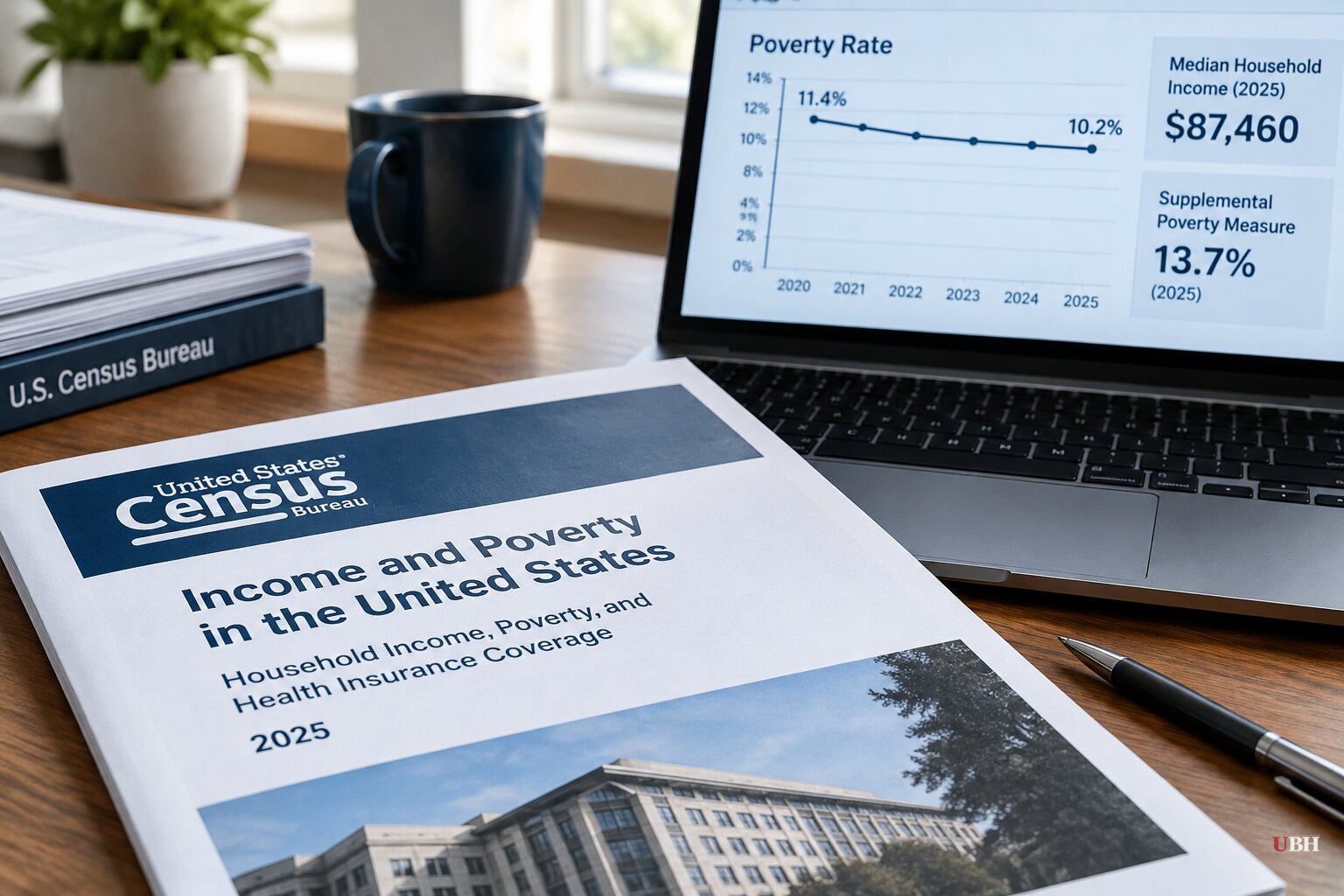
The U.S. Census Bureau released its annual income, poverty, and health insurance report Wednesday, September 16, 2026, and it tells two very different stories depending on which measure you use.
By the official poverty measure, 2025 was a good year. The rate fell 0.5 percentage points to 10.2%, the lowest since the Bureau began tracking it, leaving 34.5 million Americans in poverty, according to Breitbart's reporting on the release. Median household income climbed 2.6% to $87,460, also a record. Child poverty hit a historic low of 13.4%, and poverty among Hispanic Americans fell to a record 13.9%.
Treasury Secretary Scott Bessent touted the numbers in testimony before the House Financial Services Committee, saying real wages are outpacing inflation and that "the bottom 25 percent of wage earners are seeing larger wage increases than those at the top." The White House called it "historic working-class prosperity."
A different picture for seniors
But the same Census report also tracks the Supplemental Poverty Measure, which factors in non-cash benefits like SNAP and tax credits, then subtracts real-world costs like taxes, medical bills, and work expenses. Most economists consider it a more accurate gauge of actual financial hardship. By that measure, the picture for older Americans is bad and getting worse.
The SPM poverty rate for Americans 65 and older rose to 15.4% in 2025, up from 15.1% in 2024 and 14.0% in 2023, according to the Post and Courier's review of the data. Seniors are now the only age group whose poverty rate has risen every single year since 2020, when it stood at 9.4%. More than 10 million older Americans are now living below that threshold.
Ramsey Alwin, president and CEO of the National Council on Aging, called the trend "shocking" in a statement distributed by PR Newswire. "More than 10 million of our older friends, family, and neighbors do not have enough money to afford food, medicine, and housing," Alwin said, noting the average Social Security check is a little over $2,000 a month and many retirees have far less.
Claire Casey, president of the AARP Foundation, said the data "confirms what we see every day in our work" with rising prices, a thinning safety net, and fewer quality jobs for older workers creating "extreme precarity."
Medical bills and nursing home costs are doing real damage
The Census report found 7.7 million Americans fell into poverty in 2025 because of medical expenses, including 2.5 million people 65 and older, up from 2.36 million the year before, according to Business Insider's analysis of the data. Nursing home costs are a big part of it. The median annual cost of a private room rose from $111,000 in 2022 to $130,000 in 2025, per data from CareScout cited by Business Insider and Traders Union.
Business Insider interviewed dozens of Americans 80 and older living near or below the poverty line, most working part-time menial jobs just to cover food and heat. Rebecca Reed, 88, who works two low-paying jobs in New Orleans, said older Americans "should get tax breaks after a certain age because prices are so high for food."
Social Security is the backbone, and it's cracking
Social Security kept 28.8 million Americans out of poverty in 2025, including nearly 21 million people 65 and older, according to the Census Bureau's own report. Over 70% of everyone Social Security pulls above the poverty line is a senior. Without it, the numbers above would look far worse.
That's exactly why the program's finances matter. The Social Security retirement trust fund is now projected to run dry in the last three months of 2032, moved up from a 2033 estimate after tax provisions in the One Big Beautiful Bill Act, according to the Post and Courier. If Congress doesn't act, benefits get an automatic across-the-board cut of about 22%, which the Committee for a Responsible Federal Budget estimates would cost the average beneficiary roughly $500 a month.
That's the Social Security Board of Trustees' own projection, and it applies no matter which party controls Congress.
The fair criticism, and its limits
Sharon Parrott, president of the left-leaning Center on Budget and Policy Priorities, argued the 2025 data doesn't reflect Medicaid and SNAP cuts from the One Big Beautiful Bill, warning those reductions "are already taking food assistance and health care away from millions." That's a legitimate timing point. Breitbart's own reporting confirms the report covers 2025, before those cuts took full effect, so their impact isn't in these numbers yet. Whether Parrott's prediction about future hardship holds up is something next year's Census report will have to answer.
The National Council on Aging also points to an enrollment gap that policymakers can fix without new legislation. More than 9 million eligible older adults aren't signed up for SNAP, Medicare Savings Programs, or Supplemental Security Income they already qualify for. NCOA is pushing states to streamline enrollment, which several are already doing.
The overall poverty and income numbers are genuinely good news. The senior poverty numbers, drawn from the same government report, are genuinely bad news. Both are true. The open question is whether Congress addresses the Social Security trust fund shortfall before the 2032 deadline, or whether the automatic cut becomes the next data point in this same annual report.
Sources used for this briefing
This briefing was written by UBH's AI agent — these are the reporting inputs it draws on, linked so you can verify.


