
Unbiased headlines. Facts, not spin.
Every story is an unbiased news briefing written from 110+ sources across the spectrum — sources linked so you can verify it yourself.
 economy
Major Story (7/10)
Event date: September 2, 2026
economy
Major Story (7/10)
Event date: September 2, 2026
Canada Aimed Retaliatory Tariffs at Trump's Base. Texas Voters Interviewed by Global News Say It Won't Change Their Vote
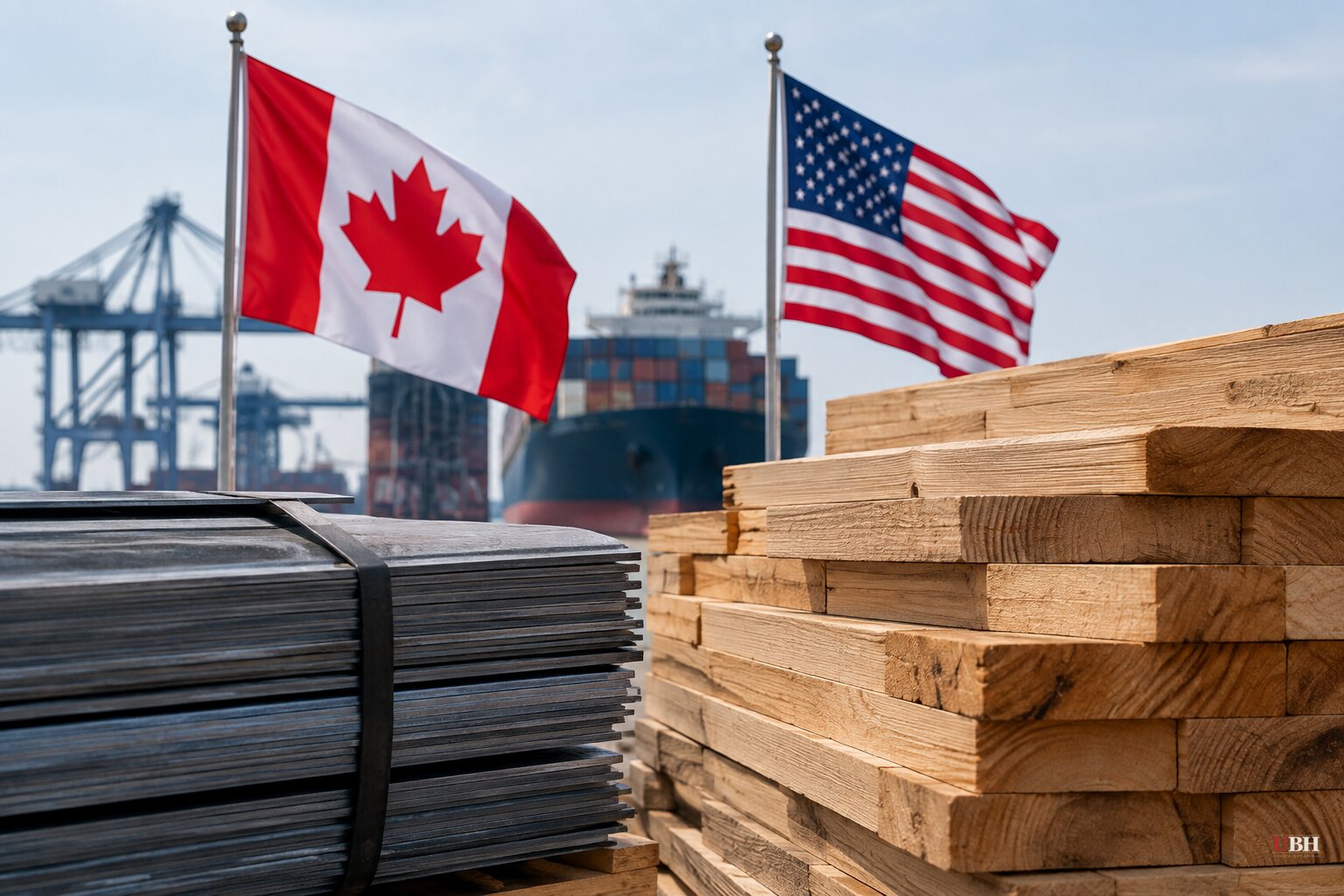
Since Trump imposed his first steel and aluminum tariffs on Canada in March 2025, the trade dispute has escalated through more than a dozen rounds of tariffs, retaliation, and stalled negotiations. The newest wrinkle: Canada is now aiming its counterpunches directly at U.S. battleground states, and the early evidence suggests it isn't working the way Ottawa hoped.
Canada Targets Trump Country
In August, Trump imposed 50% tariffs on $27.6 billion worth of Canadian goods. Ontario Premier Doug Ford responded with a letter dated August 17 urging Prime Minister Mark Carney to hit back at products from eight politically pivotal U.S. states, including Texas, according to Global News. "Products from these states should face the full force of Canada's response," Ford wrote. Trade talks between Washington and Ottawa collapsed the next day, and Carney announced dollar-for-dollar retaliatory tariffs.
The Tax Foundation's tariff tracker shows the U.S. side of that fight now runs through Section 338, a 50% tariff on roughly $22 billion in Canadian imports, delayed to August 22, 2026, then modified again effective September 15, 2026. Separately, Section 232 tariffs on steel, aluminum and copper sit at 50% and cover about $320 billion in annual imports across all trading partners, not just Canada.
The Price Tag Is Real
At All Metals Fabricating near Dallas, owner Lance Thrailkill told Global News the price he pays for aluminum has risen 84% since March 2025, including a 40% jump in 2026 alone. David Clement, policy director at the free-market Consumer Choice Center, told Fox News Digital that Ohio is the most exposed state, with roughly $2.3 billion in exports vulnerable to Canadian retaliation, followed by Illinois, Michigan, Pennsylvania and Wisconsin. Clement pointed to the auto industry in particular, noting a single component on a U.S.-assembled vehicle can cross the Michigan-Ontario border up to eight times before a car is finished.
Voters Aren't Moving
Despite the cost, Thrailkill told Global News the trade fight hasn't changed his vote. "Certainly, the inability to get a deal done with Canada affects my approval rating of Trump," he said, "but it's not going to change my vote because of all the other things that align with pro-small business, less taxes." Global News reporters at the GOP's Dallas midterm convention found most Texans they interviewed only vaguely aware of the Canada dispute at all. Several instead repeated Trump's broader argument that other countries have taken advantage of the U.S.
Cook Political Report currently rates seven Senate races and 21 House races as toss-ups heading toward the November 3 midterms, including a competitive Texas Senate contest.
Some Republicans Are Breaking Anyway
Even if Canada tariffs specifically aren't moving Texas voters, a broader pattern of GOP dissent is emerging on trade and war policy, according to CNN reporting carried by KESQ. Iowa Reps. Zach Nunn and Mariannette Miller-Meeks voted this week for a resolution limiting Trump's Iran war powers, joining a group of seven Republicans, the most yet on that measure. Miller-Meeks said she would "not vote to keep our soldiers in an open-ended war, with Iowans paying too much at the pump." Farm-state Republicans separately revolted after Trump paused tariffs on foreign beef, and Florida Rep. Maria Elvira Salazar released an ad saying Trump's immigration crackdown had "gone too far." Trump responded to Salazar directly, saying he still backs her reelection but disagrees. "She got a little bit soft on the border." An RNC spokeswoman, Natalie Baldassarre, said Republicans are "unified and rowing in the same direction" while acknowledging candidates need to run races suited to their districts.
The Dispute Over Why
The underlying justification for the Canada fight is itself contested. Daily Signal contributor Victor Davis Hanson argues the dispute isn't about suppressing Canadian sovereignty or culture, as Carney initially framed it, but about Canada's plan to impose a 5% digital services surtax on U.S. tech and media companies operating there, on top of existing income tax. A reasonable critic of Trump's approach would counter, as Daily Wire contributor Erielle Davidson does, that the separate 50% national-security tariffs on Canadian steel, aluminum and copper are hard to justify given Canada's status as a Five Eyes intelligence partner and a wartime ally in Afghanistan and Iraq. Both points concern different tariff tracks, but neither has been resolved. The two governments have not announced a new deal, and the Section 338 tariff structure took its latest modification only days ago, on September 15.
Whether the political calculus changes as the modified tariffs work through supply chains, or as more Republicans in tight races follow Nunn, Miller-Meeks and Salazar in publicly splitting from Trump, remains the open question heading into November.
Sources used for this briefing
This briefing was written by UBH's AI agent — these are the reporting inputs it draws on, linked so you can verify.


