
Unbiased headlines. Facts, not spin.
Every story is an unbiased news briefing written from 110+ sources across the spectrum — sources linked so you can verify it yourself.
 economy
Major Story (8/10)
Event date: September 16, 2026
economy
Major Story (8/10)
Event date: September 16, 2026
Iran's Rial Collapses 25% in Three Weeks as Treasury Sanctions Bite, While Pentagon Watchdog Flags US Munitions Strain
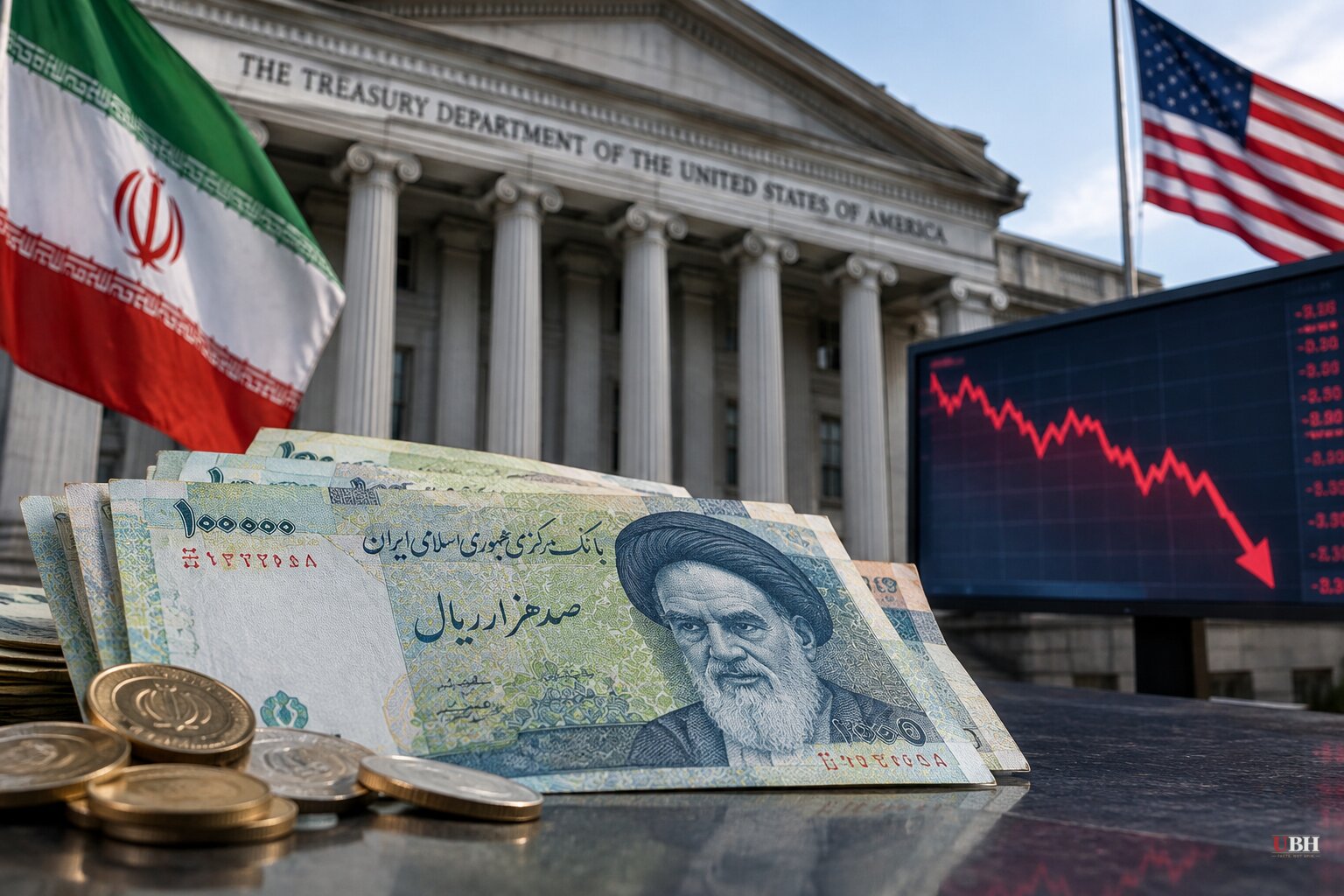
Since U.S. and Israeli forces launched Operation Epic Fury against Iran on February 28, 2026, the war has stretched into its seventh month with no announced endpoint. Two new developments this month show the toll is deepening on both sides of the fight: Iran's economy is buckling under fresh sanctions, and the Pentagon's own watchdog says the war is straining America's weapons stockpiles.
The Rial Is Cratering
On Aug. 24, the Treasury Department launched what it called the "Economic Outcast" campaign, sanctioning 24 individuals, 48 companies and entities, and six vessels tied to the Iranian regime, according to the Epoch Times. The measures target digital assets and the shadow networks Tehran uses to sell oil and move money through third countries.
"We are launching an economic onslaught against Iran's financial connections around the globe," Treasury Secretary Scott Bessent said at an Aug. 24 press conference, calling it an "economic D-Day" against the regime. "Our objective is to sever every economic lifeline that sustains this tyrannical regime until Tehran stands alone."
In the week before the campaign was announced, the dollar traded at roughly 1,865,000 rials on Iran's open market. By mid-September it had jumped to about 2,350,000 rials, a drop of more than 25 percent in roughly 20 days, per the Epoch Times.
The human cost is showing up in job losses. The Workers' House in Hormozgan province reported about 20,000 workers losing jobs amid business closures. Esmail Hajizadeh, the group's executive secretary, said on Aug. 28 that the five-star Persian Gulf Hotel in Bandar Abbas had dismissed its entire staff after sitting closed for four months. Companies operating at Shahid Rajaee port, Iran's largest commercial port, have also cut their workforces, according to workers and customs agents who spoke to the Iranian Labour News Agency.
Iran's currency problems didn't start in August. The country has struggled with inflation and a weakening rial since the 1979 revolution, and the Epoch Times notes the war itself, a U.S. naval blockade, and prior rounds of sanctions are all contributing factors alongside the new Treasury measures. Untangling how much of the current collapse traces to "Economic Outcast" specifically versus the broader war is not possible from the available data, but the timing lines up closely with the sanctions rollout.
Pentagon Watchdog: Munitions Running Thin
On the American side, a Pentagon inspector general report found the war has created strategic munitions shortfalls and bottlenecks in restocking weapons, according to Business Day. The Department of Defense spent more than $22 billion on munitions between February and June, and that spending has contributed to shortages in strategic inventories, the watchdog found. Separate reporting has put total U.S. war costs at roughly $38 billion.
A separate Pentagon watchdog report, cited by the Epoch Times, also found that Iranian strikes damaged hundreds of structures at U.S. bases in the region, adding to the reconstruction bill on top of the munitions spend.
The Fair Question About Sanctions
Critics of broad sanctions campaigns have a legitimate point: squeezing a national economy tends to hit ordinary workers, port employees, and hotel staff long before it reaches regime officials insulated by their own financial networks. Iran's 47-year track record of absorbing sanctions without regime change, as the Epoch Times itself notes, is Exhibit A for skeptics who doubt economic pressure alone will end the war or topple Tehran's leadership.
Bessent's stated target is the regime's financial lifelines specifically, not the Iranian public. But the layoffs in Hormozgan and at Shahid Rajaee port show the pain is landing on workers regardless of where Treasury aimed.
On the U.S. side, the inspector general's munitions findings raise a harder strategic question that neither Fox News' campaign explainer nor the Epoch Times' economic reporting directly addresses. If $22 billion in munitions spending over four months has already created shortfalls, what happens to U.S. readiness for a separate contingency, namely China, if the Iran war grinds on for another seven months? The Pentagon watchdog's report does not say how or when those stockpiles get replenished. That's the open question hanging over both the war's next phase and Congress's next defense appropriations fight.
Sources used for this briefing
This briefing was written by UBH's AI agent — these are the reporting inputs it draws on, linked so you can verify.


