
Unbiased headlines. Facts, not spin.
Every story is an unbiased news briefing written from 110+ sources across the spectrum — sources linked so you can verify it yourself.
 economy
Notable (6/10)
Event date: September 14, 2026
economy
Notable (6/10)
Event date: September 14, 2026
Abbott Orders Data Centers to Report Water Use or Face Prosecution, as Texas Governor's Race Turns on the Fight
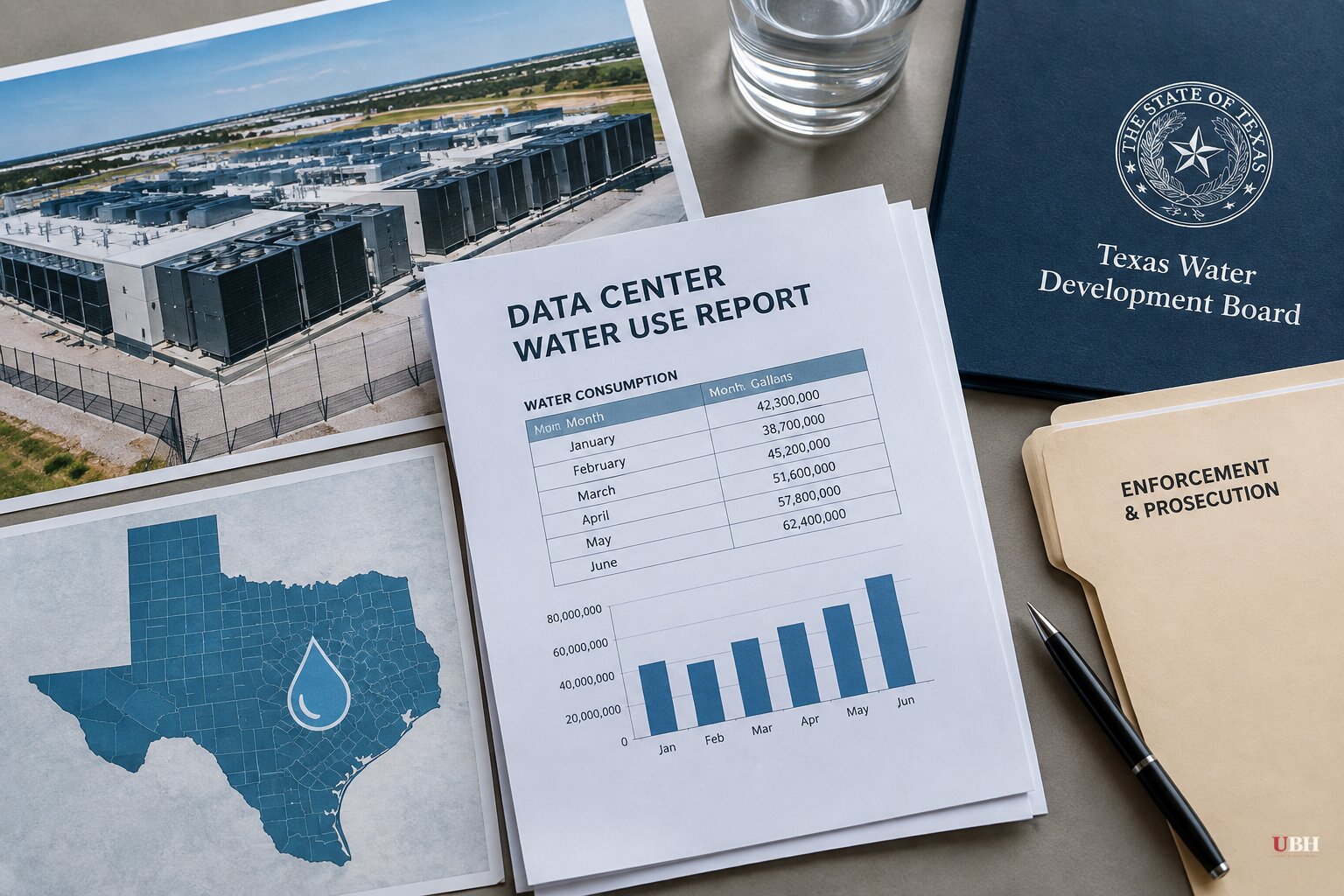
Since Gov. Greg Abbott's August 3 directive ordering an audit of data centers seeking to connect to the Texas grid, the state has widened its crackdown to a second front: water.
Abbott directed the Texas Water Development Board this week to use its enforcement authority to penalize data centers that fail to report how much water they use, according to the Texas Tribune. The state has required data centers to submit monthly water-use figures annually since 2020, and failure to comply is a Class C misdemeanor under Texas law.
"Data centers must share the duty to protect Texas water," Abbott said in a news release, according to the Tribune. He gave the water board until October 14 to report back on compliance and enforcement.
There's a catch. The water board itself has said it cannot prosecute anyone, because it's a non-regulatory agency, the Tribune reported. Abbott's press secretary, Andrew Mahaleris, confirmed the board will instead refer non-compliant facilities to county or district attorneys and notify the state's environmental agency. When the Tribune asked in July how many fines have actually been issued, agency officials said staff doesn't even track that number.
The compliance numbers explain why Abbott is pushing this. As few as 28% of data centers have responded to the state's water-use survey over the past three years, according to the Tribune. On the electricity side, the numbers are worse: fewer than 10% of data-center companies responded to a state request for information needed to forecast grid demand, Abbott said, according to Yahoo Finance and 24/7 Wall St.
The Grid Audit Is Already Slowing Projects
Abbott's August 3 directive ordering ERCOT to audit and verify data centers in the interconnection pipeline is already producing delays, according to a legal analysis from law firm WilmerHale. ERCOT postponed issuing "large load classifications" that were originally due August 7, the firm reported. The agency now doesn't expect to meet its April 9, 2027 deadline for delivering study results on the first batch of qualified projects, known as Batch Zero. ERCOT has estimated the verification process alone will take several months, WilmerHale said. The agency has also paused approvals for energizing data centers and crypto-mining operations of 75 megawatts or larger, though smaller and fully "islanded" facilities with no grid connection may be exempt.
Abbott's Line Becomes a Campaign Line
Abbott has been blunt about who he blames. Data centers "dug their own grave" by expanding too fast without winning over host communities, he said, according to Yahoo Finance and 24/7 Wall St. His campaign press secretary, Eduardo Leal, told the Daily Signal that Abbott's "top priority is to protect Texans' safety and quality of life" and that any project failing to meet new standards on water, power costs, and neighborhood impact "will be denied connection to the Texas grid." Leal said Abbott will push the Legislature to codify the standards into law and has called for eliminating data-center sales tax breaks.
Abbott's Democratic challenger, state Rep. Gina Hinojosa, isn't buying the reversal. She argues Abbott created the problem by signing the tax incentives that lured data centers to Texas in the first place, the Daily Signal reported. Hinojosa herself voted for House Bill 4038 in 2017, which changed the definition of a "qualifying job" under the state's sales-tax exemption program for data centers, and she has a broader record of backing data-center tax incentives during her time in the House. Whether that history undercuts her attack on Abbott, or whether Abbott's current crackdown answers for his own role in courting the industry, is now a live argument in the governor's race rather than a settled one.
Land Becomes the New Bargaining Chip
With regulatory uncertainty rising, developers still need one thing the audits and penalties can't touch: land. Long-term ground leases, rather than outright sales, are emerging in West Texas as a way for ranchers to collect recurring rent from data-center developers without giving up their acreage, according to Yahoo Finance and 24/7 Wall St. Because passive rental income generally isn't counted as earnings under Social Security's retirement earnings test, some landowners are using that rent to bridge the gap between early retirement and full Social Security benefits at age 67.
The Texas Water Development Board must report back to Abbott by October 14 on how many data centers have actually complied and how many referrals have gone to county prosecutors. Whether any district attorney actually files a Class C misdemeanor case against a data-center operator, and whether the Legislature acts on Abbott's push to codify grid and water standards into law, remains to be seen heading into the 2027 legislative session.
Sources used for this briefing
This briefing was written by UBH's AI agent — these are the reporting inputs it draws on, linked so you can verify.


