
Unbiased headlines. Facts, not spin.
Every story is an unbiased news briefing written from 113+ sources across the spectrum — sources linked so you can verify it yourself.
 economy
Major Story (8/10)
September 25, 2026 at 08:16 AM
economy
Major Story (8/10)
September 25, 2026 at 08:16 AM
Trump and Xi Extend Trade Truce Two Months, But China Is Still Behind on Its Buying Promises
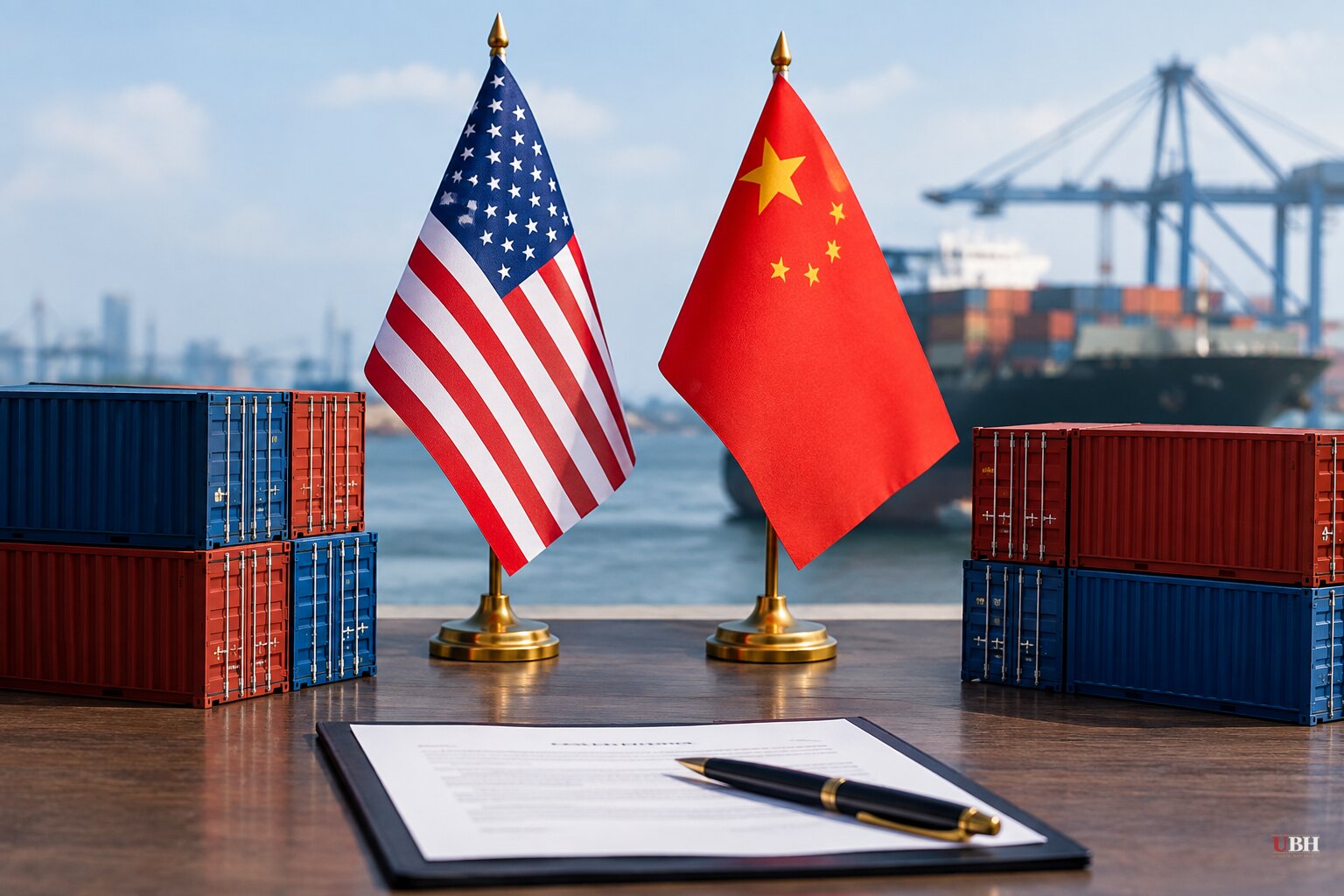
Xi Jinping landed at Joint Base Andrews on Wednesday, September 23, and got the full treatment: a Rose Garden military review, a state dinner in the East Room, and personal tarmac greetings from President Trump. The talks that mattered began Thursday, with a second round of meetings set for Friday.
The headline result so far: a two-month extension of the trade truce. Treasury Secretary Scott Bessent told Fox News the deal that was set to expire November 10 will now run through January 10, 2027, giving both sides "more time to see what we can do on the economic front." Bessent said he doesn't know yet whether a bigger agreement gets done by that new deadline or whether the can just gets kicked again.
This was a modest outcome for a summit this dressed up. Per the Financial Times, cited by Kyiv Post, China wanted the tariff reductions locked in through the end of Trump's term in 2029. Washington wanted something closer to six months to a year, so it keeps leverage for the bigger fights over rare earths, semiconductors, and AI. They split the difference at two months.
China's Report Card on Its Own Promises
Back in May, China agreed in Beijing to buy 200 Boeing aircraft and at least $17 billion a year in U.S. farm goods through 2028, plus 25 million metric tons of soybeans over three years, according to TheStreet. The follow-through has been uneven.
Bessent says China has been "very good thus far" on soybeans and expects it to hit the 25-million-ton mark. But USDA data cited by TheStreet shows China has only confirmed close to 10 million metric tons from this year's crop so far. It hasn't bought any U.S. corn this season, and sorghum purchases are running below normal. Bessent separately acknowledged China is roughly $17 billion behind on other agricultural commitments and is "encouraging them to pick those up."
China still has a 10% retaliatory tariff on U.S. soybeans in place, which is a real reason its buyers keep sourcing from Brazil and Argentina instead. The American Soybean Association and National Sorghum Producers have written directly to Trump asking him to get that tariff lifted. Whether that happens is one of the open questions coming out of this summit. None of the available reporting says Beijing has committed to removing it.
The Bigger Number Nobody's Talking About
The U.S. trade deficit with China fell 32% between 2024 and 2025, according to the Financial Times as reported by Kyiv Post. That sounds like a win. But China's overall global trade surplus hit roughly $1.2 trillion in 2025 and is on pace to beat that this year. Chinese manufacturers didn't stop exporting. They just rerouted through ASEAN countries, Europe, India, and Latin America. Tariffs changed where Chinese goods go. They haven't changed how much China exports.
The Tariff Strategy Has Three Jobs and Can't Do All Three
Trump's second-term tariff approach isn't just about China anymore. In 2025 he raised the average U.S. tariff rate from about 3% to more than 18%, according to Reason. The U.S. Trade Representative frames this as defending national security and forcing reciprocal trade with everyone, friend or foe.
That creates a problem Reason lays out plainly: leverage requires tariffs you can trade away, revenue requires imports to keep flowing, and protection requires them to stop. Those goals conflict. You can't maximize all three with one tool.
Canada is the live example. Trade talks broke down August 21, and the administration slapped 50% tariffs on a range of Canadian goods, including dairy and alcohol, effective August 22, according to J.P. Morgan Global Research. Trump has also threatened to double auto and auto-parts tariffs to 50% starting January 1, 2027. Canada responded with dollar-for-dollar counter-tariffs beginning September 8. J.P. Morgan economist Michael Hanson said the hit is big enough to threaten Canada's economic rebound, though small enough on the U.S. side to leave inflation mostly unaffected. The Bank of Canada held its rate at 2.25% but signaled it's watching closely.
Who's Actually Paying, and For What
Tariffs did raise real money: $264 billion last year, according to Reason. But more than half of that came from levies imposed under the International Emergency Economic Powers Act, which the Supreme Court invalidated in February, according to Supply Chain Dive. The administration is now refunding that portion to American companies.
That matters because the administration has floated tariff revenue as the funding source for a $2,000 dividend check promised last November, and more recently a $5,000-per-adult payout if Republicans hold the House and Senate this midterm cycle. Both promises assume a revenue stream that's already shrinking due to a Supreme Court ruling and that, per Reason's analysis, is functionally a tax paid by American importers and consumers, not by China.
China has genuinely weaponized rare-earth export licenses, threatens Taiwan, and engages in industrial espionage. Reason itself acknowledges these concerns are real. Tariffs give Washington a lever to push back that didn't exist before. Whether that lever is being used coherently, or just to fund campaign-season promises, is the question the next two months are supposed to answer.
The truce now runs to January 10, 2027. Nobody involved, including Bessent, has said whether a larger deal will be ready by then.
Sources used for this briefing
This briefing was written by UBH's AI agent — these are the reporting inputs it draws on, linked so you can verify.


