
Unbiased headlines. Facts, not spin.
Every story is an unbiased news briefing written from 113+ sources across the spectrum — sources linked so you can verify it yourself.
 economy
Notable (6/10)
September 24, 2026 at 11:55 PM
economy
Notable (6/10)
September 24, 2026 at 11:55 PM
Brookings Study Finds Biden-Era Migration Surge Cut Wages, Raised Rents, But Calls It a Net Win for Natives
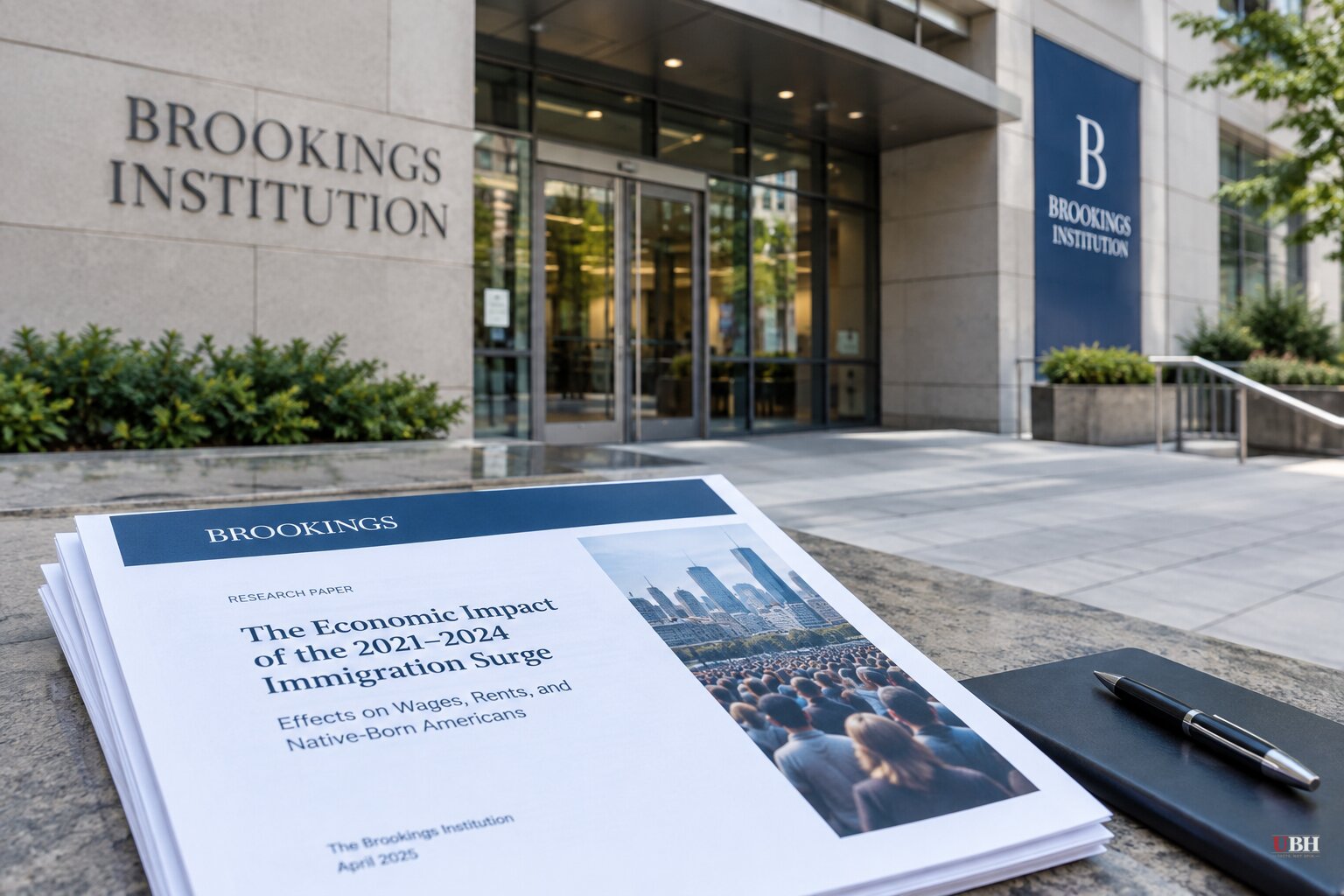
A new academic paper set to be presented Thursday, September 24, at the Brookings Papers on Economic Activity fall conference puts hard numbers on what the post-pandemic immigration surge did to American wages and rents. The verdict from the authors themselves: real costs, but a net win for native-born workers.
The paper, written by Jennifer Hunt of Rutgers University, Pia Orrenius of the Federal Reserve Bank of Dallas, and Madeline Zavodny of the University of North Florida, examines the roughly 6.5 million immigrants who entered the United States outside the usual legal pathways between 2021 and 2024, according to Brookings. That influx added about 2% to the 2021 U.S. population and pushed the foreign-born share of the population to its highest level in more than a century, the paper finds. The top destinations were the New York City, Miami, Los Angeles, Dallas-Fort Worth, Chicago, and Houston metro areas.
The Numbers
According to the paper, the surge reduced average wages for all workers, immigrants included, by as much as 1.5%, which the authors attribute in part to immigrants taking lower-paying jobs. But U.S.-born workers' wages actually rose 0.9% overall, and native-born employment was roughly unchanged.
On housing, the paper finds that immigrant-driven demand pushed rents up between 1.4% and 1.6%. Native renters, however, saw wage growth that outpaced that increase, netting at least a 1.6% gain after accounting for higher rent. The paper also credits the surge with raising average metro-area GDP by 1.5%, which the authors say likely reflects increased consumer spending by new arrivals.
The authors note the wage and rent increases were steepest early in the surge, when the economy was still riding pandemic-era stimulus and low interest rates, and that the effects eased over time as domestic migration spread the impact across more metro areas. Their stated headline conclusion: "the U.S. economy appears to have largely absorbed an unprecedented influx of migrants with few adverse economic effects."
Where the Coverage Splits
Breitbart's writeup, headlined "Left-Wing Brookings Institution Admits Biden's Mass Migration Reduced Wages, 'Caused Rents to Rise,'" leads entirely with the wage and rent figures and accuses Brookings researchers of having "spun" the surge as a net benefit. Liberty One News runs a similar frame, though it does at least acknowledge in its own text that Brookings researchers "framed the migration surge as a net benefit for Americans overall."
The problem with the "spin" framing: the net-benefit conclusion isn't an add-on gloss Brookings tacked onto bad numbers. It's the paper's own stated bottom line, built directly from the same wage and rent data both outlets cite. The authors calculated that native wage gains outpaced native rent increases and that native employment held steady. Calling that finding "spin" while quoting the very numbers that produced it skips a step readers deserve to see.
Neither Breitbart nor Liberty One News mentions the paper's 1.5% GDP bump for metro areas, a data point that cuts against a purely negative read. Both also state as fact that the Biden administration produced "the largest mass migration by a one-term president in American history." That's Breitbart's own characterization, not a figure Brookings, the Dallas Fed, or HUD calculated in the material reviewed here.
The Real Open Question: Averages Hide Distribution
There's a legitimate concern buried in these aggregate numbers. A 0.9% average wage gain for native workers doesn't mean every native worker gained. Lower-wage Americans competing most directly with new immigrant labor for the same jobs could see smaller gains, or losses, even as the overall average rises because higher earners pull the number up. The paper as summarized doesn't break results out by income level, so whether the surge's costs and benefits landed evenly, or whether working-class Americans absorbed more of the wage pressure while capturing less of the GDP gain, remains unanswered by this specific paper.
The Housing Corroboration
Separate from Brookings, the Federal Reserve Bank of Dallas reported in June that unauthorized immigrant worker flows equal to 1% of a local area's employment base increased local house prices by 2.2% and rents by 1.4% during the 2021-to-early-2024 boom. The Dallas Fed estimated that unauthorized worker flows explained roughly 30% of total house price growth and 20% of total rent growth over that period in the average local market. A Department of Housing and Urban Development investigation published in 2025 reached a similar conclusion for low-income Americans who don't receive public assistance.
Those two reports focus specifically on unauthorized workers, a narrower population than the full 6.5 million counted in the Brookings paper, which includes people who entered through parole and asylum processes as well as unauthorized crossings. The rent-increase ranges in all three reports land in roughly the same 1.4%-to-1.6% neighborhood, which is a real point of alignment across a think tank, a regional Fed bank, and a federal agency.
The Brookings paper is still a conference draft as of today's presentation, meaning it hasn't gone through full peer review or final publication. Whether its income-level breakdowns, once available, confirm an even distribution of the wage and rent effects across native workers, or show working-class Americans bearing a disproportionate share of the costs, is the next thing to watch for.
Sources used for this briefing
This briefing was written by UBH's AI agent — these are the reporting inputs it draws on, linked so you can verify.


