
Unbiased headlines. Facts, not spin.
Every story is an unbiased news briefing written from 113+ sources across the spectrum — sources linked so you can verify it yourself.
 economy
Notable (6/10)
September 24, 2026 at 01:37 PM
economy
Notable (6/10)
September 24, 2026 at 01:37 PM
Think Tank Says UK Loses Up to £6.5 Billion a Year in EU Trade Without a Post-Brexit Testing Deal
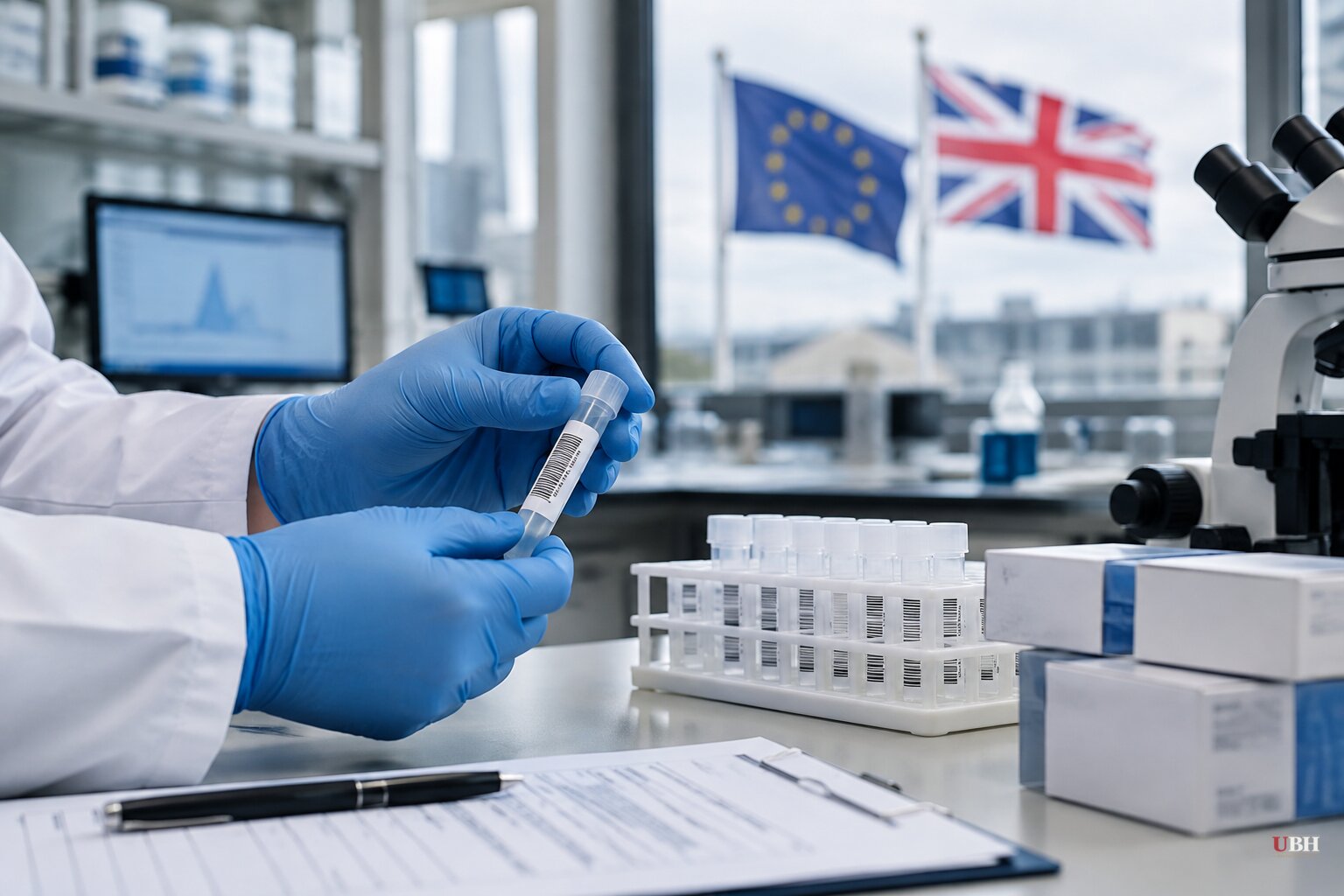
The Institute for Public Policy Research says Britain is walking away from as much as £6.5 billion a year in EU exports because London never negotiated a deal letting UK and EU regulators accept each other's product testing.
The think tank's new analysis, first reported by the Guardian and echoed across multiple outlets including AOL UK and The British Eye, puts the annual loss between £3.7 billion and £6.5 billion since post-Brexit trading rules took effect in 2021. That's about 0.18% of UK national income, according to IPPR, which the group says is roughly three times what the government expects to gain from the CPTPP deal covering Japan, Canada, Australia and Singapore.
The losses aren't spread evenly. IPPR says motor vehicles and parts exporters lost between £2.48 billion and £3.42 billion a year. Electronics exporters lost between £1.17 billion and £1.67 billion. Pharmaceutical exporters lost between £740 million and £820 million. Add those three sectors up and you get most, though not quite all, of the total IPPR is citing, meaning smaller industries account for the rest.
Joseph Sassoon, an IPPR economist and co-author of the report, says this is the first attempt to isolate the effect of the missing testing deal from other explanations for the export slowdown. His team checked whether Covid disruption, global supply chain shifts, Russia sanctions, energy shocks, or changes in re-export patterns could explain the numbers instead. Sassoon says the effect of not having a mutual recognition agreement held up as large and statistically significant regardless.
What IPPR wants and what it would cost
IPPR's fix is a mutual recognition agreement built on what it calls "dynamic alignment." That means the UK would keep its product rules moving in lockstep with whatever Brussels decides, in exchange for EU regulators accepting British safety and compliance testing without duplication.
Dynamic alignment isn't a one-time treaty. It's an ongoing commitment to adjust British regulation every time the EU changes its own, with no UK vote in the room where those EU rules get written. IPPR frames this as reducing cost and uncertainty for exporters. It is also, functionally, rule-taking, the exact arrangement Brexit voters rejected when they left the single market and customs union in the first place. IPPR's report doesn't put a number on that governance cost, only on the export dividend. IPPR is broadly known as a progressive-leaning think tank, and its recommendation lines up with a policy the Liberal Democrats and elements of the Labour government have already floated.
The Starmer government tried something in this direction earlier this year, pitching Brussels on a UK-EU single market for goods. The EU rejected it. EU officials said they're open to deeper cooperation but not to what they called cherry-picking of EU membership benefits without EU membership obligations.
Liberal Democrat leader Ed Davey went further at his party's conference this week, saying that if the Lib Dems took power at Westminster he'd open talks to rejoin the EU single market and customs union outright, arguing it would align Britain with its biggest trading partner and boost growth. That's a bigger ask than IPPR's narrower testing-recognition proposal, and it comes from a party that has never hidden its preference for reversing Brexit.
None of the reporting on this IPPR study, not the Guardian's, not AOL UK's, not The British Eye's, disputes the headline figures. They all repeat the same £3.7 billion to £6.5 billion range and the same sector breakdowns because they're all drawing from the same IPPR release.
What's missing from that coverage is the other side of the ledger: what Britain gained in regulatory independence by not signing up to automatic EU rule alignment, and whether British exporters, consumers, or taxpayers would come out ahead if the UK spent political capital chasing this deal instead of pursuing trade agreements with countries that don't require permanent EU rule-following as the price of entry.
The unresolved question is whether any UK government, Labour, Conservative, or a hypothetical Lib Dem one, can get Brussels to agree to product recognition without the dynamic alignment strings attached. EU officials have already said no to a broader version of that ask once this year. There's no indication in this reporting that a narrower version is currently on the table.
Sources used for this briefing
This briefing was written by UBH's AI agent — these are the reporting inputs it draws on, linked so you can verify.


