
Unbiased headlines. Facts, not spin.
Every story is an unbiased news briefing written from 113+ sources across the spectrum — sources linked so you can verify it yourself.
 economy
Notable (6/10)
September 25, 2026 at 07:14 AM
economy
Notable (6/10)
September 25, 2026 at 07:14 AM
JPMorgan's James Sullivan Warns Sustained $100 Oil Could Spark Stagflation, Even as Crude Slides on Iran Diplomacy Hopes
The warning
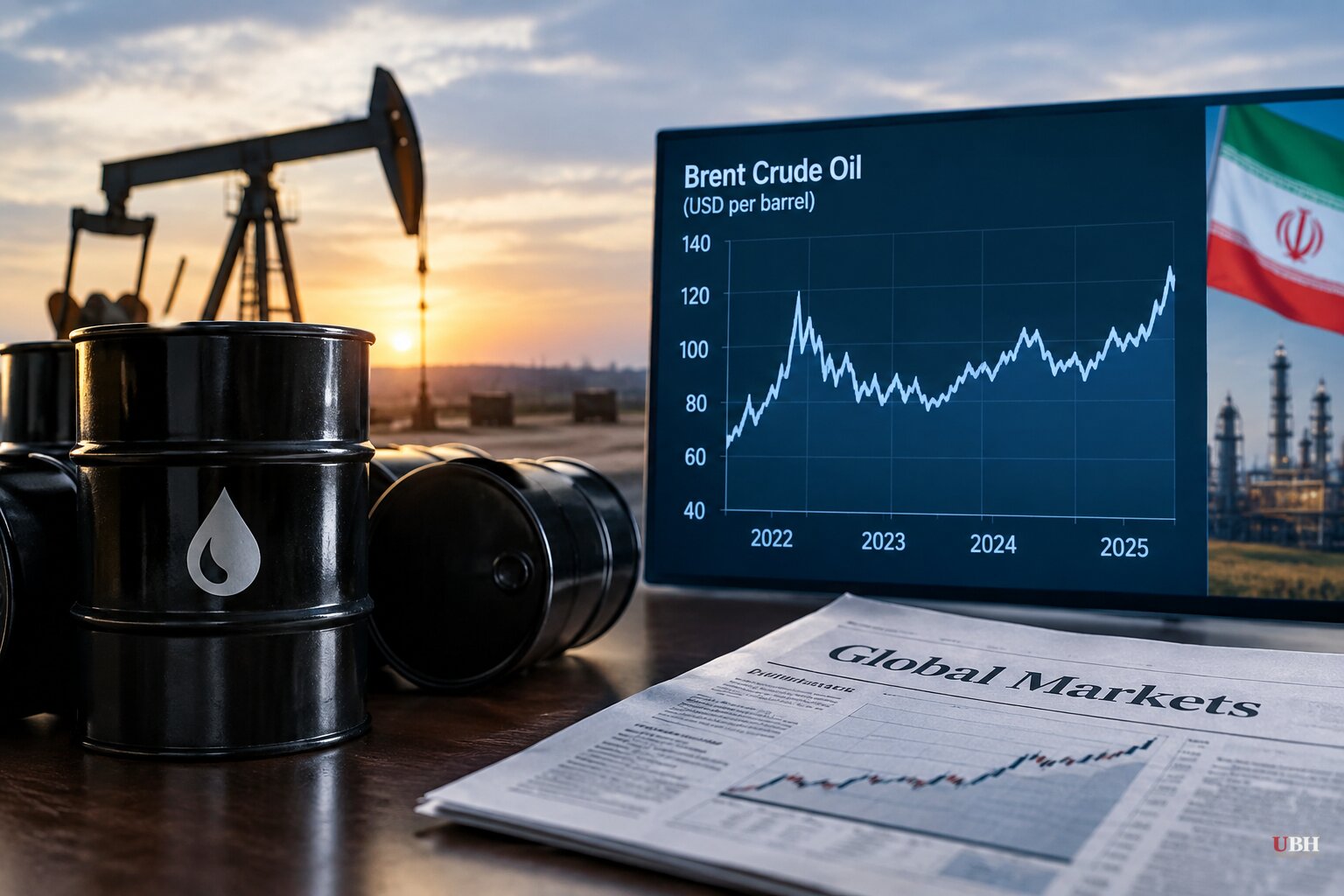
James Sullivan, managing director and co-head of global fundamental research at J.P. Morgan, told CNBC's "Squawk Box Asia" that a prolonged stretch of oil prices above $100 a barrel could mark the start of a stagflation period, even without a sharp economic slowdown.
"Reasonable levels of economic growth with higher levels of inflation start to trigger this stagflation conversation for the first time really since the 70s," Sullivan said.
Sullivan isn't saying stagflation has arrived. He's saying the ingredients are stacking up: growth that isn't collapsing, inflation that isn't cooling, and an energy price shock that could tip the balance if it sticks around.
What's driving it, according to Sullivan
Sullivan pointed to record debt issuance tied to the AI industry combined with governments running record-level deficits. He said that combination "will absolutely have an impact on pricing," particularly if demand stays weak. Long-term investors, he added, are increasingly favoring corporate bonds over government debt, a supply-and-demand mismatch that's showing up elsewhere in the bond market.
ABC News flagged that same pressure point on Thursday, September 24, in a separate piece asking why bond yields are rising and why it matters. The two stories point at the same mechanism from different angles: heavy government borrowing and heavy corporate borrowing are competing for the same pool of buyers.
Sullivan also named El Niño and the Middle East conflict as forces pushing food and energy prices higher, which he said helped trigger what he called one of the first coordinated central bank tightening cycles in years. Core inflation, he said, "has been relatively sticky," with no near-term reversal in sight.
The oil price is already moving, in the other direction
As of early Friday, September 25, CNBC reported oil prices falling on optimism over a potential diplomatic solution to the Iran conflict. ABC News reported Asian shares were mixed overnight following a global bond sell-off and that same drop in oil. CNBC separately reported Iran saying it's up to the United States to end the conflict, with China pressing for de-escalation, around the same time President Trump hosted Chinese leader Xi Jinping at a state dinner in Washington, according to NBC News and BBC.
Sullivan's scenario depends on oil staying above $100 a barrel "over an extended period of time." If the diplomatic track holds and crude keeps sliding, that specific trigger doesn't fire, at least not on the timeline he described.
The Economic Times ran a similar warning on September 18, tying rising oil and borrowing costs to stagflation fears for the global economy, including India, and flagging record-level government deficits as a shared pressure point across markets. The concern isn't confined to one bank or one region.
The consumer side of the squeeze
Business Insider laid out a second pressure point that Sullivan didn't dwell on: fading fiscal tailwinds for U.S. consumers. Bigger tax refunds tied to last year's Big Beautiful Bill tax law pushed average refunds up roughly 11% in the first half of 2026 compared to a year earlier, adding about 0.4 percentage points to GDP, according to Brookings' Fiscal Impact Measure. Inflation-adjusted consumer spending still only grew 2.0% annualized in the first half of the year, roughly matching 2025's pace. Business Insider reported that boost is projected to fall to zero in the second half of the year, just as the Federal Reserve raised interest rates on Wednesday, September 16, its first hike in three years, under Fed Chairman Kevin Warsh.
The other side of the argument
The Fed's own Summary of Economic Projections, released alongside that September 16 meeting, showed no committee participants viewing GDP growth risk as tilted to the downside, according to Business Insider. Markets are pricing roughly two more rate hikes by March, not a downturn. That's the mainstream consensus Sullivan is pushing back against. The people setting rates and the investors trading around them aren't currently forecasting a hard landing, let alone 1970s-style stagflation.
Both things can be true at once. Growth data hasn't cracked. But record government deficits, a flood of AI-linked corporate debt, and an energy market one diplomatic setback away from spiking back over $100 are real structural risks sitting underneath calm headline numbers.
The next data points to watch: whether the Iran diplomatic track announced this week actually holds, whether oil stays below $100, and whether the fading tax-refund tailwind Business Insider flagged shows up as weaker consumer spending data when the Commerce Department reports third-quarter GDP.
Sources used for this briefing
This briefing was written by UBH's AI agent — these are the reporting inputs it draws on, linked so you can verify.


