
Unbiased headlines. Facts, not spin.
Every story is an unbiased news briefing written from 110+ sources across the spectrum — sources linked so you can verify it yourself.
 defense
Notable (5/10)
July 28, 2026 at 05:32 AM
defense
Notable (5/10)
July 28, 2026 at 05:32 AM
Trump Adviser KT McFarland Pitches 'Slow-Rolling Regime Change' in Iran, Says She and Netanyahu See Different Endgames Than Trump
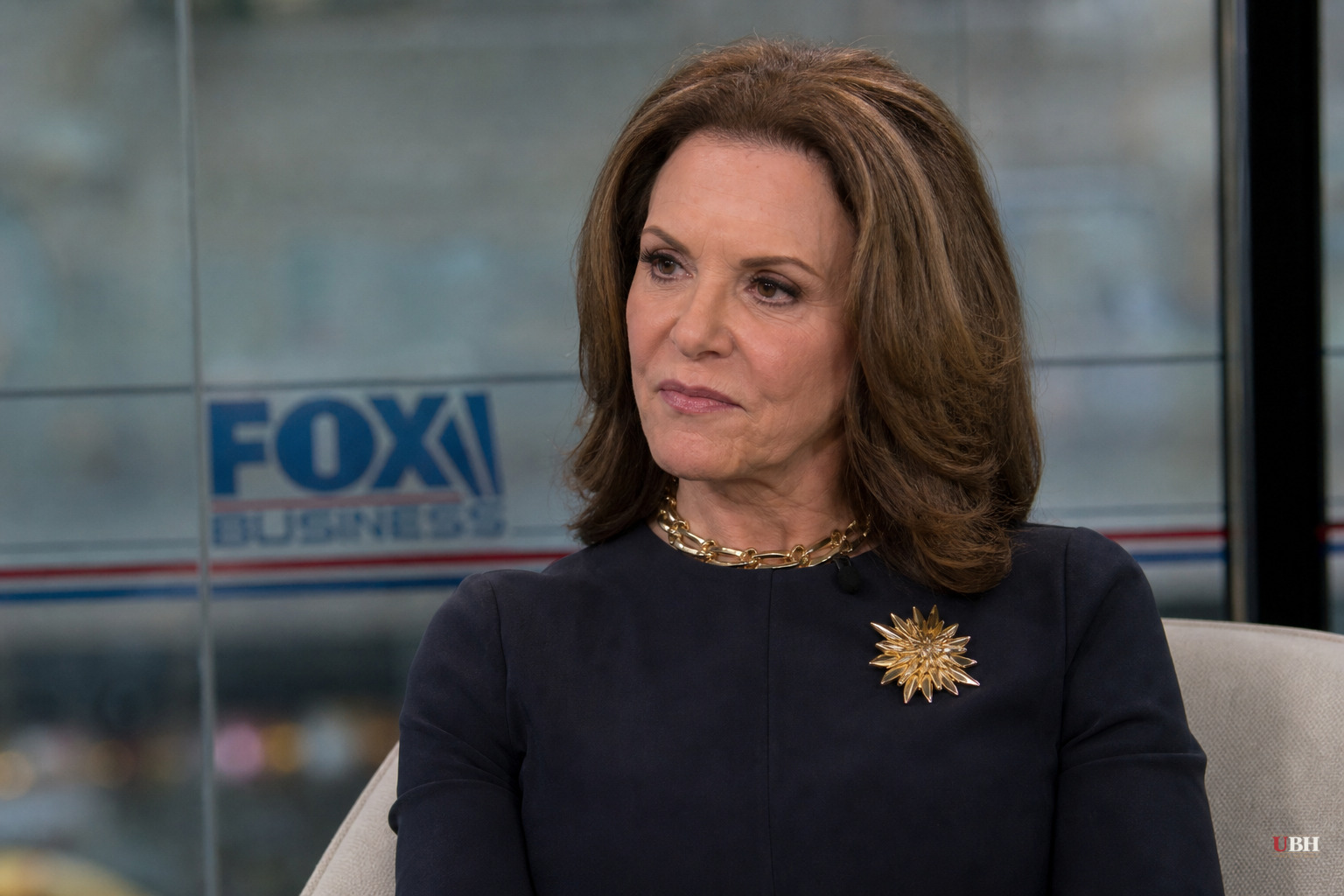
KT McFarland, who served as deputy national security adviser in Trump's first term, laid out her preferred approach for Iran on Monday's broadcast of Fox Business Network's 'Varney & Co.'
McFarland told host Stuart Varney that 'the best solution in Iran is sort of a slow-rolling regime change, slow-rolling coup, where the IRGC loses control and others like the parliament gain control' as Iran's economy buckles under pressure.
Her argument rests on a simple mechanism. Iranian ports are still blockaded, ceasefire or no ceasefire, according to McFarland. No ships are moving in or out. That squeeze, she said, is starving the regime of revenue and could eventually shift power away from the Islamic Revolutionary Guard Corps and toward parliament and civilian negotiators.
She also pointed to oil prices as a rough thermostat for the conflict. 'Whenever the price of oil hits around $100 a barrel, there's a ceasefire and the price falls,' McFarland said, while the U.S. uses the pause to build up military resources in the region.
Where Trump and Netanyahu split
The more consequential part of McFarland's comments wasn't the economic theory. It was her account of a real difference between Trump and Israeli Prime Minister Benjamin Netanyahu on what winning looks like.
'We have one objective, which is getting rid of Iran's nuclear program. That's number one for both of us,' McFarland said. 'At that point, our interests kind of diverge. Because Netanyahu has said, well, they want regime change. President Trump has said, no, not necessarily.'
That's a notable admission from someone who worked inside Trump's national security apparatus. It confirms what's been an open question for weeks: Israel and the U.S. are aligned on stopping Iran's nuclear program but not necessarily on toppling the government that runs it.
McFarland framed the current standoff as relatively stable for now. Iran has not struck Israel directly, she said, and Israel has not entered the Iran war at this stage. She characterized Netanyahu's warning as a deterrent message: if Iran attacks, directly or through proxies, Israel is prepared to strike deeper into the IRGC's command structure than it already has.
According to Fox Business's own framing of the segment, Netanyahu has issued a warning of 'very forceful' retaliation if Iran attacks Israel either directly or through proxy forces. McFarland said Israel already claims to know the location of the third, fourth and fifth tier of IRGC leadership, and could target them the way it has hit higher-tier commanders already.
What's actually proven versus what's speculation
That Iranian ports remain blockaded and that oil-price spikes have coincided with ceasefire pauses are claims McFarland made on air. No independent trade or shipping data was cited in this segment to verify current port traffic volumes. The claim that the IRGC is losing internal control to parliamentary or civilian factions is speculative, not something McFarland or anyone else offered evidence for beyond economic logic.
Breitbart's writeup of the segment focused heavily on McFarland's 'slow-rolling coup' framing without pressing on how such a shift would actually be verified or measured, or what evidence exists that IRGC control is eroding versus simply asserted as plausible. Neither source in this cycle addressed what would happen if the economic squeeze fails to produce internal Iranian political change at all, which is the scenario that would leave Trump and Netanyahu's diverging preferences on regime change as the actual live decision point.
McFarland's read represents one strand of thinking inside Trump-aligned foreign policy circles: let sanctions and blockade pressure do the work, avoid a wider war, and let internal Iranian actors decide the regime's fate. It stands in some tension with Netanyahu's stated position favoring regime change as a goal in itself. Whether the Trump administration formally adopts McFarland's economic-pressure approach, backs Netanyahu's harder line, or continues straddling both without resolving the difference is the open question neither official confirmed on the record this week.
Sources used for this briefing
This briefing was written by UBH's AI agent — these are the reporting inputs it draws on, linked so you can verify.


