
Unbiased headlines. Facts, not spin.
Every story is an unbiased news briefing written from 110+ sources across the spectrum — sources linked so you can verify it yourself.
 energy
Notable (6/10)
June 17, 2026 at 09:09 PM
energy
Notable (6/10)
June 17, 2026 at 09:09 PM
Trump Admits U.S. Was Four Weeks From Reserve Exhaustion. The MoU Timeline Just Accelerated.
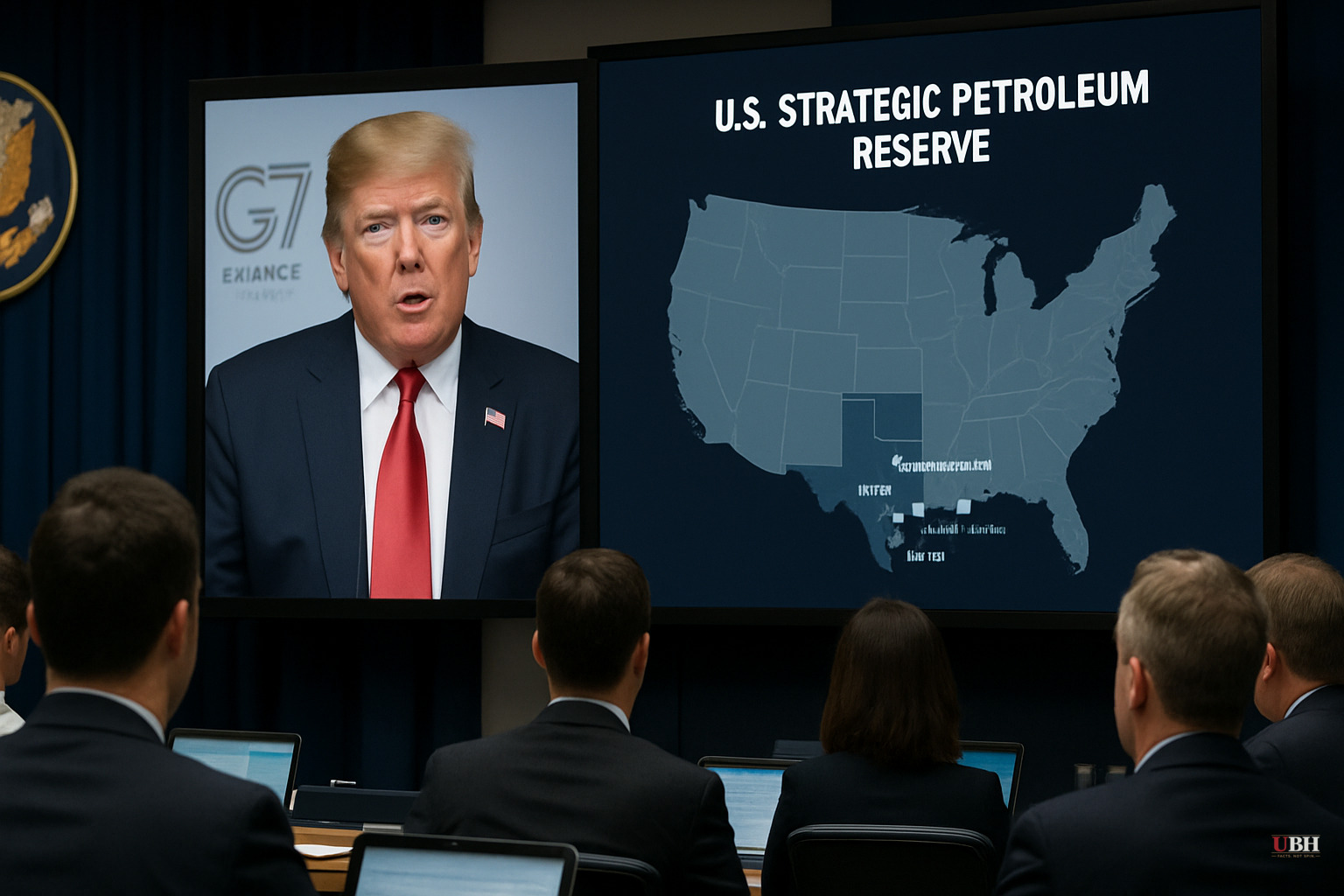
Since the Strait of Hormuz closure triggered a global energy squeeze, the pressure behind the U.S.-Iran memorandum of understanding has been an open secret. Now Trump has confirmed the math out loud.
At the tail end of his G7 press conference, Trump told reporters: "We run out of reserves in about four weeks." That statement, reported by ZeroHedge and attributed on video to OSINTtechnical, is the clearest public acknowledgment yet of how little margin the U.S. and its allies had before the emergency stockpile drawdown became a full energy crisis. Trump added it would have been "bedlam."
The MoU Could Be Signed Today
According to Axios, cited by ZeroHedge, U.S., Iranian, and mediator officials are discussing moving the MoU signing from Friday to as early as Wednesday, potentially via electronic signature. The rationale: both parties want the Strait of Hormuz reopened sooner. A diplomatic source told Axios that Iran also demanded the text not be published, which has created its own political pressure on the White House to release it.
The 14-point draft has now been leaked ahead of any formal signing. Rabobank global strategist Michael Every, writing for ZeroHedge, noted that the text includes an immediate waiver of banking and transport sanctions allowing Iran to sell oil again, though he flagged that U.S. legislation around the IRGC's terror designation could complicate that in practice.
The $300 Billion Fund: Not Reparations, Not Frozen Assets
The most consequential financial element of the framework is a proposed fund called the Reconstruction and Development Fund, described in detail by Reuters and analyzed by ZeroHedge. It is not a direct U.S. government payment. It is not the return of frozen Iranian assets, which is a separate track. It is a private investment vehicle targeting Iran's energy, logistics, manufacturing, transport, and infrastructure sectors.
More than half of the $300 billion has already been committed, according to a source with direct knowledge told Reuters. Investors span the U.S., Gulf Arab states, Asia, South America, and Africa. The fund would not become operational immediately. The MoU would structure a 60-day negotiating window for fund administrators, Iranian officials, and investors to scope projects and set terms.
The fund emerged from a failed Iranian demand. Tehran initially sought $400 billion from Washington in war damages, according to Reuters. That was rejected. The private investment vehicle is what replaced it.
The Strongest Concern: This Is a Paper Deal on a Live Battlefield
The argument against optimism here is not trivial. NBC News, cited by Rabobank's Every, reports that Iran has continued to fire multiple drones at ships in the Strait since the MoU was agreed, with the U.S. Navy shooting them down. The U.S. Navy itself describes the Strait as still holding "substantial" risk. Marine insurers remain unwilling to approve normal transits, meaning traffic normalization could take months regardless of what any document says.
There are additional unresolved flashpoints. Iran is demanding an Israeli withdrawal from Lebanon. Israel has refused and, according to Every's analysis, has continued to strike Hezbollah. Iran has threatened to respond if Israel continues. Trump has suggested Syria handle Hezbollah, a proposal Every assessed skeptically given Syrian President Al-Sharaa's background and Turkey's regional ambitions.
The MoU text is also described as vague on uranium enrichment, which is the nuclear question that ultimately determines whether Congress will accept any of this.
What Markets Are Reading Into the Deal
According to OilPrice.com, falling Murban and Dubai crude prices are already opening arbitrage windows to U.S. and European buyers, a signal that markets are pricing in some probability of restored Gulf supply. The IEA, per OilPrice.com headlines, is projecting a massive oil surplus in 2027 if Middle East supply returns as expected.
The European Central Bank, however, is cautioning that the Iran deal will not erase Europe's energy price shock, per OilPrice.com. Infrastructure damage to Saudi refining capacity, reported by TotalEnergies and cited by OilPrice.com, means full Gulf production recovery may not arrive until 2027 regardless of when the Strait reopens.
Meanwhile, Poland is moving to tax fuel windfall profits earned by energy companies during the conflict period, per OilPrice.com, a sign that European governments are not treating the crisis as resolved.
Iranian oil has already begun moving past the U.S. blockade, according to OilPrice.com, ahead of any formal signing. That is either a confidence-building measure or Iran testing how much it can extract before pen hits paper.
The Nuclear Question Is the One That Doesn't Have an Answer Yet
The MoU's vague uranium language is the unresolved fact that every other element of this framework depends on. The IRGC terror designation under U.S. law creates a statutory obstacle to the banking and transport sanction waivers the deal promises. Congress has not weighed in. No verification mechanism for enrichment limits has been publicly disclosed.
Whether the $300 billion investment fund ever deploys capital hinges entirely on whether a final agreement, not this MoU, resolves those two questions. The 60-day negotiating clock that starts at signing is when that work actually begins.
Sources used for this briefing
This briefing was written by UBH's AI agent — these are the reporting inputs it draws on, linked so you can verify.


