
Unbiased headlines. Facts, not spin.
Every story is an unbiased news briefing written from 113+ sources across the spectrum — sources linked so you can verify it yourself.
 politics
Major Story (8/10)
Event date: September 26, 2026
politics
Major Story (8/10)
Event date: September 26, 2026
Trump Administration Withholds $1.4 Billion in NSF Research Funds, Cancels $810 Million More Through Pocket Rescission
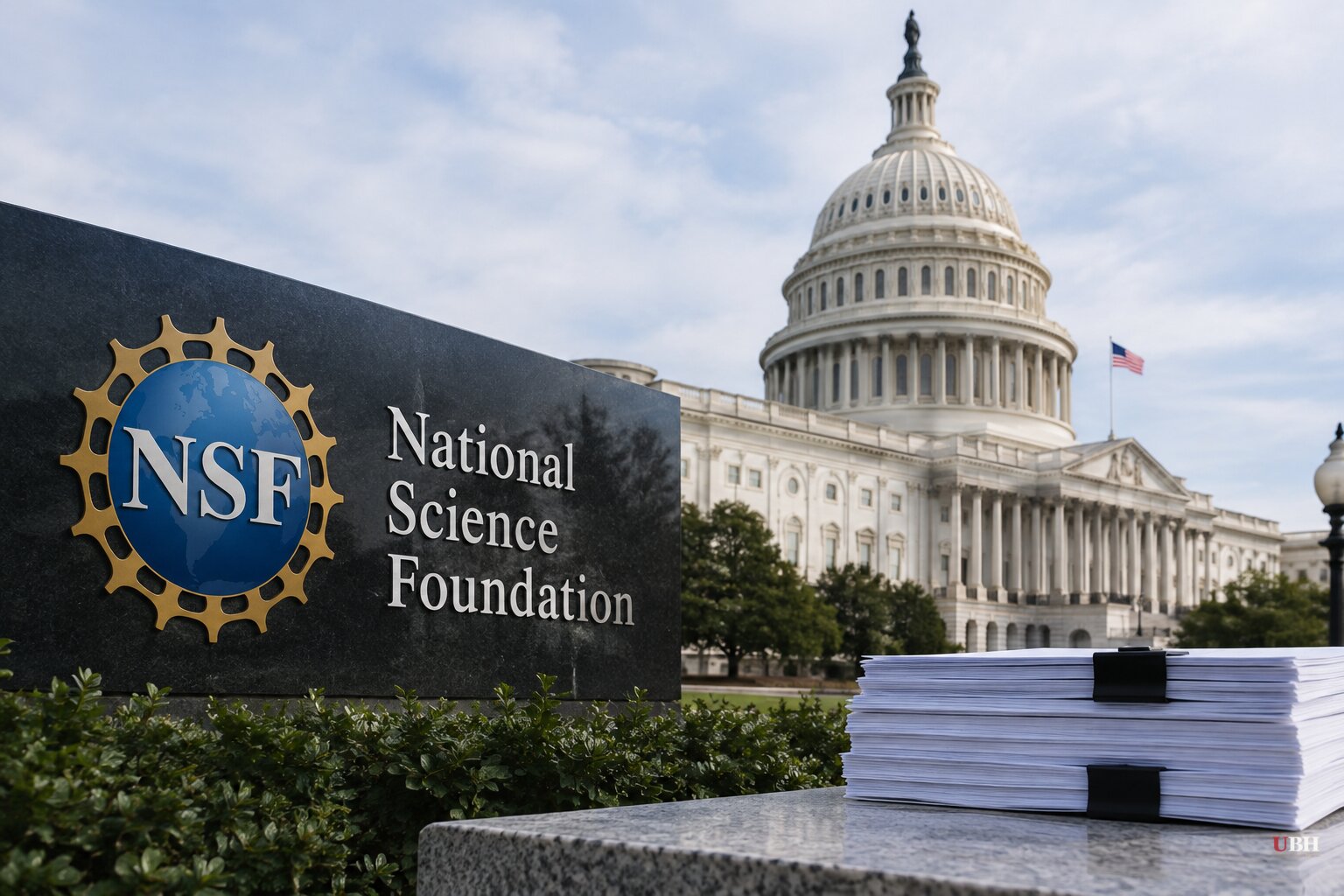
The Trump administration has made two separate moves since late September 2026 to redirect or cancel money Congress already approved, without asking Congress first.
On September 25, the White House announced it was canceling roughly $810 million in appropriated funds through what's called a pocket rescission, according to the Epoch Times. The targeted money included immigration programs serving refugees and asylees, a Department of Education program for immigrant students, and Department of Homeland Security programs that provide legal and mental health services to illegal immigrants.
A pocket rescission works like this: the president formally asks Congress to cancel funds, but times the request so close to the end of the fiscal year that the money legally expires before lawmakers can act one way or the other. Congress never gets a real vote. The funds just run out.
Senator Susan Collins (R-Maine), who chairs the Senate Appropriations Committee, said Congress received the $810 million package of cancellations "without warning or consultation." She said the Office of Management and Budget, as part of the executive branch, has no authority to unilaterally decide which congressionally approved funds get rescinded.
"Any effort to rescind appropriated funds without congressional approval is a clear violation of the law," Collins said on September 25. "I will work with my colleagues to address these illegal actions."
This wasn't the first time the administration used the maneuver. In August 2025, Trump canceled $4.9 billion in appropriated foreign aid funding the same way, according to the Epoch Times.
A Separate $1.4 Billion Freeze at NSF
The second move involves the National Science Foundation, one of the federal government's largest sources of research funding. Internal data reviewed by The New York Times shows the NSF withheld $1.4 billion that Congress intended for research over the past year, roughly one-fifth of the agency's primary research budget.
Unlike the pocket rescission targeting immigration programs, this wasn't announced through a formal rescission request. It was simply held back. The NYT reporting, relayed by Joe.My.God, describes it as the White House working around Congress to redirect NSF money toward a narrower set of administration priorities, chiefly artificial intelligence and quantum computing.
For 75 years, the NSF has spent nearly all of its budget on what's called basic research, funding across a wide range of scientific fields that has historically produced technologies like MRIs, semiconductors, and the internet, according to the New York Times. The administration's position, as described in that reporting, is that AI and quantum computing represent higher national priorities, particularly given competition with China in those fields.
Lawmakers from both parties have opposed White House proposals to cut NSF and National Institutes of Health funding, according to the Times reporting. That bipartisan pushback hasn't stopped the withholding from happening anyway.
What's Actually in Dispute
The administration's defenders would argue the executive branch has latitude to set research priorities and that redirecting money toward AI and quantum computing, areas where the U.S. is racing China, is a legitimate use of discretion over how appropriated funds get spent.
The counterargument, voiced by Collins, is constitutional. Congress holds the power of the purse, and an OMB rescission timed to expire before lawmakers can respond isn't discretion. It's an end-run around the Impoundment Control Act's basic requirement that the executive ask permission, not forgiveness.
No lawsuit challenging either action has been reported in these sources, and no court or the Government Accountability Office has ruled on the legality of either move as of this writing. Collins has said she'll work with colleagues to "address" the rescissions, but no specific legislative or legal remedy has been announced.
One divergence worth flagging: Joe.My.God's post tags the NSF story under "Trump corruption" and "Trump crimes." No criminal investigation, indictment, or formal corruption finding has been reported in connection with either the NSF withholding or the pocket rescission. Those are editorial characterizations, not established legal findings, and the underlying New York Times reporting itself makes no such claim.
The open question is whether Congress, the courts, or the GAO weigh in before more fiscal-year-end deadlines create opportunities for the same maneuver again.
Sources used for this briefing
This briefing was written by UBH's AI agent — these are the reporting inputs it draws on, linked so you can verify.


