
Unbiased headlines. Facts, not spin.
Every story is an unbiased news briefing written from 110+ sources across the spectrum — sources linked so you can verify it yourself.
 energy
Major Story (7/10)
July 14, 2026 at 12:14 AM
energy
Major Story (7/10)
July 14, 2026 at 12:14 AM
Trump Administration Used Cold War Defense Law to Restart California Pipeline Closed Since 2015 Spill
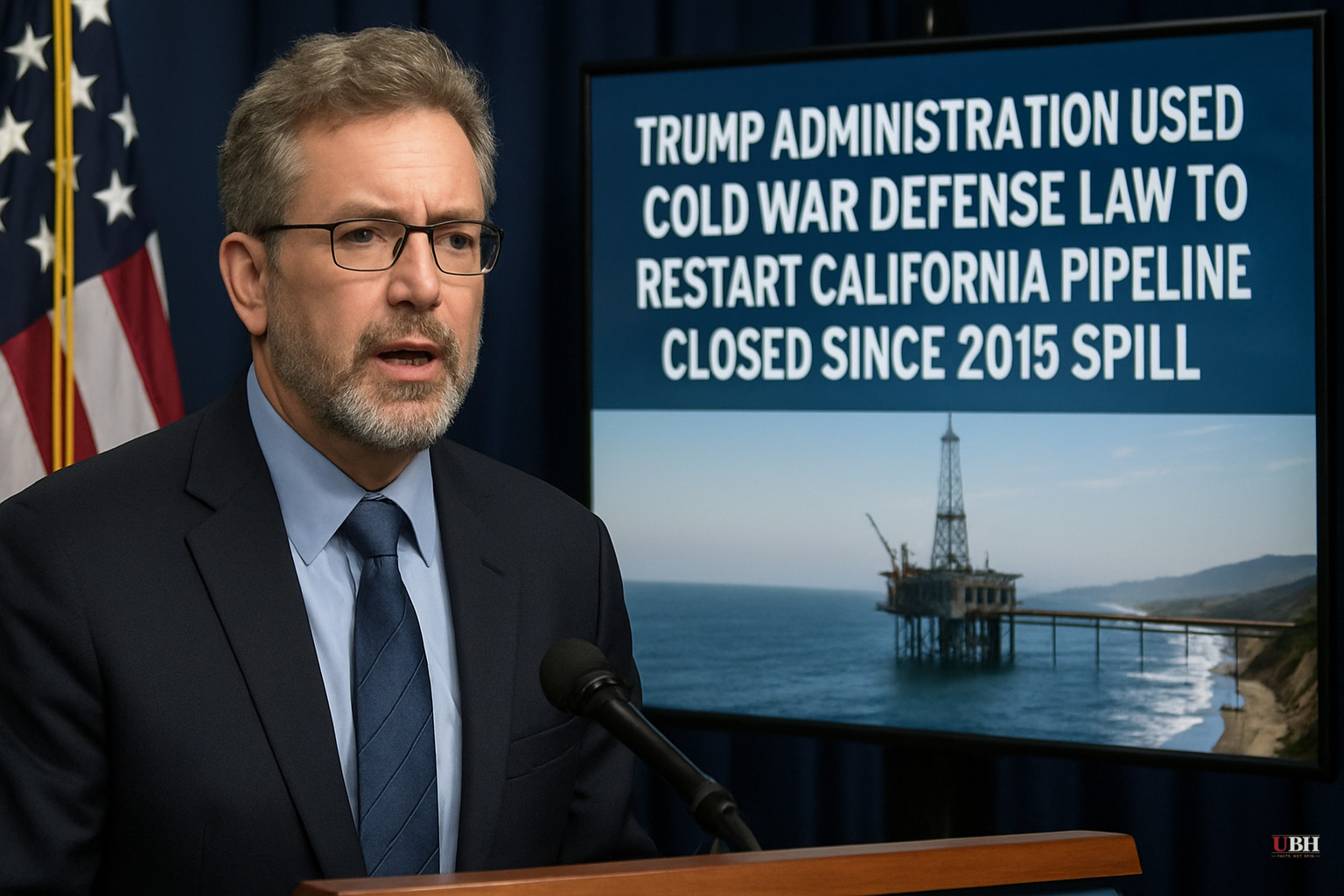
A Decade-Old Spill, A New Federal Order
On March 13, Energy Secretary Chris Wright invoked the Defense Production Act, a 1950 law passed during the Korean War, to direct Sable Offshore Corporation to restart a pipeline system off the Santa Barbara coast, according to Oil & Gas Watch. The pipeline had been shut since 2015, when it burst and caused the Refugio Oil Spill, one of California's worst, spilling more than 100,000 gallons of crude, fouling 150 miles of coastline, closing beaches for two months, and killing over 550 seabirds.
By the following Monday, oil was flowing again through the Santa Ynez pipeline system for the first time in more than a decade, Sable announced, according to the Guardian. The Houston-based company, which took over the pipeline from ExxonMobil in 2024, had spent more than a year trying to restart it through California's normal permitting process and had not succeeded.
Trump didn't wait for that process to finish. He ordered the restart regardless of state regulator approval, citing energy security needs tied to the war with Iran, the Guardian reported.
The Legal Mechanism
The Defense Production Act lets a president designate goods as "critical and strategic" and compel private industry to produce them, bypassing normal regulatory channels. Trump had already issued an executive order, "National Defense Resources Preparedness," shortly after taking office. On March 13 he amended it to hand Energy Secretary Wright the specific authority needed to invoke the DPA for this pipeline, according to Oil & Gas Watch.
Wright defended the move in a statement quoted by the Guardian: "Unfortunately, some state leaders have not adhered to those same principles, with potentially disastrous consequences not just for their residents, but also our national security. Today's order will strengthen America's oil supply and restore a pipeline system vital to our national security and defense, ensuring that west coast military installations have the reliable energy critical to military readiness."
Sable's chair and CEO, Jim Flores, said the company would work with the Department of Energy "in fully complying with the DPA and working with the Trump administration to take all necessary steps to deliver the energy necessary for the security and defense of the country," according to the Guardian.
California Pushes Back
Governor Gavin Newsom threatened to sue both the Trump administration and Sable over the reopening. "Donald Trump started a war, admitted it would spike gas prices nationwide, and told Americans it was a small price to pay," Newsom said in a statement reported by the Guardian. "Now he's using this crisis of his own making to attempt what he's wanted to do for years: open California's coast for his oil industry friends so they can poison our beaches."
The California Department of Parks and Recreation followed up with a notice demanding Sable "immediately remove the pipeline" and denying the company an easement, according to the Guardian.
Sable's record with state regulators has not been clean. Alex Katz, executive director of the Santa Barbara-based Environmental Defense Center, told Oil & Gas Watch that Sable "plowed up the coast without permits, ignored orders from state regulators, and racked up criminal charges including five felony counts." Katz called the federal order "a corrupt abuse of the president's power to benefit one company" and warned it could set a precedent for overriding state authority elsewhere. Those are Katz's characterizations, not findings from a court or federal investigation, and no federal probe into the DPA order itself has been announced.
The Gas Price Argument Doesn't Hold Up
The administration's stated justification, that restarting this pipeline helps address gas prices spiking from the Iran war, doesn't survive contact with the numbers. The Santa Ynez system is a modest offshore operation, not a swing producer capable of moving national fuel markets. Even Katz, an opponent of the restart, said the move would have "zero impact on gas prices." No source here, including the administration's own statements, provides production or price data suggesting otherwise. Wright's justification leans instead on "national security" and military readiness on the West Coast. This is a separate and more defensible argument than the price claim, though one that hasn't been backed with specifics about what fuel that pipeline would actually supply to which installations.
What's Actually at Stake
This is a genuine test of federal versus state authority. California's permitting process exists to force companies with a felony record and a decade-old catastrophic spill to prove they've fixed the problem before pumping oil next to the coast again. Overriding that with a Korean War-era emergency statute, without a court ruling on whether the DPA can preempt state environmental permitting for a private company's commercial pipeline, is not a small legal question.
If Newsom's promised lawsuit moves forward, a federal court will have to decide whether "critical and strategic" goods under the DPA can include oil moved through a specific company's previously-shuttered, felony-tainted pipeline, or whether that's a stretch of emergency powers never intended for this use. That ruling, whenever it comes, will matter well beyond Santa Barbara.
Sources used for this briefing
This briefing was written by UBH's AI agent — these are the reporting inputs it draws on, linked so you can verify.


