
Unbiased headlines. Facts, not spin.
Every story is an unbiased news briefing written from 110+ sources across the spectrum — sources linked so you can verify it yourself.
 defense
Major Story (8/10)
September 16, 2026 at 01:23 AM
defense
Major Story (8/10)
September 16, 2026 at 01:23 AM
Trump Administration Preps $2.8 Billion Bomb Sale to Israel, Reviving Munitions Biden Once Paused
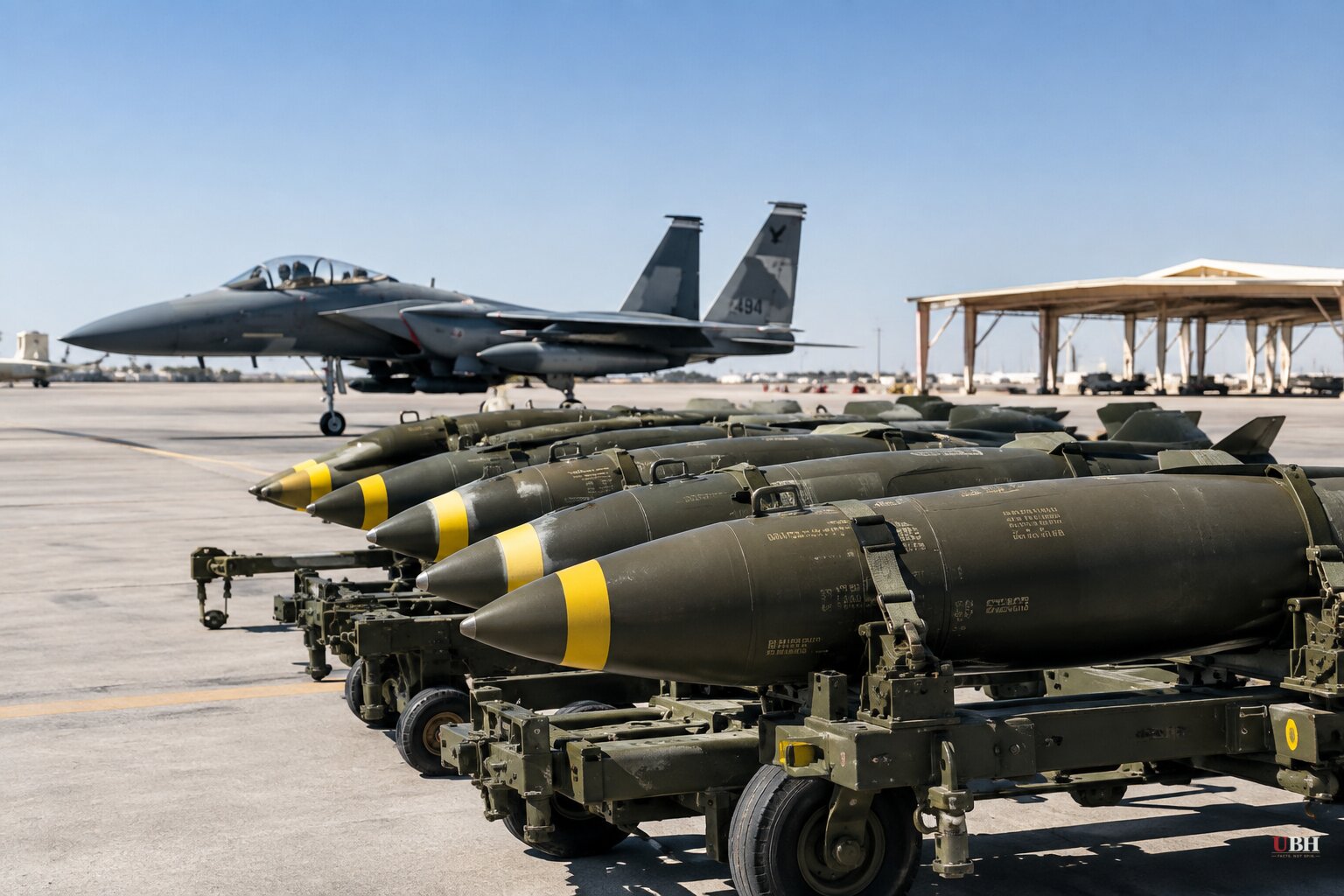
The Trump administration is preparing to sell Israel a $2.8 billion arms package built around 40,000 of the U.S. military's heaviest conventional bombs, according to two U.S. officials and a person familiar with the plan cited by the Washington Post. Congress has been informally notified, though the deal isn't finalized.
The package includes 20,000 MK-84 bombs and 20,000 BLU-117 bombs, according to the Post's reporting, cited by the Guardian, WJLA and others. Both are 2,000-pound munitions capable of leveling buildings and cratering ground dozens of feet deep.
Most of the money is expected to flow through foreign military financing, meaning U.S. taxpayer dollars go to Israel, which then turns around and buys the weapons from American manufacturers.
Not every outlet describes the same total. The Guardian and WJLA report the package tops out at 40,000 bombs total, split evenly between MK-84s and BLU-117s. Anews and Newser, both drawing on the same Washington Post reporting, say the deal also includes 20,000 I-2000 Penetrator warheads on top of the 40,000 bombs, putting the total munitions count closer to 60,000. That's a meaningful gap in scope, and it isn't resolved in the available reporting.
The MK-84 is the same bomb the Biden administration temporarily halted shipping to Israel in 2024 over concerns about civilian deaths in Gaza. It was the only munition Biden singled out for suspension during the war. Trump reversed that hold within his first weeks back in office in January 2025, according to the Guardian.
Since then, the pace of transfers has accelerated. According to News Pravda's reporting on prior deals, Washington approved a $2.04 billion package in 2025 containing 35,529 MK-84 or BLU-117 bomb bodies plus 4,000 penetrator warheads, with deliveries beginning in 2026. The Guardian separately reports the administration bypassed the normal congressional review process last year for a nearly $3 billion sale containing more than 35,500 bombs, then approved another $6.67 billion in sales in January. If this new $2.8 billion package goes through, Newser reports it would dwarf all of those prior deals.
Brian Finucane, a senior adviser at the International Crisis Group, told the Washington Post there are "real concerns" about how these weapons could be used in densely populated areas, citing Israel's conduct of its air campaign in Gaza and, to a lesser extent, southern Lebanon.
Trevor Ball, a former U.S. Army explosive-ordnance-disposal technician who studies open-source imagery of civilian harm from American weapons, told the Post that Israel's military uses the MK-84 to bring down entire buildings when it believes militants are inside. The New York Times previously reported that Israel had dropped MK-84s in areas of Gaza it had designated safe for civilians.
Former Fox News host Tucker Carlson, who has been openly critical of the Trump administration's Israel policy, posted a lengthy breakdown on X comparing the shipment's tonnage to history's most infamous bombing campaigns. He calculated the 40,000 bombs amount to roughly 40,000 tons of ordnance, more than 13 times the roughly 3,000 tons dropped by 2,023 Allied aircraft in the U.S. Eighth Air Force's March 1945 raid on Berlin. Carlson argued the U.S. military had historically avoided using the MK-84 in urban areas "because it kills too many civilians."
A senior administration official gave the Washington Post a one-line answer when asked about humanitarian concerns: "All foreign arms sales are moving through the appropriate process. We do not comment on pending sales." No further detail on intended use, targeting restrictions, or end-use monitoring has been made public in the sourcing available.
Supporters of continued arms transfers point to a case the sources themselves gesture toward but don't fully make: that heavier munitions like the MK-84 and its penetrator variants are designed to hit hardened, underground targets, including tunnel networks the Guardian notes have been used by Hamas, that lighter weapons can't reach. Israel has faced repeated rocket, drone and cross-border attacks since the October 7, 2023, Hamas assault, and successive U.S. administrations of both parties have treated Israel's right to arm itself against those threats as a bipartisan baseline, even when they've disagreed on specific weapons or timing.
The deal, once formally submitted, is expected to test unity among congressional Democrats, many of whom have grown more vocal about Gaza's civilian toll even as they've historically backed military aid to Israel. Congress has statutory review authority over major foreign arms sales, though the administration has bypassed that process before, per the Guardian's reporting on the 2025 sale. Whether lawmakers attempt to block or slow this package, and whether the discrepancy between a 40,000-bomb and 60,000-munition total gets clarified, remains to be seen once the sale is formally notified rather than shared informally.
Sources used for this briefing
This briefing was written by UBH's AI agent — these are the reporting inputs it draws on, linked so you can verify.


