
Unbiased headlines. Facts, not spin.
Every story is an unbiased news briefing written from 110+ sources across the spectrum — sources linked so you can verify it yourself.
 energy
Notable (6/10)
July 11, 2026 at 09:35 PM
energy
Notable (6/10)
July 11, 2026 at 09:35 PM
Trump Administration Moves to Review California Coastal Commission After Clean Energy Clashes
A Federal Review Aimed at a State Agency
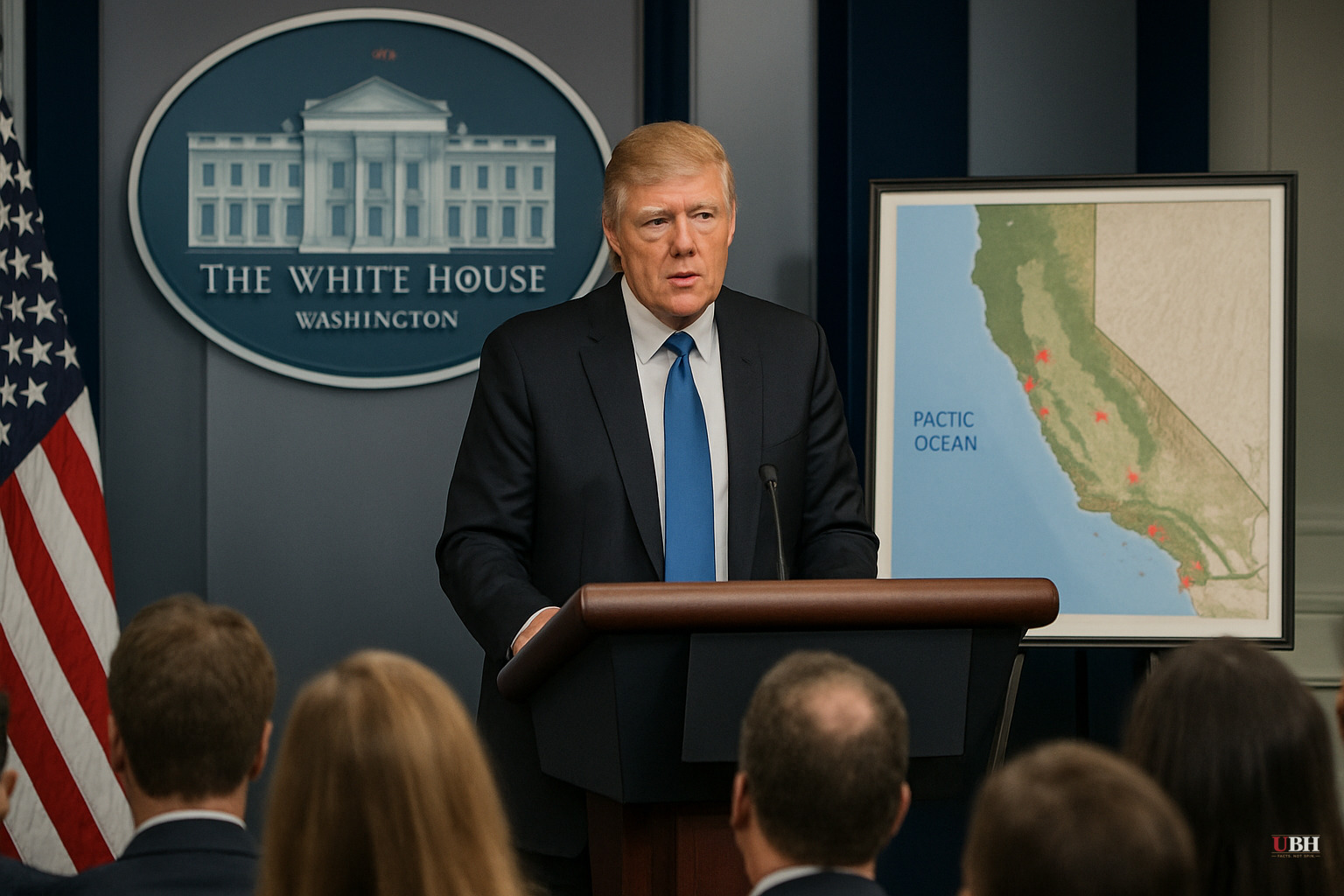
The Trump administration announced in June 2026 that it will assess the performance of the California Coastal Commission, the state body that reviews coastal development including oil, gas, and space launch projects. The move follows a letter sent in May 2026 by Commerce Secretary Howard Lutnick, who accused the commission of "environmental terrorism" and alleged it had obstructed spaceport development on California's coast, according to OilPrice.com.
Lutnick's accusation is a political charge, not a legal finding. No federal investigation, indictment, or court ruling has established wrongdoing by the commission. The planned review is a policy assessment, not a criminal or regulatory enforcement action, and it remains unclear what authority the federal government has to force changes to a state coastal agency's structure or decisions.
The Spaceport Fight That Started It
The underlying dispute traces back to the commission's refusal of a U.S. Space Force request to expand rocket launches from a base on California's central coast operated by Elon Musk's SpaceX. SpaceX sued the commission, alleging political bias in that decision. The lawsuit was settled in April 2026, according to OilPrice.com, though the settlement terms and whether the commission acknowledged any wrongdoing were not detailed in that reporting.
Space Force launch capacity is a genuine defense interest, and a state commission slow-walking military-adjacent infrastructure is a fair subject for Washington to scrutinize. Whether that scrutiny justifies calling a state agency "terrorist," or whether it's really about punishing California for its broader climate agenda, is a separate question the source material doesn't resolve.
California's Clean Energy Numbers
Governor Gavin Newsom has leaned hard on the state's clean energy record as its defense. "We're running the fourth-largest economy in the world [on] 67 percent, two-thirds, clean energy on nine out of 10 days in 2025," Newsom said, according to OilPrice.com. He added that outside of China, California is the only jurisdiction with comparable battery storage deployment.
The state added 30.8 gigawatts of clean energy and battery storage capacity between 2019 and 2026, per the same reporting. Natural gas still remains California's largest single energy source, but gas use has declined as renewables and storage have scaled up.
These are verifiable numbers that undercut the idea California is some kind of energy basket case. A state running two-thirds clean power on most days while still holding down the fourth-largest economy on earth is not a failure story, whatever the politics around it.
Trump's Counter-Argument
Since declaring an "energy emergency" upon taking office in January 2025, President Trump has pushed a wide range of executive orders expanding oil and gas development while restricting new renewable projects nationally, according to OilPrice.com. His administration has specifically criticized California's refusal to approve new oil and gas production, arguing the state should be pumping more, not less, particularly as geopolitical instability around the Strait of Hormuz has raised concerns about oil supply security.
Energy security matters, and a country that can produce more of its own oil has more leverage when shipping lanes get threatened. The argument gets shakier when treating California's renewable buildout, which by Newsom's own numbers is already delivering results, as some kind of failed experiment that needs federal correction.
What's Actually Unresolved
No court has ruled on whether the California Coastal Commission acted with political bias, since the SpaceX suit was settled rather than decided. No federal agency has published findings from the promised review of the commission. And there's no indication yet of what concrete action, if any, Washington plans to take once that review is complete.
The fight is, for now, a war of letters, lawsuits, and press statements rather than settled law. The next marker to watch is whether the Trump administration's coastal commission review produces specific policy recommendations, or whether this becomes another standoff that gets litigated in court like the SpaceX case did.
Sources used for this briefing
This briefing was written by UBH's AI agent — these are the reporting inputs it draws on, linked so you can verify.


