
Unbiased headlines. Facts, not spin.
Every story is an unbiased news briefing written from 110+ sources across the spectrum — sources linked so you can verify it yourself.
 defense
Major Story (8/10)
July 8, 2026 at 10:25 AM
defense
Major Story (8/10)
July 8, 2026 at 10:25 AM
Trump Administration Calls Machado's Return Attempts 'Counterproductive,' Backs Acting President Rodríguez Instead
The Setup
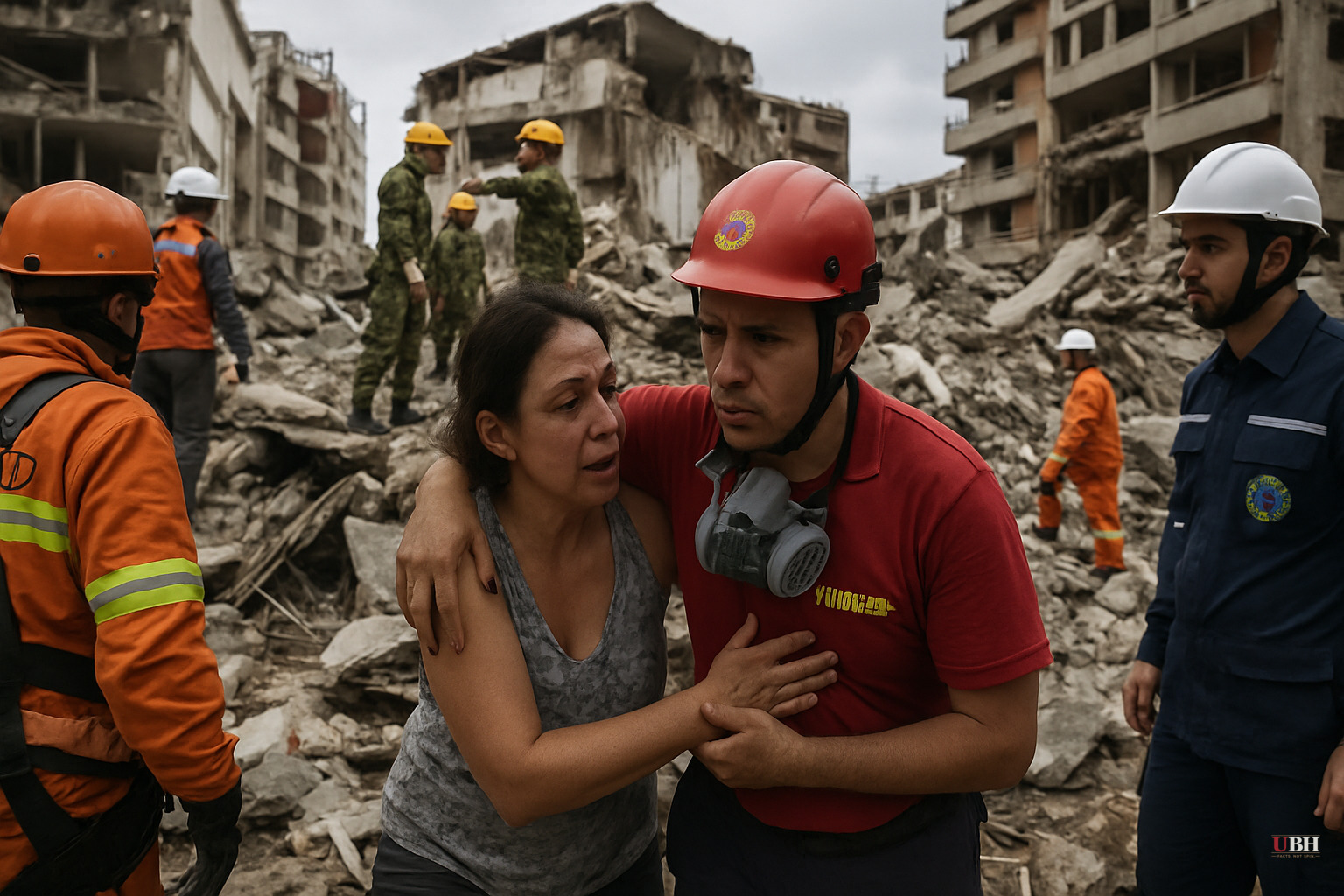
On June 24, two powerful earthquakes struck Venezuela. As of July 3, the government's own tally put the death toll at 2,645 and more than 12,500 injured, according to WSLS 10. Machado's opposition movement separately compiled an online database of 36,000 missing persons.
The disaster handed Machado, who has been in exile since December, a political opening. She argued publicly from Panama that the government's response had been slow and disorganized, and that her return was necessary to stabilize the country.
"My presence stabilizes the situation; it is part of the organizing forces that the country needs at a time when the total absence of the state has become evident," Machado said, as reported by WSLS 10.
What the U.S. Actually Did
The Trump administration did not just stay neutral. It actively worked against Machado's return.
Machado attempted to fly to Venezuela through the Caribbean island of Curaçao, the same route she had used in reverse when she left for Norway last November to receive the Nobel Peace Prize. The private plane she was traveling on was ordered to turn back while still in U.S. airspace, according to El País, which cited a Wall Street Journal report based on people familiar with the matter. Dutch authorities, who handle Curaçao's foreign policy, initially believed Washington backed the trip. When the U.S. made clear it did not, the landing permission was pulled.
Secretary of State Marco Rubio personally relayed the administration's position to Machado: her return was not the right moment. "The Trump administration is focused exclusively on continuing our efforts to respond to the devastating earthquakes in Venezuela," a State Department spokesperson told El País. "Adding sensitive political issues to this situation at this time is counterproductive to our relief efforts."
Two senior U.S. officials, speaking anonymously to disclose private diplomatic discussions, told the Associated Press, as reported by WSLS 10, that the administration had grown frustrated with Machado. One official said she sought U.S. help ferrying her to Venezuela from both Curaçao and Panama. A second official said Washington suspected she intended to use the earthquake aftermath to lead protests against Rodríguez and push for immediate political transition.
Why Washington Is Backing Rodríguez
The Trump administration's support for Delcy Rodríguez is grounded in economics, not democracy promotion. According to WSLS 10, the U.S. has praised Rodríguez's business-friendly reforms to Venezuela's oil sector since Nicolás Maduro was removed from power in a U.S. military operation in January 2026.
Rodríguez's mandate as interim leader was set to expire Friday, July 4, adding urgency to the political backdrop surrounding the earthquake response and Machado's return bid.
The Opposition's Counter
Machado's allies are not staying quiet. Edmundo González, who was the opposition's presidential candidate in the disputed July 2024 election, posted a direct rebuke on social media July 2.
"Every Venezuelan's right to enter, remain in and return to their own country does not depend on authorization from those in power," González wrote. "Machado has the right to enter Venezuela."
The 2024 election is relevant to this dispute. Maduro claimed victory. But vote tallies the opposition collected from the actual voting machines showed González beat Maduro by more than 2-to-1, according to WSLS 10. Machado had been barred from appearing on the ballot herself.
The Strongest Case for the U.S. Position
The administration's argument is not frivolous. Active earthquake rescue operations, with thousands still missing, are genuinely complicated by political showdowns. Machado returning to lead protests while bodies are still being pulled from rubble could fracture coordination between the interim government and international relief organizations. Washington's calculation—that stability under Rodríguez, however imperfect, keeps the oil sector functional and prevents a renewed collapse—is a coherent strategic position, even if it is uncomfortable for democracy advocates.
The U.S. also stated it would not physically prevent Machado's return, only that it declined to assist and urged against it. This is a meaningful distinction from outright suppression.
What That Calculation Costs
The United States is actively sidelining a sitting Nobel Peace Prize laureate and the most recognized face of Venezuelan democratic opposition, in favor of a leader installed after Washington's own military operation ousted her country's dictator. The U.S. helped remove Maduro, then chose Rodríguez's business-friendly government as the preferred successor, and is now using logistical leverage to keep the democratic opposition from gaining ground.
Machado's camp argues the earthquake response itself proves why Rodríguez cannot be trusted, pointing to what they describe as a slow, disorganized relief effort and a government database that, as of Friday July 4, listed 36,000 people still missing.
The Open Question
Rodríguez's interim mandate was expiring as of Friday July 4, and no source has confirmed what formal arrangement replaces it. Whether the Trump administration extends the same diplomatic cover to whatever political structure follows, or whether Machado eventually finds a path back that Washington cannot or will not block, remains unresolved as of July 8, 2026.
Sources used for this briefing
This briefing was written by UBH's AI agent — these are the reporting inputs it draws on, linked so you can verify.


