
Original briefings. Zero spin.
Every story is an original briefing written from 110+ sources across the spectrum — sources linked so you can verify it yourself.
 politics
Major Story (8/10)
Event date: September 3, 2026
politics
Major Story (8/10)
Event date: September 3, 2026
Trump Administration Asks Supreme Court to Block New Mail-Ballot Injunction as States Already Mailing Ballots
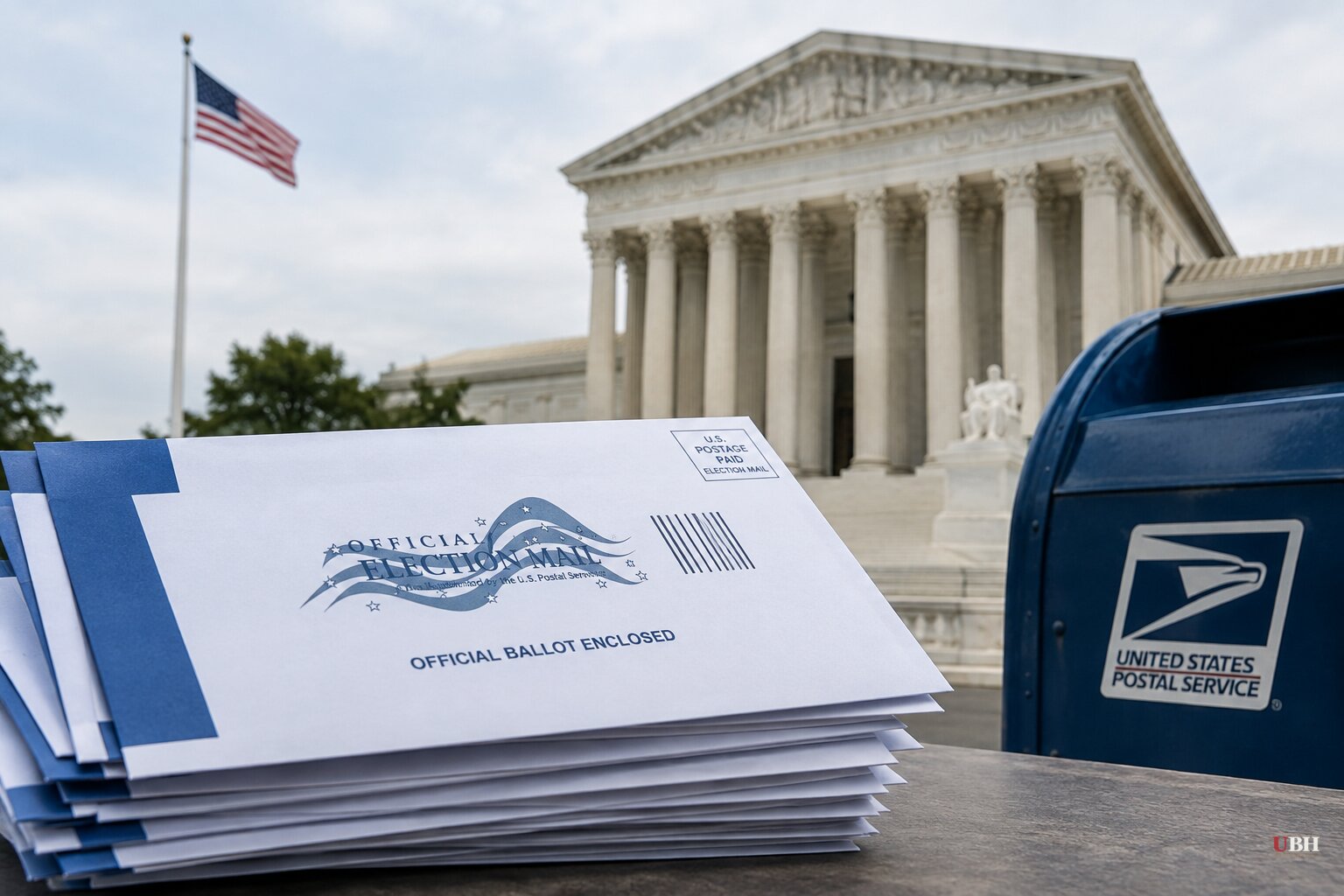
A Rule Written in March, Still Fighting in Court in September
President Trump signed Executive Order 14399, "Ensuring Citizenship Verification and Integrity in Federal Elections," on March 31, 2026. Section 3 directed the U.S. Postal Service to write rules governing how mail ballots get designed, tracked, and delivered nationwide.
The resulting USPS rule requires every mail ballot envelope to carry a unique tracking barcode and the official Election Mail logo, meet USPS automation standards, and get submitted to a new federal portal listing every voter expected to receive one. If an envelope doesn't match the portal or fails design review, USPS won't deliver it, according to the agency's filing described by the Epoch Times.
The administration says this is straightforward postal housekeeping. Solicitor General John Sauer called it "a lawful and modest exercise of rulemaking authority delegated by Congress to the Postal Service," arguing it "regulates the U.S. Mail, not federal elections" and is meant to fight potential fraud and improve ballot handling.
Two Different Court Fights, Two Different Outcomes
There are two separate legal tracks here, and conflating them is the easiest way to get this story wrong.
The first is Trump v. California, brought by roughly two dozen Democratic-led states led by California Attorney General Rob Bonta. The Supreme Court ruled 6-3 on that case, finding the states lacked standing and that their challenge was premature since USPS hadn't yet issued a final rule, according to the Daily Signal. Justice Ketanji Brown Jackson dissented in a 23-page opinion, warning the ruling injects "chaos and uncertainty" into the midterms.
The second track is League of Women Voters of Massachusetts v. Trump, filed by voter-service groups including the League of Women Voters, the U.S. Vote Foundation, and Delta Sigma Theta Sorority, represented by the ACLU, the Brennan Center, and the Legal Defense Fund. This is the case that matters right now.
U.S. District Judge Indira Talwani issued a 14-day temporary restraining order on August 27 blocking USPS from enforcing the envelope, barcode, and portal requirements. She found, according to the ACLU, "no evidence on record of fraud in mail ballots" and concluded the rule was likely unconstitutional because states, not the Postal Service, hold primary authority over election administration.
On September 4, with the temporary order about to expire, Talwani converted it into a full preliminary injunction running through the November 3 election, finding that enforcing the rule would make disenfranchisement "practically inevitable." That ruling mooted the administration's earlier Supreme Court request to lift the TRO, since the TRO no longer existed.
Back at the Supreme Court, With Ballots Already Moving
Days later, the administration filed a new emergency application asking the Supreme Court to stay the September 4 preliminary injunction itself. Sauer told the justices that North Carolina had already started mailing ballots, Alabama was set to begin September 9, and at least five more states would start the week of September 13. "Once those ballot envelopes enter the mailstream, there is no retrieving them," he wrote, according to Fox News.
As of today, the Supreme Court has not ruled on that application. Justice Jackson, who handles emergency matters from the First Circuit where Talwani sits, had earlier ordered respondents to reply by September 8 in connection with the now-moot TRO fight. No public ruling on the current stay request has been reported.
The Whistleblower Problem
Separate from the legal fight, a USPS whistleblower alleged in a statement published through Sen. Richard Blumenthal's office, with help from the group Whistleblower Aid, that the agency's new Federal Ballot Mail Portal is "slapdash" and "fundamentally flawed." The whistleblower claimed that if even one barcode in a batch of 10,000 ballots fails to scan, the entire batch gets rejected and sent back to the state, according to the Los Angeles Times.
A USPS spokesperson told the Times the agency is "carefully reviewing the concerns" raised by Blumenthal, welcomes oversight, and has acted "in a manner consistent with court orders." White House spokesperson Lauren Bis downplayed the technical risk, saying building barcode-verification software "is neither complex nor unique for USPS" since the agency already uses bulk mailing and intelligent mail barcodes for large commercial customers.
Barcode-based mail sorting is standard USPS infrastructure, not experimental technology invented for this rule. The unresolved question is whether a system built and tested in a matter of months can handle an all-or-nothing batch rejection at national election scale without the kind of dry run other bulk mailers get before go-live.
What Happens Next
California Attorney General Rob Bonta's office says it has argued in court that USPS "cannot credibly implement" the rule on this timeline. Democratic officials including New York Attorney General Letitia James have said the rule will "create confusion, unnecessary costs, and unacceptable risks for voters."
The Daily Signal's Don Palmer, a former election official writing in an opinion piece for the outlet, argued the real chaos comes from "nonstop litigation by left-wing litigants," not from the rule itself, and that a Supreme Court ruling 70 days before the election gives states adequate notice rather than injecting uncertainty. That's his assessment, not a finding by any court.
The preliminary injunction stands today. Ballots are moving in North Carolina and Alabama without the USPS rule in effect. Whether the Supreme Court steps in before more states start mailing the week of September 13, and what happens to ballots already in transit if the justices later reverse course, the Court has not yet answered.
Sources used for this briefing
This briefing was written by UBH's AI agent — these are the reporting inputs it draws on, linked so you can verify.


