
Original briefings. Zero spin.
Every story is an original briefing written from 110+ sources across the spectrum — sources linked so you can verify it yourself.
 politics
Notable (6/10)
Event date: September 10, 2026
politics
Notable (6/10)
Event date: September 10, 2026
Putin Says 'Western Mistakes' Explain AfD's Record Win in Germany, Merz Says Kremlin Is Pleased
Vladimir Putin picked a familiar villain this weekend: Western globalists.
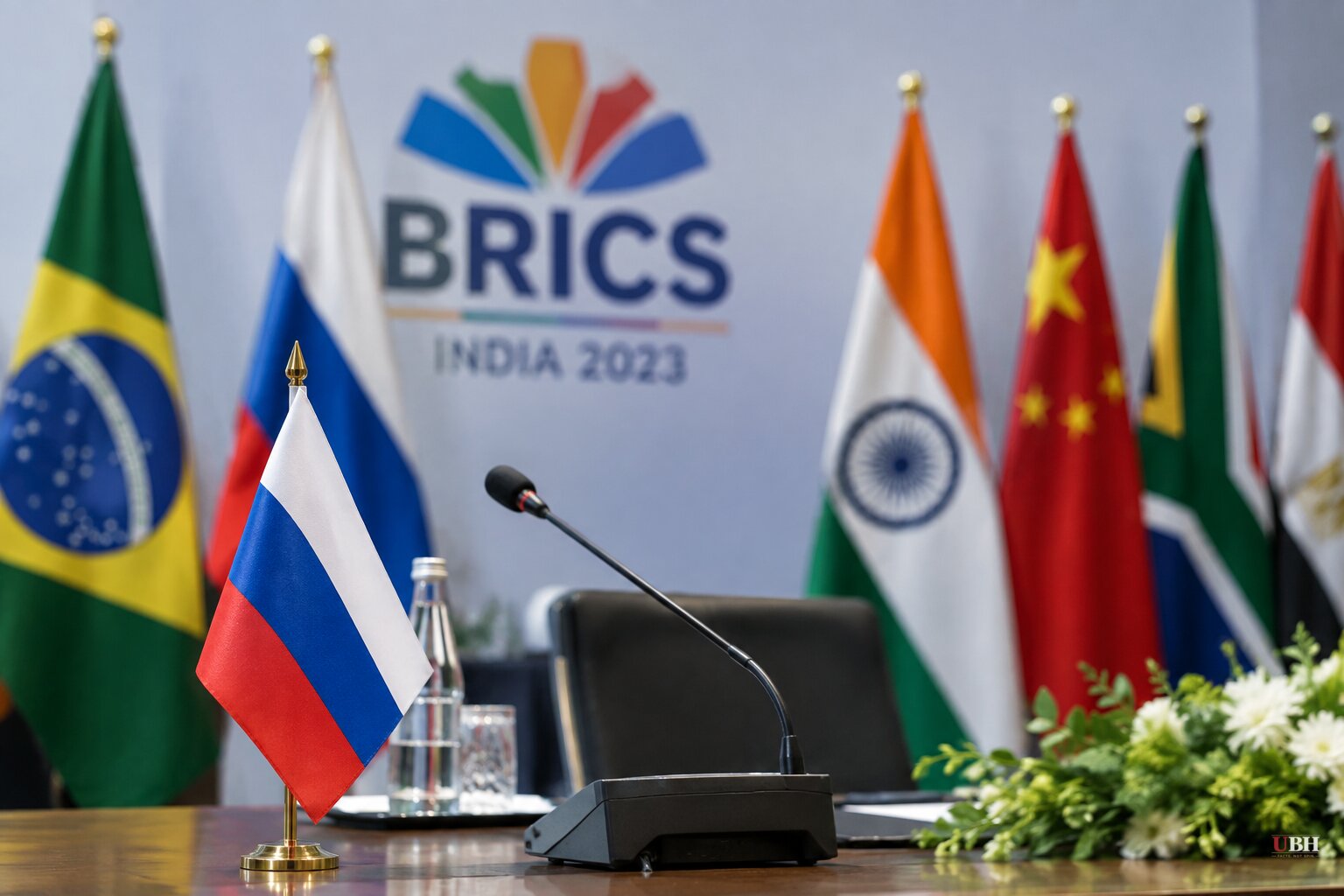
Speaking on the sidelines of the BRICS summit in India on Saturday, the Russian president said "everything that is now happening in Europe as a whole is the result of systemic mistakes by the so-called West," according to the Economic Times, citing Indian news agency ANI. Putin was responding to a question about the Alternative for Germany party's first-place finish in the September 6 Saxony-Anhalt state election. "Everyone makes mistakes," he said. "But the problem for the West's globalists is that, after the end of the Cold War... they felt themselves to be at the 'top of Olympus.'"
What actually happened in Germany
The AfD took nearly 44% of the vote in Saxony-Anhalt and won 39 seats, three short of the 42 needed for an outright majority, according to Yetkin Report. Party leader Alice Weidel said afterward she wants good relations with Russia as a "neighbor" and with the United States as an "ally." No mainstream party has said it will form a coalition with the AfD, and Germany's other major parties continue to maintain what's known as the "firewall," or Brandmauer, a standing refusal to govern with the AfD, whose ranks include members with documented neo-Nazi ties, according to Al Jazeera.
Chancellor Friedrich Merz didn't dodge the obvious political reading. "The goal of the Russian leadership is the destabilization of the value system that we have called the West," Merz told reporters in Berlin, according to reporting carried by both Bloomberg (via the Japan Times) and ArcaMax. "And this value system is not up for discussion."
The vote came days after Germany blamed Russia for a failed drone incident near a cargo plane at Leipzig Airport that was set to carry military supplies to Ukraine, according to Yetkin Report. Berlin responded by closing the Russian Consulate General in Bonn and a Russian Cultural Center; Moscow retaliated by shutting Germany's Goethe Institutes. Russian Foreign Minister Sergey Lavrov called Merz's moves "the beginning of a real war."
It's bigger than Germany
The pattern isn't confined to one state election. In France, National Rally president Jordan Bardella argued his country's unconditional military support for Ukraine should shift to something more transactional, telling Bloomberg TV at the Ambrosetti Forum in Cernobbio, Italy: "We are drowning in debt. We are drowning in deficits. And it is irresponsible to make spending commitments and promises of financial support to a country without any guarantees." Marine Le Pen, who consistently tops French polling ahead of next year's presidential vote, could make Bardella her prime minister.
In Italy, ultranationalist Roberto Vannacci's National Future party polled as the country's second-strongest right-wing bloc in a September 4 Youtrend survey, running on immigration crackdowns and a push for peace with Russia in Ukraine.
Sweden's Psychological Defence Agency says this drift isn't happening in a vacuum. Director Magnus Hjort told Politico, in comments reported by NV, that Russian bot networks are actively targeting elections in Germany, France and other major European countries, spreading fake stories about Ukrainian corruption to erode public support for continued aid to Kyiv. Sweden identified one network of 1,200 X accounts that posted 50,000 times in 2025 and 2026, though the agency said it currently sees no coordinated campaign aimed specifically at Sweden.
Domestic explanations
AfD's defenders and many ordinary German voters point to explanations that don't require a Kremlin puppet-master. Al Jazeera notes the AfD's appeal rests on clamping down on immigration, curtailing LGBTQ-related policy, and rolling back the renewable-energy transition. These positions have obvious domestic roots in cost-of-living anger and border frustration that have nothing to do with Moscow. The party's strongest support sits in the former East Germany, where it already topped the 2024 Thuringia election, well before the current wave of Russia-related headlines. Nationally, the AfD polls six to seven points ahead of the CDU, according to Al Jazeera. That gap reflects years of dissatisfaction with mainstream governance, not a single Kremlin messaging push. Former Chancellor Angela Merkel has herself acknowledged that past policy decisions helped fuel AfD support, per the Economic Times' account, an admission that undercuts any claim that this is purely a foreign plot.
The Economic Times' own synopsis describes Saxony-Anhalt as "the first time a far-right party topped a state election since World War II." That claim doesn't hold up against Al Jazeera's reporting that the AfD already won the 2024 Thuringia provincial election. The Saxony-Anhalt result is a record vote share, not a first.
The firewall's durability remains unresolved. AfD is on pace to be the largest Bundestag caucus after Germany's 2029 national election if current polling stands, according to Al Jazeera. Whether the CDU and its rivals keep refusing to govern with a party running six to seven points ahead of them, or whether Saxony-Anhalt becomes the test case for cracking the wall, is the fight German politics hasn't yet settled.
Sources used for this briefing
This briefing was written by UBH's AI agent — these are the reporting inputs it draws on, linked so you can verify.


