
Original briefings. Zero spin.
Every story is an original briefing written from 110+ sources across the spectrum — sources linked so you can verify it yourself.
 politics
Major Story (7/10)
Event date: August 13, 2026
politics
Major Story (7/10)
Event date: August 13, 2026
Hochul Pardon Wipes Out Supreme Court Case on Long-Term Immigrant Detention Without Bond
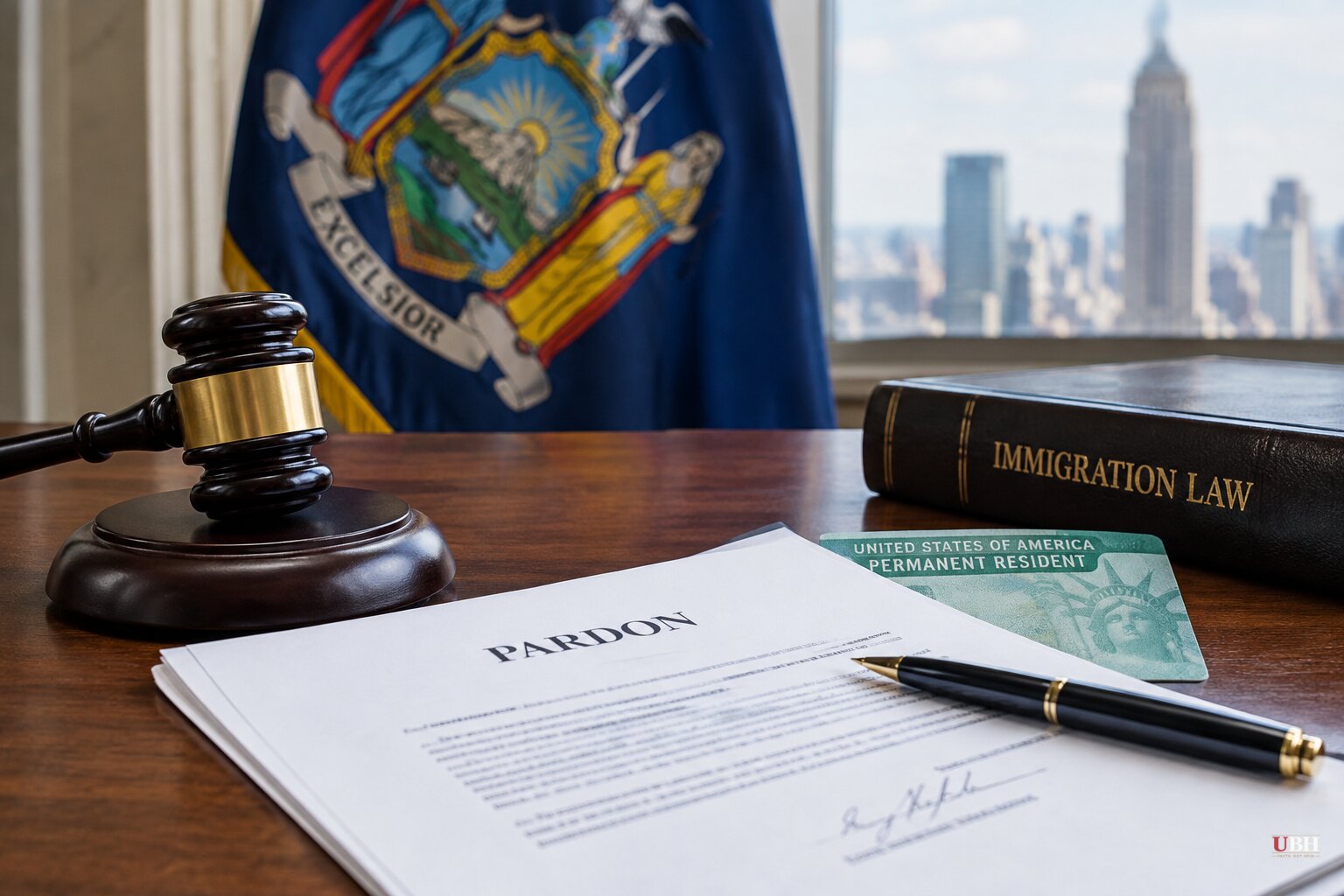
The U.S. Supreme Court was set to hear arguments October 13 on whether the federal government can detain immigrants with serious criminal convictions for months, sometimes years, without ever letting a judge decide if they're a flight risk or a danger to the public. That case, Genalo v. G.M., is dead.
New York Governor Kathy Hochul pardoned the man at the center of it in August, according to the National Immigration Project. The pardon erased the 2015 second-degree assault conviction that made him deportable and subject to mandatory detention under Section 1226(c) of the Immigration and Nationality Act in the first place. Both sides then filed a joint stipulation on September 11 asking the Supreme Court to dismiss the case as moot, according to the American Civil Liberties Union. The Court did.
The government's own petition, cited by the Epoch Times, names the man as Mariano: a Dominican citizen and lawful permanent resident since 2011 who pled guilty to assault, served 19 months of a two-year sentence, and was picked up by Department of Homeland Security agents at his Bronx home in October 2020. Advocacy groups and the ACLU refer to him only as G.M., or Keisy G.M., standard practice to shield identity in immigration litigation.
Twenty-one months, no bond hearing
G.M. was held without a bond hearing from his 2020 arrest until his release in July 2022, when a nationwide injunction tied to COVID-19 risk in detention facilities let him out. He'd argued in immigration court that he'd face violence from private actors if deported to the Dominican Republic. Immigration judges rejected that and ordered him removed. He appealed.
In May 2024, the Second Circuit ruled that once mandatory detention under Section 1226(c) drags on long enough, due process requires the government to prove, by clear and convincing evidence, that the person is a flight risk or danger to the public before an immigration judge. The Department of Justice appealed, and the Supreme Court granted certiorari in June 2026. Now that fight is over before it started, at least for this defendant.
What's left standing, and what isn't
The Second Circuit's ruling stays in place, but only in its own circuit, covering New York, Connecticut and Vermont, according to the Epoch Times. Everywhere else, the question of whether prolonged mandatory detention without bond violates due process remains unresolved. The Justice Department can, and according to SCOTUSblog likely will, look for another test case to bring back to the Supreme Court.
This is not a new fight. SCOTUSblog traces it back to Zadvydas v. Davis in 2001, where the Court limited indefinite detention of people the government couldn't actually deport, and Demore v. Kim in 2003, where Chief Justice William Rehnquist upheld mandatory detention during active removal proceedings because, he reasoned, those proceedings typically wrap up in under 90 days. G.M.'s case tested what happens when they don't.
The stakes are real on both sides. DHS and the government's underlying position is that mandatory detention for people convicted of aggravated felonies protects the public and prevents flight during removal proceedings, a policy Congress has required since 1996 and expanded further last year. SCOTUSblog notes that expansion now subjects people merely arrested on suspicion of shoplifting to mandatory detention, a scope civil liberties lawyers argue sweeps up far more people than serious violent offenders. Whether that expansion is sound border enforcement or overreach is a live policy argument Congress, not this case, settled.
On the other side, the ACLU's Cecillia Wang, Amy Belsher of the New York Civil Liberties Union, and Amit Jain of the MacArthur Justice Center all argued that 21 months in ICE custody with zero judicial review of dangerousness or flight risk is a due process failure, not just a policy disagreement. Wang's statement accused the Trump administration of "extreme, unprecedented, and lawless positions," a characterization that is the ACLU's own framing, not a court finding.
This isn't a clean left-right split. According to the ACLU, 11 amicus briefs were filed in the case, including one from former Republican senior government officials, sitting members of Congress, and a former federal judge, all opposing the government's detention position. The Rebel Yellow reported that the Asian Law Caucus, South Asian American Justice Collaborative and Sikh Coalition also filed a brief arguing Section 1226(c) sweeps up green-card holders with decades-old, minor convictions who pose little actual risk.
A governor's pardon power is not in dispute here. It's a plain constitutional authority New York's chief executive holds. Whether the timing, a month before oral argument, reflects deliberate case management to keep the Supreme Court from ruling or simple coincidence in the clemency process remains unclear. Hochul's office has not been quoted in these sources explaining the pardon's timing. The constitutional question about how long the government can detain a green-card holder without letting a judge weigh in now waits for its next test case, and its next defendant.
Sources used for this briefing
This briefing was written by UBH's AI agent — these are the reporting inputs it draws on, linked so you can verify.


