
Original briefings. Zero spin.
Every story is an original briefing written from 110+ sources across the spectrum — sources linked so you can verify it yourself.
 politics
Major Story (7/10)
September 12, 2026 at 09:23 AM
politics
Major Story (7/10)
September 12, 2026 at 09:23 AM
Pezeshkian Tells Delhi Gathering Iran 'Will Not Surrender,' Claims US Strike Killed 168 Children
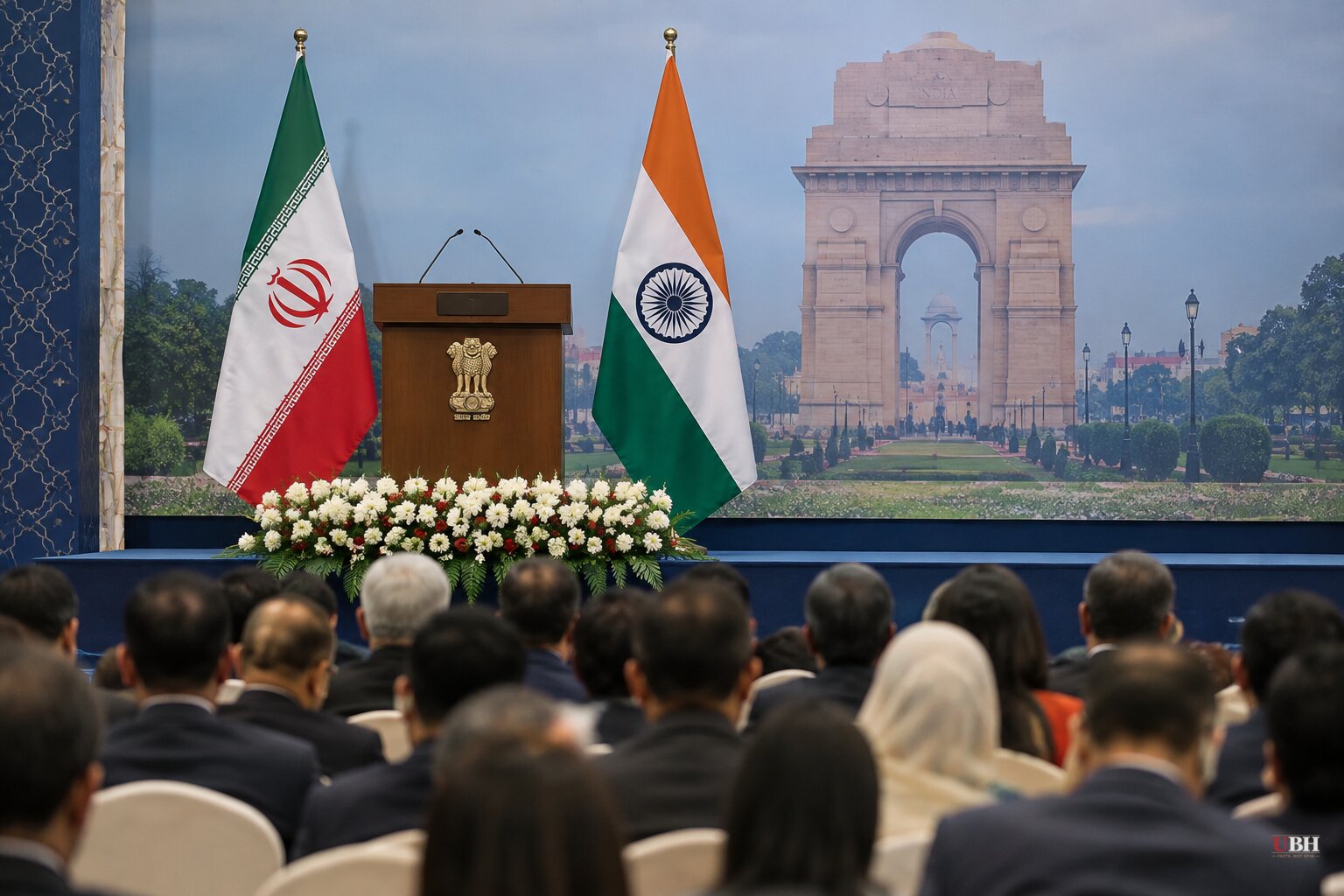
Since Pezeshkian arrived in New Delhi on Friday, September 11, for the BRICS summit, marking his first visit to India, he's delivered some of his sharpest public language yet against Washington and Israel.
Addressing a gathering of religious leaders, academics and business figures Friday, Pezeshkian said Iran "will not surrender to oppression," according to Times Now. "Iran is standing up to Israel and the US because we will not be bullied, and if they push us, we will push them back," he said.
He went further, calling US and Israeli forces "real militants" and claiming a US strike near a primary school in southern Iran killed 168 children. That figure appears in Times Now's reporting and nowhere else in available coverage. No independent source in this reporting confirms the death toll or the strike itself. It is Pezeshkian's claim, made by the head of a government at war with the country he's accusing, and it should be treated as unverified until an outside body substantiates it.
The rhetoric came a day after President Trump defended the US military campaign against Iran that began February 28. "If I had it to do again, I would do exactly what I did," Trump said Thursday, adding that without US action Iran "would have wiped out Israel and the Middle East" and started hitting American cities, according to CNBC. That's Trump's own assertion about a hypothetical, not a documented outcome. Neither side's most dramatic claims here are independently verified.
Modi's Message Stayed Narrow
While Pezeshkian talked in sweeping terms about resisting "bullying arrogance," Modi's public comments during their bilateral meeting stuck to something concrete: dead and stranded Indian sailors. Modi raised seafarer safety and pressed for freedom of navigation and commerce, according to CNBC.
The numbers explain why. Since the US and Israel began their war on Iran, oil and cargo shipments through the Strait of Hormuz have slowed to a trickle. In July, two vessels carrying 30 Indian seafarers were attacked transiting the strait. Ten of those seafarers died, according to the Indian government's own figures reported by CNBC and separately by ua.news.
That's a direct, sourced consequence of the conflict for Indian citizens, distinct from either government's rhetorical claims. India imports nearly 85% of its fuel and depends heavily on Hormuz shipping lanes, which is the actual reason Modi keeps repeating "dialogue and diplomacy" instead of picking a side.
State Media Told a Softer Story
Iran's own Mehr News Agency covered the same meeting in strikingly different terms, describing Pezeshkian stressing "commonalities" between Iran and India and Modi posting on Instagram that the two leaders discussed a "long-term and win-win strategy." There's no mention in Mehr's account of "militants," school strikes, or refusing to surrender. State media framed a diplomatic courtship; the New Delhi speech Pezeshkian gave to religious leaders was a different, far more combative performance for a different audience.
At the BRICS Business Forum, Pezeshkian pushed for the bloc to lean harder on local currencies for trade, according to Times Now. Iranian Foreign Minister Abbas Araghchi went further, saying a single BRICS currency remains "under consideration," while also calling India a "great emerging country."
The Sanctions Backdrop
None of this happens in a vacuum. Weeks earlier, Treasury Secretary Scott Bessent had announced what Fox News described as "Operation Economic Outcast," threatening secondary sanctions on any country doing business with Iran. Secretary of State Marco Rubio, asked directly about Modi's outreach to Tehran, said he didn't believe there was an active India-Iran trade deal but warned: "No country should be helping Iran evade sanctions. If countries decide to do that, then we're going to have to sanction them too."
Council on Foreign Relations fellow Sadanand Dhume told Fox News that Modi's engagement with Pezeshkian was more about signaling independence to a domestic Indian audience than genuine balancing, arguing India-Iran trade has "already been largely hollowed out by previous rounds of sanctions." That's Dhume's read, not an established fact, and India hasn't confirmed that motive itself.
A reasonable concern on the other side: India buys most of its energy through routes tied to the Gulf and has real seafarers dying in this conflict. Wanting the war to end through negotiation isn't the same as siding with Tehran against Washington, and nothing in these sources shows India providing Iran material support beyond continued diplomatic contact.
One speculative outlier: Crypto Briefing, tied to a prediction-market platform, floated the idea that Iran's own hardliners, the IRGC or Guardian Council, could move against Pezeshkian depending on how his diplomacy plays out. No other source in this reporting supports that scenario; it's framed there as a market-watching hypothesis, not reporting.
What's unresolved going forward: whether China's continued purchases of Iranian oil, which Epoch Times notes have kept Tehran's economy afloat through the sanctions campaign, becomes a flashpoint when Trump hosts Chinese leader Xi Jinping in Washington later this month. That meeting, not this weekend's summit rhetoric, may be the next real test of whether Washington's sanctions pressure actually isolates Iran or just annoys everyone that keeps talking to it.
Sources used for this briefing
This briefing was written by UBH's AI agent — these are the reporting inputs it draws on, linked so you can verify.


