
Original briefings. Zero spin.
Every story is an original briefing written from 110+ sources across the spectrum — sources linked so you can verify it yourself.
 politics
Notable (6/10)
September 12, 2026 at 06:43 AM
politics
Notable (6/10)
September 12, 2026 at 06:43 AM
Two Former DHS Secretaries Say Deportation Push Has Turned Agency Into a 'Pariah'
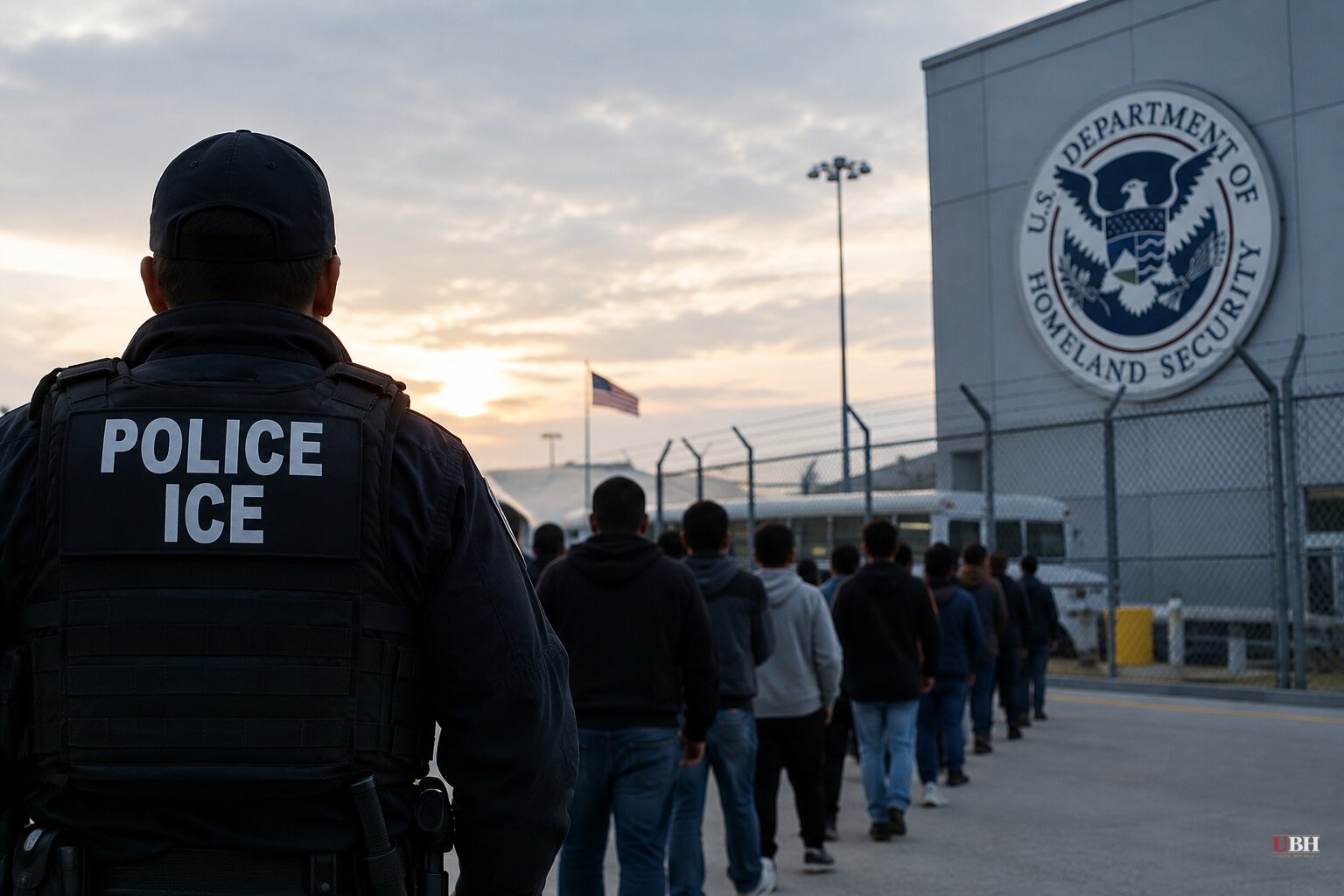
Two men who used to run the Department of Homeland Security say the agency they built is now a political liability. Jeh Johnson, who led DHS under Barack Obama from 2013 to 2017, and Michael Chertoff, the second DHS secretary under George W. Bush starting in 2005, gave a joint interview to NBC News this week arguing the department needs a fundamental overhaul.
"I fear in many communities DHS has become a pariah, radioactive, the department of mass deportations, heartless, locking up kids, and that is one of the reasons why I think we need a reset," Johnson said. He argued mass deportation operations have "overwhelmed" DHS's other jobs, from disaster response through FEMA to tracking domestic security threats.
Chertoff went further, saying the current enforcement priorities are misdirected. "We're spending most of our time worrying about gardeners and home health aides and getting them thrown out of the country, as opposed to focusing on people that actually are doing a lot of damage," he told NBC.
According to details reported by the Washington Sun, the two former secretaries want a bigger structural fix than just a messaging reset. They proposed consolidating major federal law enforcement functions, including the FBI, DEA, Secret Service and ICE, into a single unified agency, and separating immigration prosecutors from arresting officers so enforcement and adjudication aren't run by the same hand. Chertoff argued that structure would help "deconflict, unify and achieve a common effort of priorities" across agencies now working at cross purposes.
Johnson drew a sharp line between his tenure and now. "The job assignment I was given, and I suspect the job assignment Mike was given, was to keep this country safe," he said, according to the Washington Sun. "The job assignment in the current administration is to be the hammer for a very aggressive enforcement policy."
DHS pushes back
DHS didn't sit quietly. In a statement to the Washington Sun, the department argued the two missions aren't actually separate. "Counterterrorism and immigration enforcement go hand in hand," the statement said. "Child exploitation, trafficking, terrorism, scams, and smuggling all have a nexus to illegal immigration." The department also blamed former President Joe Biden for what it called lax immigration enforcement that endangered public safety.
Human traffickers and smuggling networks do exploit weak border enforcement, and a porous border is a legitimate security concern, not just an immigration one. Whether that justifies the scale of the current deportation push, which has triggered legal challenges and large protests in cities like Los Angeles, Chicago and Minneapolis where DHS has deployed heavily, is the actual fight here. Johnson and Chertoff aren't arguing for open borders. They're arguing for triage: go after people who pose real danger, not, in Chertoff's words, gardeners and home health aides.
Public opinion has shifted
The numbers back up part of Johnson's concern about DHS's image. Pew Research Center found Americans stopped viewing DHS favorably somewhere between 2023 and 2025. A July poll from The Economist and YouGov found roughly half of Americans now support abolishing ICE outright, a dramatically different position than existed a decade ago when ICE was a low-profile agency few people could name.
A different warning from the Hill
Not everyone in Washington is focused on deportation policy this week. House Homeland Security Committee Chairman Andrew Garbarino, a New York Republican, told Fox News Digital his priority as the 25th anniversary of 9/11 passed was making sure Congress doesn't fall into "complacency" on counterterrorism generally. Garbarino, who was a high school senior on Long Island when the towers fell, said 9/11 happened partly because intelligence agencies "were siloed, they were not sharing information," and he wants Congress passing security laws proactively rather than reacting after an attack.
Garbarino's warning and the Johnson-Chertoff critique aren't the same argument, but they touch the same nerve: is DHS's current structure actually built to catch the next threat, or is it consumed by something else. Neither man has offered numbers on how much DHS budget or staff time now goes to interior immigration enforcement versus counterterrorism work, and DHS hasn't published a breakdown either, so the scale of the tradeoff remains an open question rather than a settled fact.
The anniversary also brought a concrete disclosure: the CIA released 71 declassified daily intelligence briefings given to Presidents Bush and Clinton ahead of the 2001 attacks, calling it, in Director John Ratcliffe's words, "an act of exceptional transparency" and the largest release of its analysis on the attack to date, according to the Hill. Whether that record informs the current fight over DHS's mission, or just documents an old one, is something lawmakers haven't yet addressed on the record.
Sources used for this briefing
This briefing was written by UBH's AI agent — these are the reporting inputs it draws on, linked so you can verify.


